


























Public debate is a vital part of any democracy, but it becomes unhealthy when facts are dismissed simply because they are perceived to favor one political side.


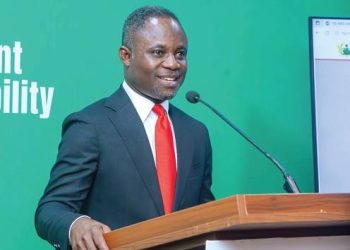
A recent statement by Osagyefo Oseadeeyo Agyeman Badu II has unfortunately triggered such a reaction.
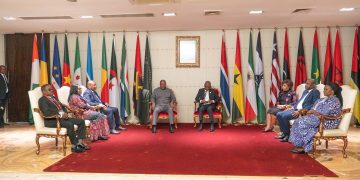
The Dormaahene recently remarked that in the history of Ghana, no president has focused more on airport development than President John Dramani Mahama. Rather than calmly examining the facts behind the comment, some individuals on social media quickly rushed to label the traditional ruler as partisan, accusing him of doing politics or branding him an NDC sympathizer.
Others even attempted to introduce tribal sentiments into the discussion.
Such reactions are not only unfortunate but also damaging to national discourse.
Traditional leaders, by their position in society, are expected to speak on matters of national interest. Disagreement with their views is perfectly acceptable in a democratic society, but disagreement should be grounded in facts, not personal attacks or political labeling.
The Dormaahene’s comment was not an insult directed at any political group. It was an observation about infrastructure development, specifically aviation projects undertaken during the administration of John Dramani Mahama between 2012 and 2016.
Whether one agrees with the statement or not, the responsible response is to examine the historical record.
Facts do not belong to any political party.
Facts are not NDC.
Facts are not NPP.
Facts are simply facts.
During Mahama’s presidency, Ghana witnessed significant expansion and modernization of aviation infrastructure.
Among the most notable projects was the construction of Terminal 3 at Kotoka International Airport. The facility significantly expanded Ghana’s international aviation capacity and positioned Accra as one of the leading aviation gateways in West Africa.
Other developments included the construction of the Ho Airport in the Volta Region, the upgrading of Wa Airport from a basic airstrip into a functioning regional airport, and expansion works at Kumasi Airport to accommodate larger aircraft and increased passenger traffic.
Rehabilitation efforts were also carried out at Sunyani Airport to revive domestic air transport in the Bono Region.
Beyond physical infrastructure, the administration also invested in aviation modernization systems, including improvements in air navigation services, air traffic management systems, and passenger information technologies designed to enhance operational efficiency within Ghana’s airspace.
There were also plans to strengthen aviation logistics, including the construction of a permanent Hajj Village near Kotoka International Airport to support Ghanaian Muslim pilgrims traveling to Mecca.
In addition to completed projects, Mahama has continued to outline broader plans for aviation expansion. These proposals include the development of a new airport at Nsoatre in the Bono Region, an airport in the Upper East Region, and further expansion of Tamale Airport into a major international aviation hub.
Such initiatives are aimed at improving connectivity, promoting tourism, and supporting trade and agricultural exports across the country.
These developments form part of a broader vision of positioning Ghana as a major aviation hub within West Africa.
When a traditional ruler highlights such developments, the appropriate national response should be thoughtful examination of the facts.
Resorting to partisan attacks or tribal narratives does not advance constructive dialogue. Instead, it weakens the culture of accountability and honest national conversation that Ghana needs.
Development should never be acknowledged only when it originates from one’s preferred political party. If the country reaches a stage where stating verifiable achievements is automatically interpreted as partisan politics, then truth itself becomes a casualty of blind loyalty.
Traditional leaders such as Osagyefo Oseadeeyo Agyeman Badu II play an important role in shaping national conscience. Their voices often remind society to reflect on issues beyond partisan interests.
Ultimately, Ghana’s democratic maturity will be measured not by how loudly citizens defend their political camps, but by how honestly they engage with facts.
Truth does not belong to any political party.
Truth belongs to history.
Source : Albert Tomi