



























The Africa Institute on Governance and Security (AIGS) has raised alarm over the security implications of recent public comments by the Chief Executive Officer of the Ghana Free Zones Board, describing them as a potential threat to social cohesion and Ghana’s anti-galamsey efforts.


In a letter dated April 24, 2026, and addressed to the Chief of Staff at the Office of the President, the policy think tank expressed concern over what it described as the public denigration of the Chairman of the Church of Pentecost by a senior public official following the church leader’s stance against illegal mining.
Signed by Senior Fellow, Palgrave Boakye-Danquah, the statement warned that such conduct could erode trust between the state and religious institutions, which it described as a critical pillar of Ghana’s stability.
The Institute noted that the Church of Pentecost represents millions of Ghanaians, and any perceived attack on its leadership risks triggering tensions between government and faith-based communities. It further cautioned that failure to enforce the Code of Conduct for Public Officers could signal institutional weakness and embolden misconduct.
According to AIGS, the incident could also heighten the risk of youth mobilization and misinformation, creating opportunities for destabilizing actors to exploit the situation. It warned that such developments could undermine the collective national effort required to combat illegal mining, widely known as galamsey.
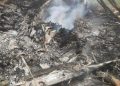
Describing illegal mining as a “tier-one national security threat,” the Institute highlighted its links to environmental degradation, water pollution, land disputes, and illicit financial flows.
To address the challenge, AIGS proposed a comprehensive four-tier strategy focusing on intelligence and enforcement, governance and accountability, socio-economic interventions, and deterrence.
Key recommendations include deploying financial intelligence to dismantle illegal mining networks, establishing a vetted multi-agency anti-galamsey task force under National Security, and expanding the use of drone and satellite surveillance to monitor mining activities.
The Institute also called for lifestyle audits of public officials in mining districts, stricter enforcement of public service codes, and reforms to community mining frameworks to ensure transparency and reduce incentives for illegal operations.
On the socio-economic front, AIGS urged the government to scale up alternative livelihood programmes, including agroforestry, aquaculture, and technical training, while proposing the creation of a Water and Land Restoration Corps to employ former miners.
As part of deterrence measures, the think tank recommended a policy to seize and destroy equipment used in illegal mining, as well as the establishment of special courts to expedite prosecution of galamsey-related cases.
The Institute further urged the Presidency to investigate the conduct of the Ghana Free Zones Board CEO and publicly communicate the outcome, while reaffirming the government’s commitment to protecting the rights of religious and civil society leaders to speak on national issues.
It also called for a National Security Council briefing to incorporate its proposals into a revised national anti-galamsey strategy.
AIGS emphasized that the fight against illegal mining requires a unified front, cautioning that public officials must not undermine voices that support state efforts in addressing the crisis.
Below is the full letter :
AFRICA INSTITUTE ON GOVERNANCE AND SECURITY
Policy, Research & Advocacy for Resilient States
P.O. Box LG 733, Legon Accra, Ghana
Ref: AIGS/NS/04/2026/01
Date: April 24, 2026
The Chief of Staff
Office of the President
Jubilee House
Accra
Copied to:
The National Security Coordinator
The Minister for National Security
The Minister for Lands and Natural Resources
The Chairperson, Public Services Commission
SUBJECT: SECURITY IMPLICATIONS OF PUBLIC DENIGRATION OF RELIGIOUS LEADERSHIP ON THE ANTI-GALAMSEY CAMPAIGN & RECOMMENDATIONS FOR ADDRESSING ILLEGAL MINING
The Africa Institute on Governance and Security has taken note, with serious concern, of recent public conduct by the Chief Executive Officer of the Ghana Free Zones Board, involving insults directed at the Chairman of the Church of Pentecost over his principled Christian position and statement on illegal mining.
From a national security perspective, we assess that such conduct by a public officer creates critical triggers within our security architecture:
- Key Security Triggers Identified
- Erosion of Social Cohesion: The Church of Pentecost represents over 3.2 million citizens. Denigration of its leadership by state officials risks antagonism between the state and faith communities — a key pillar of Ghana’s stability architecture.
- Governance Signaling: Failure to sanction breaches of the Code of Conduct for Public Officers signals impunity, weakens institutional accountability, and may deter other moral voices from speaking on matters of national interest.
- Conflict Escalation Potential: The incident creates conditions for youth mobilization, counter-narratives, and information disorder that can be exploited by actors seeking to destabilize public order.
- Anti-Galamsey Campaign Undermining: Public attacks on anti-galamsey advocates suggest possible elite complicity and compromise the moral alliance required for whole-of-society action against illegal mining.
Illegal mining itself constitutes a tier-one national security threat due to its linkages to environmental destruction, water insecurity, land conflicts, and illicit financial flows.
- Recommended Measures to Address Illegal Mining
In line with our mandate to promote resilient governance, the Institute proposes a four-layer security-led approach:
A. Intelligence & Enforcement
- Deploy financial intelligence to map and dismantle galamsey financing networks, targeting sponsors and equipment supply chains.
- Establish a vetted, multi-agency Anti-Galamsey Taskforce under National Security with strict rotation and conflict-of-interest screening.
- Institute drone and satellite monitoring of forest reserves and water bodies linked to a central rapid response command.
B. Governance & Accountability
- Conduct lifestyle audits for MMDCEs, MPs, and CEOs in mining districts; interdict officials with unexplained wealth.
- Enforce the Code of Conduct for Public Officers: public denigration of anti-galamsey voices should trigger immediate suspension and investigation.
- Reform community mining through transparent licensing, geo-fenced concessions, and community equity to reduce incentives for illegality.
C. Socio-Economic Interventions
- Scale alternative livelihoods — cocoa agroforestry, aquaculture, TVET — in mining regions to address youth unemployment drivers.
- Create a Water & Land Restoration Corps employing former miners, funded by 5% of mineral royalties and environmental bonds.
- Formalize partnerships with the Christian Council, Ghana Pentecostal and Charismatic Council, and National House of Chiefs for community reporting and civic education, with legal protection for their advocacy.
D. Deterrence
- Adopt a seize-and-destroy policy for equipment caught at illegal sites, with public documentation.
- Establish special galamsey courts in key districts with 90-day case resolution timelines and monthly publication of convictions.
- Prayers
The Institute respectfully urges your high office to: - Investigate the conduct of the CEO of the Ghana Free Zones Board in relation to the Code of Conduct for Public Officers and communicate the outcome publicly.
- Issue a clear statement reaffirming government’s commitment to protect the right of religious and civil society leaders to speak on matters of national security, including illegal mining.
- Convene a National Security Council briefing to integrate the above recommendations into the revised National Anti-Galamsey Strategy.
The fight against galamsey requires unified moral and state authority. Public officers must not be seen to attack the very voices that reinforce state legitimacy in this campaign.
We remain available to provide technical support and further briefings on this matter.
Yours in service to Ghana,
Dr. Palgrave Boakye-Danquah
Senior Fellow
Africa Institute on Governance and Security
Source: www.kumasimail.com