





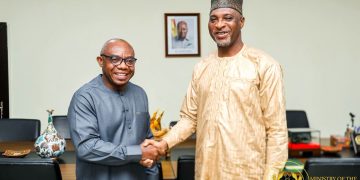



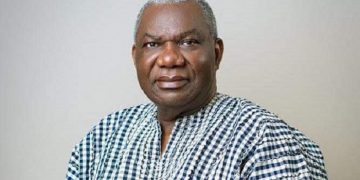






















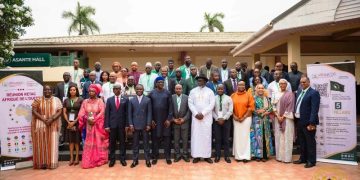






Ghana’s Ambassador to the Republic of Korea, Kojo Choi, says Ghana-Korea cooperation in the health sector is entering a new phase, with discussions on Ghana’s healthcare priorities translating into concrete development projects.


Mr. Choi said one of the latest outcomes of the partnership was the advancement of a new Official Development Assistance (ODA) project aimed at supporting the digital transformation of Ghana’s National Health Insurance Scheme (NHIS).
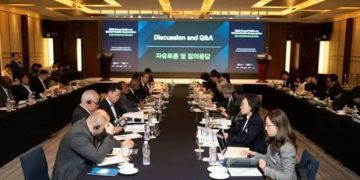
The Ambassador disclosed this in a Facebook post following his participation in the 20th Anniversary Celebration and Forum of the Korea Foundation for International Healthcare (KOFIH) on August 13.
He said the development followed the 2026 Ambassadors’ Roundtable, where he presented Ghana’s healthcare priorities and specifically encouraged KOFIH to consider supporting the digitalisation of the NHIS.
According to Mr. Choi, the initiative demonstrates how Ghana can identify its development priorities and connect them with Korea’s expertise and institutions to produce tangible results.
“This is exactly the kind of partnership I believe in. We identify Ghana’s priorities. We connect them with Korea’s expertise and institutions. We make the case. We follow through. And, most importantly, we deliver,” he said.
The proposed digitalisation of the NHIS, he noted, has the potential to improve efficiency, strengthen health financing and administration, and ultimately contribute to better access to healthcare for Ghanaians.
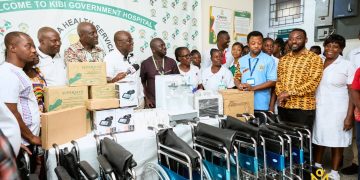
Mr. Choi also highlighted KOFIH’s longstanding contribution to Ghana’s health sector, including support for maternal and child health, healthcare capacity building, advanced surgical services, medical equipment management, biomedical engineering, emergency care and rehabilitation.
He cited the establishment of a Biomedical Engineering Workshop at the Greater Accra Regional Hospital as one of the notable interventions, saying it had helped build local capacity to maintain and manage critical medical equipment.
KOFIH has also supported the expansion of laparoscopic surgery capacity in Ghana, providing Ghanaian health professionals with advanced knowledge and skills while helping to broaden access to modern surgical care in public hospitals.
Reflecting on the broader relationship between Ghana and KOFIH, Mr. Choi said the partnership was an example of what could be achieved when Ghana clearly communicates its needs and Korean expertise, technology and institutions are aligned with those priorities.
The Ambassador said his role in Korea went beyond diplomatic representation, stressing that he viewed his mandate as one of building bridges capable of producing tangible outcomes for Ghana.
“My commitment is clear: to keep connecting Ghana with the right Korean institutions, opening doors, turning conversations into projects, and projects into measurable results,” he said.
Mr. Choi also used the KOFIH anniversary celebration to reflect on the historical and symbolic links between Ghana and Korea.
He referenced the legacies of former United Nations Secretary-General Kofi Annan of Ghana and the late Dr. Lee Jong-wook of South Korea, former Director-General of the World Health Organization, whom he said represented the contributions of both countries to global leadership and public health.
The Ambassador said the two countries now had an opportunity to build on those legacies and “write the next chapter together.”
KOFIH, established to promote international healthcare cooperation, has worked with Ghana over the years on a range of health-sector initiatives.
Mr. Choi said the emerging NHIS digitalisation project represented the kind of practical partnership that could deepen Ghana-Korea relations while delivering direct benefits to citizens.
“Not only through promises, but through projects that make a difference in the lives of Ghanaians,” he said.
Source: www.kumasimail.com