



























Duane “Keffe D” Davis has been found guilty of orchestrating the 1996 murder of rap icon Tupac Shakur, bringing a dramatic conclusion to one of America’s most enduring cold cases nearly three decades after the killing.


A Las Vegas jury convicted the former gang leader of one count of murder with a deadly weapon for Shakur’s death in a drive-by shooting on September 7, 1996.
The case against Davis, 63, centred heavily on his own words.
For years, Davis publicly discussed his alleged involvement in the events surrounding Shakur’s killing, speaking in documentaries, interviews, podcasts and his 2019 memoir, Compton Street Legend. Prosecutors argued that those statements, together with a 2008 police interview, showed that Davis played a central role in arranging the shooting.
Dressed in a black suit, Davis stood impassively as the verdict was read in a Las Vegas courtroom. He later said he intended to appeal.
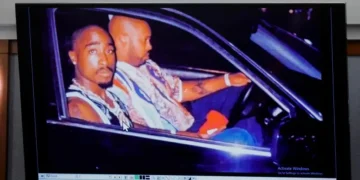
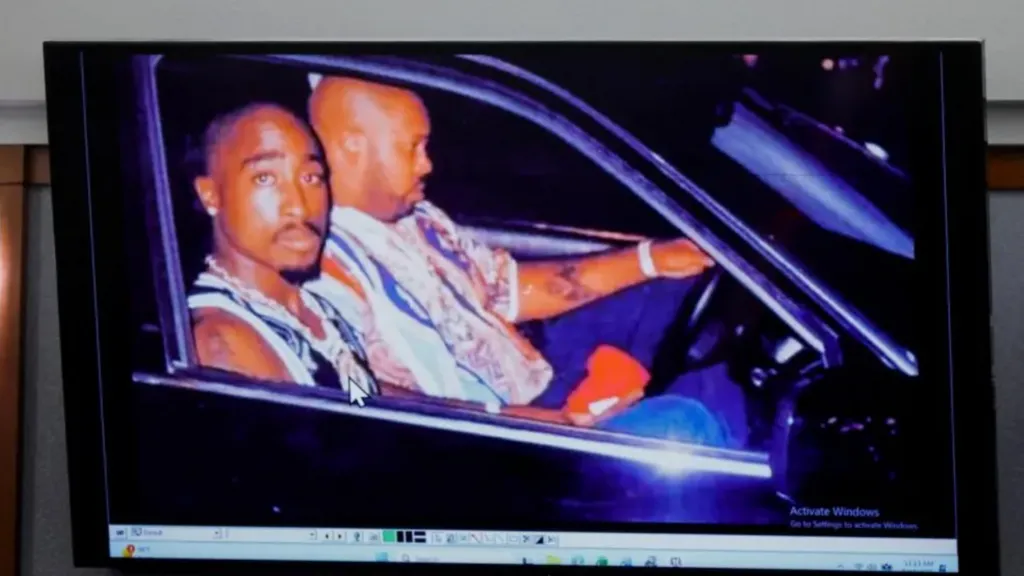
In a recorded 2008 police interview played during the trial, Davis said he was inside the white Cadillac from which the fatal shots were fired. He maintained that he did not pull the trigger.
Prosecutors, however, argued that Davis did not need to have fired the weapon to be held responsible for Shakur’s death. They alleged that, as a former leader of the South Side Compton Crips, Davis ordered the shooting and supplied the gun used in the attack.
According to the prosecution, Davis’ nephew, Orlando Anderson, fired the shots that struck Shakur.
Anderson denied involvement in the rapper’s killing and was himself killed in an unrelated shooting in 2008.
During closing arguments, prosecutor Binu Palal urged jurors to believe Davis’ repeated accounts of his role in the killing.
For years, Palal said, Davis had been telling people that he was responsible for Shakur’s murder through interviews, documentaries, podcasts, his memoir and conversations with police.
“He’s the shot caller,” Palal told the jury, referring to Davis’ alleged leadership role within the South Side Crips.
“When you have the shot caller sitting shotgun when shots are fired, there’s no doubt he’s responsible,” the prosecutor said.
Davis’ defence team took the opposite position, arguing that his public statements were exaggerated stories designed to sell books and enhance his reputation.
His lawyer, Michael Sanft, urged jurors not to take Davis’ comments literally, describing them as fiction, bravado and an attempt to make money.
“There’s no proof,” Sanft told the jury during closing arguments.
The jury, however, rejected the defence argument and returned a guilty verdict within hours of receiving the case on Monday.
The prosecution said the shooting was planned as retaliation after Anderson was involved in a fight with Shakur and members of his entourage in Las Vegas only hours before the attack.
Shakur was shot while travelling in a car in Las Vegas at the height of his career. He was 25 years old.
One of hip-hop’s most influential artists, Shakur has sold more than 75 million records worldwide. His unsolved murder became one of the most closely followed cold cases in American popular culture, generating decades of speculation and conspiracy theories.
The killing also came during a period of fierce rivalry between the East Coast and West Coast rap scenes and continuing gang tensions involving the Bloods and Crips.
As the verdict was announced, members of Shakur’s family held hands, hugged and cried in the courtroom. His sister embraced a prosecutor, while other relatives sat nearby in tears.
Outside the courthouse, fans of the rapper also reacted emotionally, with some crying and cheering.
Davis had previously received protection over statements he made during the 2008 police interview, which was connected to the investigation into the death of fellow rapper Notorious B.I.G., whose real name was Christopher Wallace.
However, prosecutors argued that Davis later forfeited that protection by publicly discussing his role in Shakur’s death in his memoir and multiple media appearances. The court subsequently ruled that his police interview could be used as evidence in the murder trial.
Clark County District Court Judge Carli Kierny has scheduled Davis’ sentencing for October 13.
Before leaving the courtroom, Davis raised his hand to ask about personal belongings, including his phone, before declaring that he wanted to appeal the case.
The judge told him that the appeal process could begin after sentencing.
For Shakur’s family, the verdict marked the first criminal conviction in a murder case that remained unresolved for nearly 30 years.
Source: www.kumasimail.com