



















Ghana has formally applied to join BRICS, opening a new front in the country’s push to diversify its international partnerships and deepen cooperation with emerging economies in the Global South.


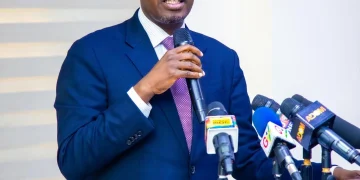
Foreign Affairs Minister Samuel Okudzeto Ablakwa disclosed the decision during talks with India’s External Affairs Minister, Dr Subrahmanyam Jaishankar, who is in Ghana for his first official visit to the country.
Ablakwa said Cabinet had approved Ghana’s decision to seek BRICS membership as part of the government’s broader strategy to expand the country’s economic options and strengthen its engagement with the Global South.
He stressed that Ghana’s proposed membership would complement rather than replace the country’s existing relationships with traditional development and financial partners.
India, a founding member of BRICS, has been identified by Ghana as a key strategic partner in its bid.
Ablakwa said Ghana had formally sought India’s assistance, with Jaishankar indicating that India had always been sympathetic and supportive of Ghana’s aspirations and goals.
The Indian minister, however, noted that Ghana’s application would ultimately be subject to consideration by the BRICS membership.
The BRICS development emerged as one of the major outcomes of Jaishankar’s first official visit to Ghana on Tuesday, October 6, 2026, which comes after Ghana and India elevated their longstanding bilateral relations to a Comprehensive Partnership.
The two countries also agreed to deepen cooperation in agriculture, pharmaceuticals and healthcare, mining, defence, railway development, digital transformation, science and technology, renewable energy and skills development.
Defence pact on the cards
Ghana is also preparing to deepen its defence relationship with India, with Ablakwa announcing plans to conclude a defence cooperation agreement between the two countries.
The agreement is expected to be signed during his reciprocal visit to India early next year, according to the Foreign Affairs Minister.
The proposed pact adds defence and security cooperation to an expanding list of areas in which Ghana and India intend to strengthen bilateral relations.
Jaishankar said the two countries faced similar development challenges and had significant opportunities to pool their experiences and expertise in addressing common priorities.
He described Ghana and India as historic champions of the Global South, saying both countries shared commitments to independence, self-reliance, dignity and strategic autonomy.
India to support Ghana’s development priorities
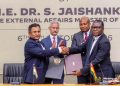
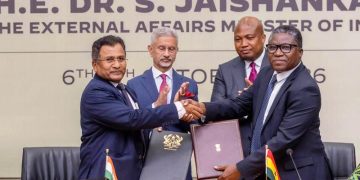
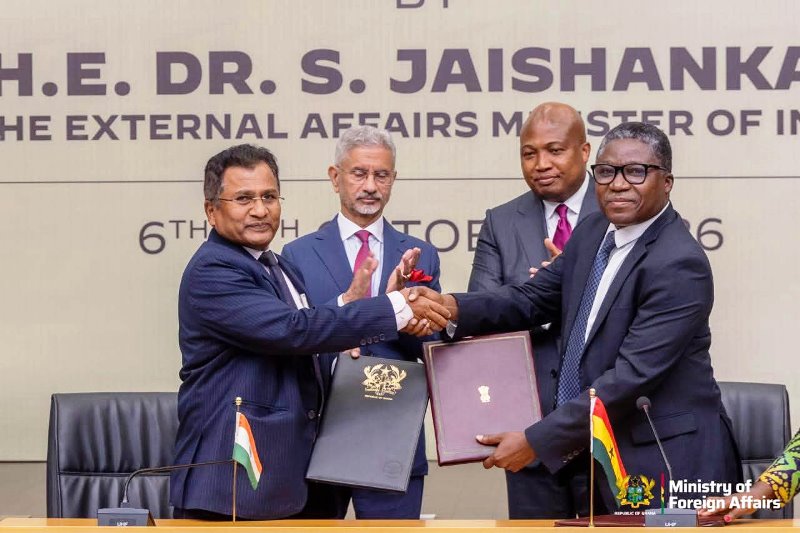
The talks also produced two Memoranda of Understanding covering agricultural research and education and biodiversity.
The agricultural agreement, signed between the Indian Council of Agricultural Research and Ghana’s CSIR-Crops Research Institute, will facilitate the exchange of scientists, technologists, scientific information and materials, as well as collaborative research and training.
Jaishankar highlighted similarities between Ghana’s Accra Reset, Feed Ghana and One Million Coders initiatives and Indian programmes in health, food security, digital transformation and entrepreneurship.
He said those similarities provided opportunities for Ghana and India to exchange knowledge and practical experience.
Railway development was another key area of discussion, with Ghana seeking to build on the operationalisation of the Tema-Mpakadan Railway Project, which Ablakwa described as a foundation for further cooperation.
Ghana wants expanded railway infrastructure to reduce pressure on the country’s roads, facilitate the movement of heavy cargo and help ease traffic congestion.
The two sides also discussed cooperation in pharmaceuticals and healthcare under President John Mahama’s health sovereignty agenda, including Ghana’s plans to establish a pharmaceutical hub to strengthen domestic production capacity.
On digital transformation, Ghana is seeking to leverage India’s extensive experience in technology to support the One Million Coders programme, building on the foundation provided by the Kofi Annan ICT Centre.
From projects to strategic partnership
Welcoming Jaishankar to Ghana, Ablakwa described the visit as historic and said the elevation of Ghana-India relations to a Comprehensive Partnership reflected the depth and practical nature of the relationship.
He cited the Jubilee House, Kofi Annan ICT Centre and Tema-Mpakadan Railway Project among projects that demonstrate how the relationship has translated into tangible development outcomes.
Ablakwa said Ghana-India relations had moved beyond diplomatic engagements into practical cooperation in areas of national development.
For his part, Jaishankar said his visit was intended partly to follow up on the historic visit of Indian Prime Minister Narendra Modi to Ghana and deepen the newly established Comprehensive Partnership.
He also expressed India’s readiness to work with Ghana on issues of common interest at the African Union, ECOWAS, Commonwealth and United Nations.

Jaishankar further welcomed Ghana’s engagement on the reparatory justice agenda and restitution of cultural properties, while calling for stronger cooperation on the Sustainable Development Goals and reform of the United Nations, including the Security Council.
The visit ended with a lecture by Jaishankar to diplomats and officials at the Foreign Service Institute, focusing on contemporary international affairs, Global South cooperation, strategic autonomy and the changing international order.
A tree-planting ceremony at the Ministry of Foreign Affairs also formed part of the visit, symbolising the growing Ghana-India relationship and the two countries’ commitment to environmental sustainability.
With Ghana’s BRICS application now formally on the table, a proposed defence agreement in the pipeline and cooperation expanding across infrastructure, agriculture, health and technology, the latest engagement marks a significant broadening of Ghana’s strategic partnership with India.
Source: www.kumasimail.com