

































The government has announced plans to extend a proposed railway line from Nyinahin in the Ashanti Region to Hamile in the Upper West Region from 2030, alongside the development of a modern inland port at the border town to serve Burkina Faso, Mali, Niger and the wider Sahel.


The announcement, contained in the 2027 Budget presented by Finance Minister Dr Cassiel Ato Forson on Thursday, November 12, places Hamile at the centre of an ambitious transport and trade infrastructure strategy intended to strengthen Ghana’s position as a regional commercial gateway.
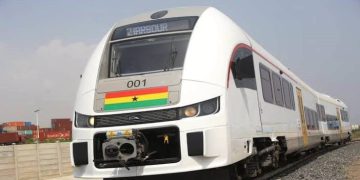
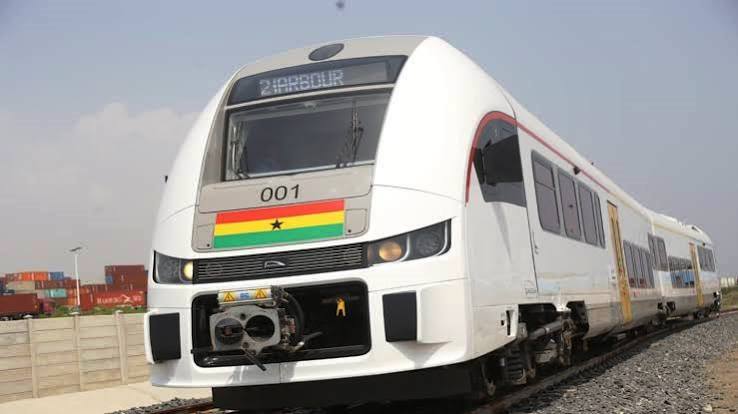
Under the plan, construction of a railway line from Takoradi to Nyinahin will begin in 2027 using the government’s own resources.
The railway will pass through major mineral-producing communities, including Nsuta and Awaso, and transport manganese and bauxite to a proposed critical-minerals processing enclave in the Western Region.
From 2030, the government intends to extend the railway northwards from Nyinahin to Hamile, where a modern inland port will be developed to serve landlocked countries across the Sahel.
The proposed arrangement will connect Ghana’s southern maritime infrastructure to an inland logistics hub in the Upper West Region, potentially creating a more direct and organised trade corridor for goods moving between the Gulf of Guinea and the Sahel.
Dr Forson said Takoradi Port would be developed as Ghana’s principal maritime gateway to the Sahel, while the Hamile inland port would provide access to markets in Burkina Faso, Mali, Niger and neighbouring areas.
The announcement forms part of the government’s US$1.5 billion critical minerals value-addition pillar, which seeks to move Ghana away from exporting raw mineral resources towards domestic processing and industrial production.
The government intends to establish a 24-hour critical-minerals processing enclave in the Western Region, supported by investments in electricity generation and transmission.
It also plans to progressively prohibit the export of unprocessed mineral resources.
At least 70 per cent of artisanal and small-scale gold is expected to be refined locally by December 2027, rising to 100 per cent by December 2028, when exports of raw artisanal and small-scale gold will be prohibited.
For manganese and bauxite, the government is targeting local processing of at least 50 per cent of production by the end of 2028, with complete domestic processing and a prohibition on raw exports by the end of 2030.
The proposed railway is therefore expected to serve a dual purpose: transporting mineral resources to processing facilities while strengthening Ghana’s capacity to move goods across regional markets.
For the Upper West Region, the proposed extension to Hamile could have significant economic implications beyond the immediate transport infrastructure.
The development of an inland port could create opportunities in warehousing, freight handling, customs services, transport, hospitality, logistics and cross-border trade.
It could also strengthen the commercial importance of Hamile and surrounding communities, particularly given their proximity to Burkina Faso.
However, the proposed timeline raises important questions about financing, land acquisition, technical planning and the coordination required to deliver the railway and inland port infrastructure.

The budget provides for the use of government resources to construct the Takoradi-Nyinahin section but does not provide a detailed financing breakdown for the proposed extension to Hamile.
Neither does the announcement provide a detailed construction schedule for the northern section or specify the projected freight capacity of the proposed inland port.
The success of the initiative will depend on whether the government can translate the announcement into a properly financed and integrated railway and logistics network.
For communities in the Upper West Region, particularly Hamile, the proposal represents one of the most significant infrastructure and economic development prospects announced in the 2027 Budget.
If delivered, the project could reposition Hamile from a border trading community into a strategic logistics hub connecting Ghana to some of the most important markets in the Sahel.
Source: www.kumasimail.com