































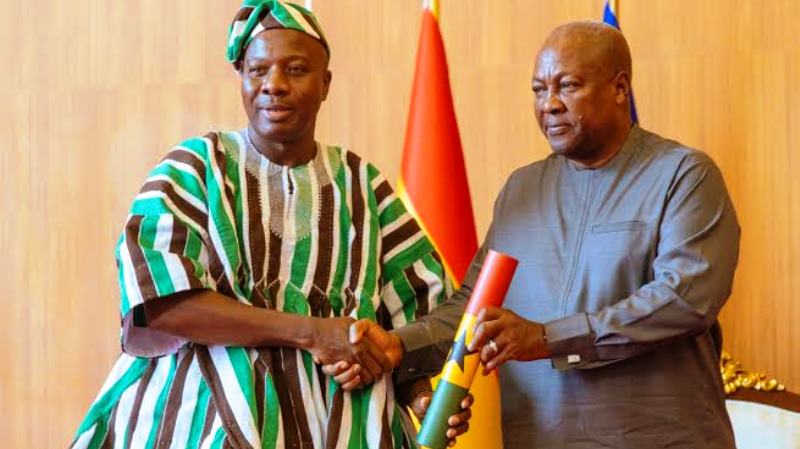
President John Dramani Mahama has directed a nationwide performance evaluation of all 261 Metropolitan, Municipal and District Chief Executives (MMDCEs), with citizens expected to assess their performance as part of a process aimed at determining their effectiveness since assuming office.


The Ministry of Local Government, Chieftaincy and Religious Affairs, headed by Mahama Ayariga, announced the directive in a press release dated November 17, 2026, indicating that the exercise would involve a comprehensive, independent and evidence-based assessment of the MMDCEs.
The evaluation, which begins immediately and is expected to end on December 15, 2026, will assess the performance of the local government appointees, with a final report to be submitted to President Mahama by December 20 for consideration and action.
A major feature of the exercise is the introduction of a citizen scorecard, which will allow residents in each district to rate their respective MMDCEs through a dedicated online platform.
Evaluation teams will also undertake field visits to all 261 districts between December 1 and 15 to verify claims made by the MMDCEs, inspect development projects, roads, markets and financial records, and engage Assembly Members, traditional authorities and ordinary citizens.
The assessment will be based on six Key Performance Indicators (KPIs), with general development, local economic development, service delivery and poverty eradication carrying the highest weight of 35 per cent.
The indicators will also examine revenue mobilisation and financial management, which account for 20 per cent; peace, security and chieftaincy relations (15 per cent); governance and accountability (15 per cent); citizen engagement and inclusiveness (10 per cent); and implementation of presidential directives and national programmes (five per cent).
Under the development and service delivery component, the Ministry will assess sanitation and waste management, road networks and drainage infrastructure, the construction and maintenance of markets, lorry parks, schools and CHPS compounds, job creation and the implementation of social intervention programmes.
The assessment of peace and security will, among other things, consider the relationship between MMDCEs and traditional authorities, Queen Mothers, Imams and pastors, as well as the number of chieftaincy and land disputes escalated or resolved locally.
On governance and accountability, the evaluation will examine the frequency of General Assembly meetings, the functioning of sub-committees and Area Councils, implementation of Assembly-approved development programmes and compliance with procurement and public financial management laws.
The methodology will also require each MMDCE to submit a performance report supported by evidence through a dedicated portal by November 30, 2026.

In addition to the citizen scorecard and field verification, the exercise will include a confidential peer review, under which intelligence agencies, Presiding Members and District Coordinating Directors may be requested to submit assessments of the respective MMDCEs.
An Independent Evaluation Team will conduct the exercise, comprising representatives from the Ministry of Local Government, Chieftaincy and Religious Affairs and Regional Coordinating Councils, which will lead the process.
Other proposed members include representatives of the Office of the Head of Local Government Service, the District Assemblies Common Fund Office, the National Development Planning Commission and two other individuals from the respective region or district nominated by the Minister.
The evaluation will also consider the implementation of presidential directives and national programmes, including housing, sanitation and the 24-Hour Economy programme.
The Ministry says the exercise is intended to provide an evidence-based assessment of the MMDCEs’ performance and citizens’ perceptions of their delivery since assuming office.
Source: www.kumasimail.com