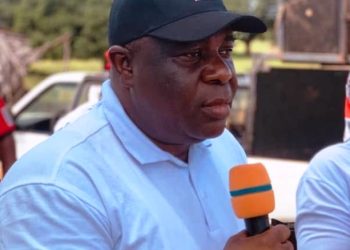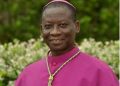

































The Nandom Municipal Assembly has recorded a score of 84 per cent in the 2025 District Assemblies Performance Assessment Tool (DPAT), marking a significant improvement from its 33 per cent score in 2024, according to Municipal Chief Executive (MCE), Hon. Anthony Ziniel.


Mr Ziniel has attributed the achievement to hard work and dedication among staff of the Assembly, describing the improvement as a milestone worthy of celebration.
“Our own Nandom Municipal Assembly has scored the highest mark in the 2025 DPAT assessment in Ghana. We scored 84% and we are the best in Ghana. We are proud of this achievement because in 2024 our score was 33%. We must celebrate our little achievements,” he said in a social media post.
The MCE commended the Assembly’s staff for their contribution to the improved performance.
“We achieved this through hard work and dedication. Kudos to the Municipal Assembly staff for this great achievement,” he said.
The results are contained in the Ministry of Local Government, Chieftaincy and Religious Affairs’ publication of the DPAT X (Financial Year 2025) results and provisional allocations for all 261 Metropolitan, Municipal and District Assemblies (MMDAs) in Ghana.
Significant improvement in performance
The increase from 33 per cent in 2024 to 84 per cent in 2025 represents a 51-percentage-point improvement in Nandom’s assessment score.
The assessment is designed to evaluate assemblies’ compliance with existing legal, regulatory and policy frameworks, as well as their performance in service delivery and other institutional responsibilities.
The DPAT uses three main sets of indicators: Compliance Indicators, Service Delivery Indicators and Performance Indicators.
The results provide a basis for assessing how assemblies perform against established requirements and for determining their eligibility for allocations under the District Assemblies Common Fund Responsiveness Factor Grant (DACF-RFG) Programme.
Nandom qualifies for more than GH¢5.6 million
The published results list Nandom Municipal Assembly at serial number 204, with a performance score of 84.
Based on the allocation table, the Assembly has a provisional total allocation of approximately GH¢5.66 million under the programme.
The breakdown includes a performance grant of GH¢5,467,486 and a capacity-building grant of GH¢192,488.52. The table does not list a vulnerability window grant for Nandom.
The performance grant component is distributed proportionately among assemblies that attain a performance score equal to or above the national average of 48 marks, according to the ministry’s publication.
The capacity-building grant is intended to support institutional capacity, while the broader programme seeks to strengthen local governance and improve the delivery of public services.
The ministry, however, cautions that the allocations are provisional and may change depending on actual inflows into the Consolidated Fund and the exchange rate prevailing at the time of disbursement.
How Nandom compares with other Upper West assemblies
Nandom’s 84-point score places it above the scores recorded by other assemblies in the Upper West Region in the published table.
Lawra Municipal Assembly scored 53, while Jirapa Municipal Assembly recorded 49. Nadowli-Kaleo District Assembly and Sissala East Municipal Assembly each scored 65, while Daffiama-Bussie-Issa District Assembly recorded 58.
Lambussie District Assembly scored 40, Wa Municipal Assembly recorded 35, Sissala West District Assembly scored 44, Wa East District Assembly scored 41, and Wa West District Assembly recorded 37.
The figures show considerable variation in the assessment scores across the region, with Nandom’s result representing a marked improvement over its previous performance.

The results also show that allocations are not determined by the score alone. Assemblies’ compliance status and the applicable grant rules influence the components of funding they qualify to receive.
A milestone for the Assembly
For Mr Ziniel, the improvement represents an achievement that deserves recognition, particularly given the Assembly’s previous score.
His commendation of staff highlights the role of institutional commitment in improving performance, although the published results do not identify the specific administrative changes or interventions responsible for Nandom’s increase.
The 2025 assessment outcome could also provide a reference point for the Assembly as it seeks to sustain its performance and strengthen compliance, service delivery and institutional capacity.
While the improved score is a notable development for Nandom, maintaining the gains will depend on the Assembly’s ability to sustain the practices that contributed to the result and translate institutional performance into better outcomes for residents.
The provisional allocation of more than GH¢5.6 million further places attention on how the Assembly will utilise available resources to support local development and improve public services.
Source: www.kumasimail.com