
































France has expressed deep disappointment over the outcome of the COP31 climate negotiations, saying the two-week talks failed to produce an agreement commensurate with the urgency of the climate crisis or make sufficient progress on implementing commitments under the Paris Agreement.


In a statement issued on Sunday, the French government said it had worked alongside the European Union and other countries to secure a compromise, putting forward proposals intended to address the concerns of different parties. However, those proposals were rejected, and negotiators failed to reach consensus on a sufficiently ambitious final text.
France said the outcome was particularly concerning because the negotiations did not explicitly reaffirm the commitment to move away from fossil fuels, which it described as essential to reducing greenhouse gas emissions.
The talks also failed, according to the statement, to adequately reflect scientific findings on the overshoot of the 1.5°C global warming threshold. France further criticised what it described as disproportionate emphasis on carbon capture technologies, whose large-scale deployment remains uncertain, at the expense of cutting emissions at their source.
“The search for consensus must not lead us to revisit commitments already made each year, or reduce climate ambition to the lowest common denominator,” the statement said.
The French government pointed to the melting glaciers of the Himalayas, particularly in Nepal, and the heatwaves that affected France during the summer as evidence that climate change is already having serious consequences.
It warned that exceeding the 1.5°C threshold poses an immediate threat to vulnerable countries, especially small island states, putting their territories, populations and, in some cases, their very existence at risk.
France said every additional fraction of a degree of warming would worsen the impacts of climate change while making adaptation more difficult and expensive.
The government called for simultaneous action to reduce greenhouse gas emissions and strengthen societies’ ability to adapt to the effects of climate change. It argued that adaptation without meaningful emissions reductions would be financially unsustainable and could leave some areas facing irreversible damage and becoming uninhabitable.
Despite its criticism of the overall outcome, France acknowledged progress in discussions in Antalya on implementing climate finance commitments. These included the collective commitment made in Belém to triple adaptation finance by 2035 and efforts to make funding more accessible to countries most in need.
France said it remained committed to its climate finance pledges and would reaffirm them at COP32, scheduled to take place in Addis Ababa.
The country also reiterated its support for multilateral cooperation and the Paris Agreement, but argued that future climate conferences must focus on implementing existing commitments rather than repeatedly reopening agreements reached at previous summits.
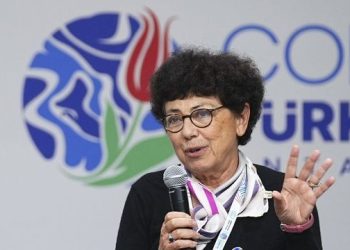
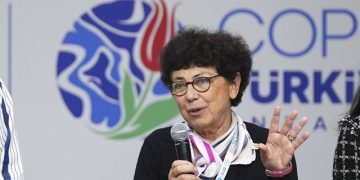
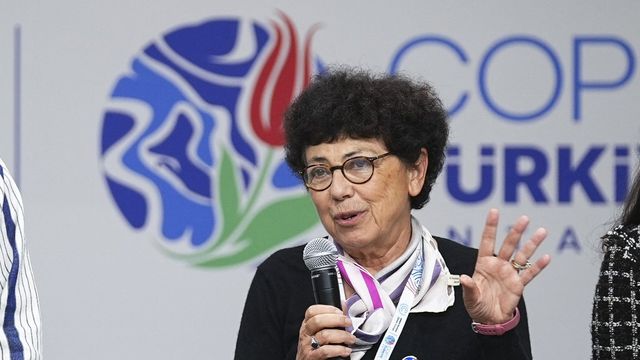
Monique Barbut, France’s Minister for Ecological Transition, Biodiversity and International Negotiations on Climate and Nature, said the worsening effects of climate change placed a shared responsibility on countries to respond with greater urgency.
“I deeply regret that this COP did not make it possible to reach an agreement commensurate with these challenges. We will have to do better in Addis Ababa,” Barbut said.
She urged countries to continue and accelerate the implementation of commitments already made, saying this was essential to keeping the goals of the Paris Agreement within reach.
France said it would work with international partners to rebuild momentum ahead of COP32, with a renewed focus on the scientific evidence and progress on both emissions reduction and climate adaptation.
Source: www.kumasimail.com