








































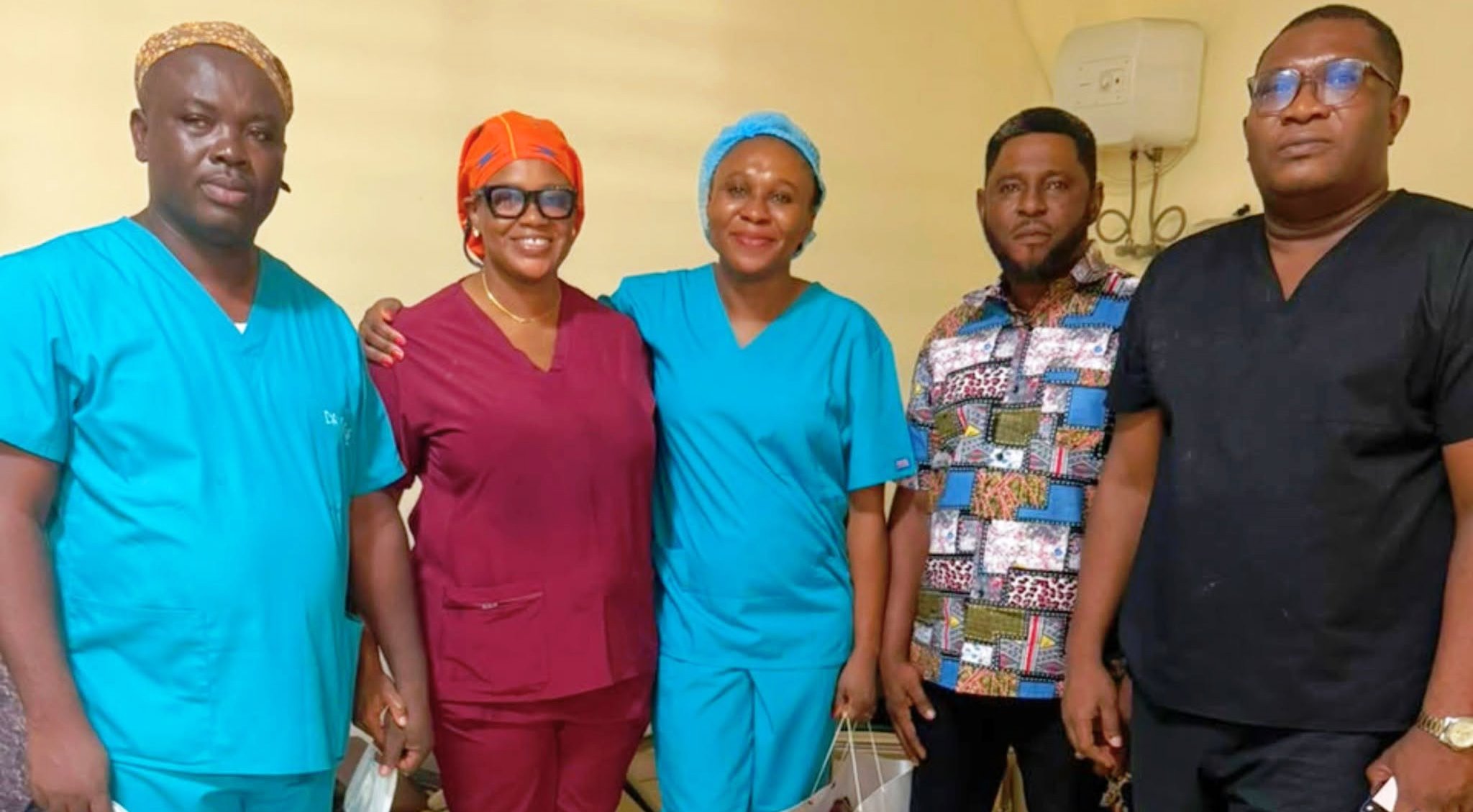
The Upper West Regional Hospital (UWRH) in Wa has performed its first minimally invasive gynaecological surgery, marking a significant breakthrough in specialist healthcare delivery and potentially reducing the need for women in the region to travel elsewhere for advanced reproductive health services.


The historic procedure, performed on October 14, 2026, involved a 36-year-old woman with a history of infertility and previous abdominal surgeries.
The patient successfully underwent a combination of hysteroscopic adhesiolysis, diagnostic laparoscopy and chromopertubation, procedures aimed at investigating and addressing possible causes of infertility involving the uterus and pelvic organs.
Hospital authorities said the surgery was successful, with the patient making a good post-operative recovery.
The milestone marks the introduction of minimally invasive gynaecological surgical services at the regional hospital, expanding access to specialised reproductive healthcare for women in the Upper West Region and neighbouring communities.
Previously, women requiring certain advanced gynaecological procedures had to travel outside the region to access such services, often incurring additional financial and other costs.
The Head of the Department of Obstetrics and Gynaecology, Dr Gildas Mbamba Ngman-Wara, described the achievement as a defining moment in the hospital’s efforts to improve access to modern women’s healthcare.
He said the development was intended to change the situation where women had to travel long distances to seek specialised gynaecological treatment.
“Our vision is to change that narrative. We want women in the Upper West Region and neighbouring communities to have access to quality, modern and specialised gynaecological services within their own region, without the burden of travelling long distances to seek care elsewhere,” he stated.
Dr Ngman-Wara said the successful procedure demonstrated what could be achieved through the combination of specialist expertise, teamwork, institutional commitment and investment in healthcare delivery.
He particularly highlighted its significance for women experiencing infertility and other gynaecological conditions, noting that minimally invasive surgical approaches can offer benefits such as smaller incisions, reduced post-operative pain, shorter hospital stays and faster recovery.

He said the department was committed to expanding its capacity and introducing more minimally invasive procedures to strengthen the hospital’s position in specialised reproductive and gynaecological healthcare.
The introduction of the service is also expected to create opportunities for improved management of conditions such as intrauterine adhesions, endometriosis, ovarian conditions and other gynaecological disorders requiring advanced surgical intervention.
The operation was led by Dr Chidinma Ohachenu, assisted by Dr Ludovic Some and Dr Amina Sanni-Toure.
The anaesthesia team was led by Mr Issaka Gbene, while Mr Salim and Zainab served as scrub nurses.
The hospital says the achievement forms part of its broader commitment to decentralising specialist healthcare, developing local expertise and reducing geographical barriers to accessing quality medical services.
For women in the Upper West Region, the milestone represents an important step towards accessing advanced gynaecological surgical care closer to home.
Source: www.kumasimail.com