



































StarOil has pledged to reserve half of its petroleum product requirements for existing and prospective bulk fuel suppliers, despite securing regulatory approval to enter Ghana’s bulk importation and distribution market.


The decision is intended to reassure long-standing business partners that the company’s entry into the Bulk Import, Distribution and Export Company (BIDEC) segment will not be used to shut them out of its supply chain.
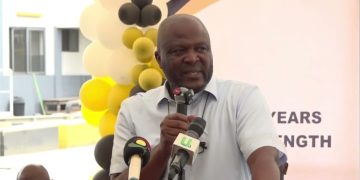
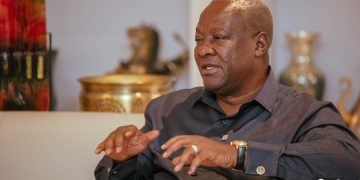
StarOil Group Chief Executive Officer, Philip Kwame Tieku, said the company had deliberately limited the intended contribution of its new subsidiary, SOL Energy Limited, to approximately 50 per cent of its fuel requirements.
In a statement issued on Thursday, he said the remaining 50 per cent will be procured from established and prospective suppliers through the company’s existing competitive tender processes.
Mr Tieku said StarOil could have pursued complete backward integration but had opted for a model that combines greater supply security with continued commercial relationships across the downstream petroleum industry.
“Our intention is therefore not to displace our partners but to create a more resilient supply structure that combines the security of our own import arrangements with the competitive advantages of continuing to source products from established industry participants,” he said.
SOL Energy, a wholly owned subsidiary of StarOil, has received authorisation from the National Petroleum Authority (NPA) to operate as a BIDEC, following a lengthy regulatory approval process.
The approval allows StarOil to participate directly in bulk petroleum importation and distribution after years of relying on external suppliers to meet the requirements of its retail network.
Existing suppliers remain in the picture
Mr Tieku specifically acknowledged the contributions of Juwel Energy, MOSL, Cirrus, Fuel Trade and PWSL, among other suppliers, to StarOil’s growth.
He said the company did not take those relationships for granted, noting that their support had helped StarOil become Ghana’s leading oil marketing company.
“Companies such as Juwel Energy, MOSL, Cirrus, Fuel Trade and PWSL, among others, have been important partners in our journey to becoming Ghana’s number one OMC,” he said.
The decision to retain third-party procurement comes at a time when vertical integration has become increasingly common in Ghana’s downstream petroleum industry.
Mr Tieku said almost all major bulk distributors either owned or were affiliated with oil marketing companies, creating a market in which suppliers also compete with StarOil at the retail level.
He noted that StarOil had continued buying from these suppliers even as some expanded into retail operations, choosing to maintain competitive procurement rather than establish its own bulk distribution business.
However, petroleum product shortages in the first quarter of 2025 exposed the risks of depending entirely on external suppliers during periods of tight inventories.
The experience prompted the company to establish SOL Energy to strengthen its control over fuel availability while preserving its existing partnerships.
StarOil seeks reliable allocations
Beyond securing the necessary regulatory approval, StarOil is seeking cooperation from industry partners to ensure SOL Energy obtains reliable laycan allocations for petroleum product cargoes.
Mr Tieku said the company considered its request reasonable in view of its market position and substantial fuel requirements.

He stressed, however, that StarOil was not demanding preferential treatment from suppliers.
“We remain committed to fair competition, transparent procurement and the continued success of our BIDEC partners,” he said.
The company expects the dual-sourcing arrangement to reduce its exposure to supply disruptions while retaining opportunities for existing and new suppliers to compete for business.
For StarOil, the strategy represents an attempt to strengthen its supply chain without abandoning the commercial relationships that supported its expansion.
Mr Tieku said the company intended to use the new arrangement to build a more resilient business while maintaining cooperation across the petroleum industry. Source: www.kumasimail.com