








































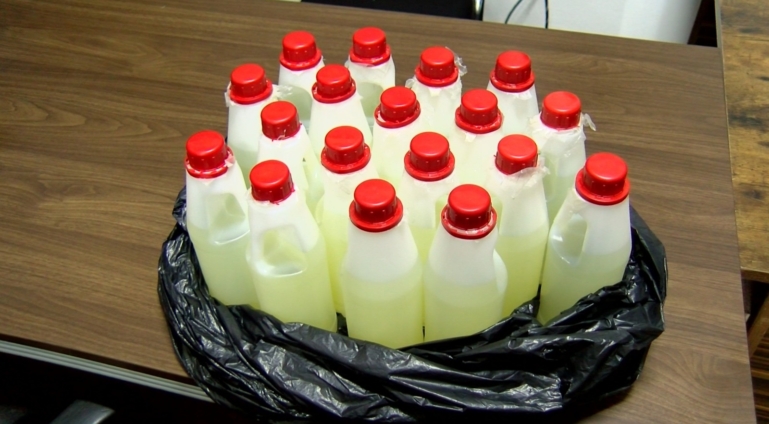
The Food and Drugs Authority (FDA) has cautioned the public against consuming a substance known as “Sukudai,” being marketed as a heart-cleansing remedy in the Kumasi Metropolis, after laboratory tests confirmed it contains the toxic chemical chloroform.


The warning follows a viral video circulating on social media that claims the product can corrode Styrofoam plates, raising concerns about its safety. According to the FDA, the product is not registered with the Authority and is therefore not approved for sale or consumption in Ghana.
Samples of Sukudai collected from the Kumasi area were sent for laboratory analysis after the Ashanti regional Branch of the National Security led by Captain (retired) John Kwame Jabari raised concerns about the substance.
The tests confirmed the presence of chloroform, a chemical known to pose serious health risks.
Chloroform is a colorless liquid with a sweet taste and a non-irritating odor. It was historically used as an anesthetic in surgical procedures and in pharmaceutical preparations. However, the FDA explained that the chemical is no longer used in medicine because of its toxic nature and the severe health effects associated with exposure.
The Authority warned that ingesting or inhaling chloroform can lead to serious health complications, including drowsiness, breathing difficulties, liver and kidney damage, loss of consciousness in severe cases, cancer, and even death.
The FDA said it is working closely with stakeholders, including the Ghana Police Service and national security agencies, to educate the public about the dangers of the product and clamp down on those distributing or selling it.
“The public is strongly advised not to patronize or consume Sukudai,” the FDA said in a public alert.
Authorities also urged the public to report individuals selling the product through the complaint section on the FDA’s website or via its official hotlines and social media platforms.
The FDA added that anyone found distributing or selling Sukudai or other unregistered products could face arrest and prosecution under Ghana’s public health regulations.
Source: www.kumasimail.com