





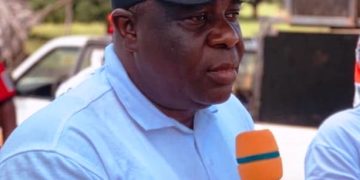



















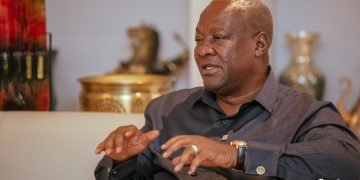

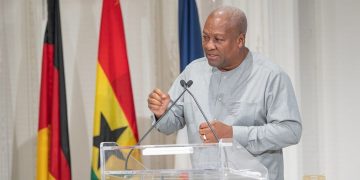



IMANI Africa Founding President Franklin Cudjoe has disputed claims that the Ministry of Finance is responsible for delays in the implementation of the Greater Accra Resilient and Integrated Development (GARID) Project, arguing instead that the current government has redirected the project back to its original flood mitigation mandate.


In a Facebook post on Thursday, Cudjoe said it was “not accurate” to suggest that the Government of Ghana or the Ministry of Finance had delayed the World Bank-supported project.
His comments come days after former Minister for Works and Housing and Member of Parliament for Kwadaso, Francis Asenso-Boakye, cited what he described as a World Bank assessment to argue that fiscal measures introduced in 2025 had slowed implementation of the GARID Project through delayed payments to contractors.
Providing what he described as the “true state of affairs” surrounding the project, Cudjoe said the previous administration drew down US$103.8 million from the project’s US$350 million World Bank facility between 2019 and 2024.
According to him, approximately US$22.1 million, representing 21 percent of the amount drawn, was spent on training, while US$7.9 million, or seven percent, went into consultancy services. He further alleged that US$60.8 million, representing about 59 percent, was redirected to COVID-19-related expenditure, with another US$1.68 million used mainly for the purchase of vehicles.
Cudjoe claimed that only US$11.4 million—about 11 percent of the funds drawn—was spent directly on flood prevention and mitigation works, which he described as the project’s primary objective.
He further alleged that a total of US$65 million had been transferred from the GARID project account for COVID-19 expenditure, of which US$60.8 million had been retired, while approximately US$4.2 million remained unretired.
According to Cudjoe, the expenditures included payments for fumigation, weighing scales, more than US$353,000 to the then Ministry of Information for the development of a COVID-19 work plan, over US$1 million for quarantine feeding, nearly US$2.8 million to Metropolitan, Municipal and District Assemblies (MMDAs) for what he described as unknown purposes, and about US$2.7 million for broadly described COVID-19 support activities.
Cudjoe said that after assuming office, the Mahama administration engaged the World Bank and secured agreement to repurpose the remaining funds to focus exclusively on flood prevention infrastructure.
He argued that the decision should not be interpreted as a delay but rather as an effort to ensure that the remaining funds are used for the project’s intended purpose.

According to him, about US$3 million was spent on flood mitigation works under the project in 2025, while approximately US$10.52 million has so far been released for similar works in 2026, bringing total expenditure for the two years to about US$13.52 million.
He also stated that the Ministry of Finance has approved the cedi equivalent of more than US$76 million under the GARID Project for flood mitigation infrastructure in 2026 and 2027.
Cudjoe further claimed that, unlike the previous administration, no new project funds in 2025 and 2026 have been allocated to training, consultancy services or vehicle purchases.
“The Ministry of Finance and the Government have not delayed the GARID Project. What they have done is refocus it—ensuring that every dollar now goes toward what it was originally borrowed for: protecting lives, property, and communities from the devastation of flooding,” he wrote.
The claims made by Cudjoe have not been independently verified by KumasiMail. Likewise, the expenditure figures and allegations regarding the use of GARID funds are based on information contained in his Facebook post.
The World Bank, the Ministry of Finance and the GARID Project Coordination Unit had not publicly responded to Cudjoe’s claims at the time this report was filed.
Source: www.kumasimail.com