






































Asantehene Otumfuo Osei Tutu II has issued a strong warning to individuals, traditional authorities and legal practitioners involved in disputes over lands belonging to the Kwame Nkrumah University of Science and Technology (KNUST), declaring that attempts to claim or sell portions of the university’s property will not be tolerated.


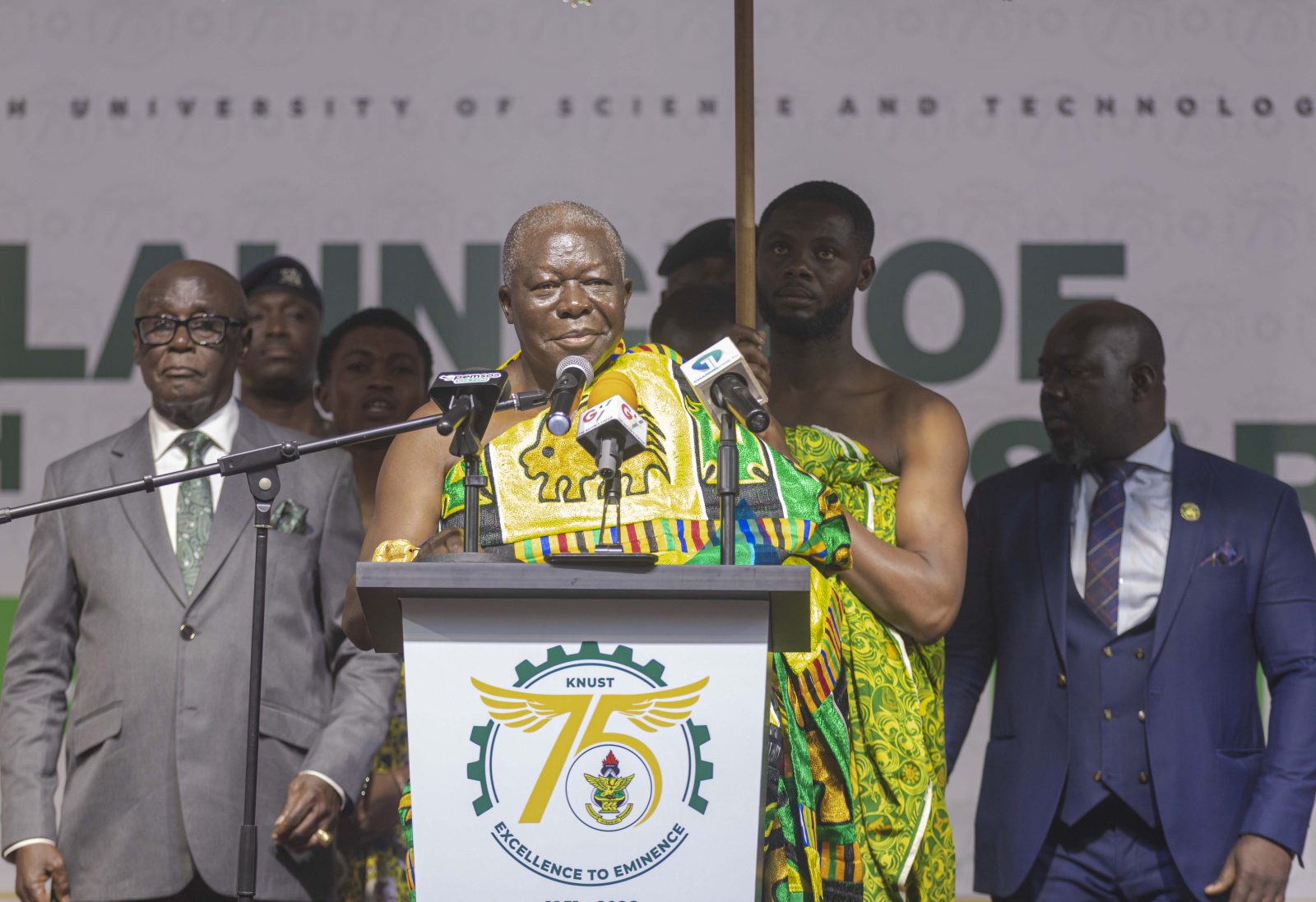
Speaking at the launch of KNUST’s 75th Anniversary celebrations, the university’s Chancellor stressed that the institution’s lands are vested in the Golden Stool and are reserved exclusively for educational purposes.
According to him, chiefs do not own the lands but serve only as custodians on behalf of the Golden Stool.
“The land belongs to the Golden Stool. The chiefs are caretakers; no family owns the land. The lands are all vested in the stools,” Otumfuo stated.
The Asantehene expressed concern over what he described as growing attempts by some people to use the courts to secure ownership of large portions of university land before selling them for private benefit.
He warned that anyone who collaborates with such efforts, whether from within or outside the university community, does so at their own risk.
“Anyone within the university or thereabouts who condones with people to take matters of land to court just because they can get a judgment over more than 1,000 acres of university land and go and sell it, I say no,” he cautioned.
Otumfuo also alleged that some individuals have been working together to obtain favourable court judgments over sections of KNUST land, describing the practice as a worrying trend.
He reserved particular criticism for lawyers who accept such cases without thoroughly examining the legal status of lands designated for public institutions.
“I wonder why some lawyers would want to do that when they are trained professionals and someone comes to them claiming ownership of university land, and they support that person to go to court,” he said.
KNUST, established in 1952, has over the years faced persistent challenges of land encroachment and litigation, reflecting a broader problem affecting several educational institutions across Ghana. Otumfuo’s latest remarks signal a renewed call to protect public educational lands from private acquisition and unlawful development.
Source: www.kumasimail.com