








































Vice President Prof. Jane Naana Opoku-Agyemang has called for stronger implementation of science, technology, and environmental policies to accelerate Ghana’s development, stressing that effective governance depends on translating policy into tangible benefits for citizens.


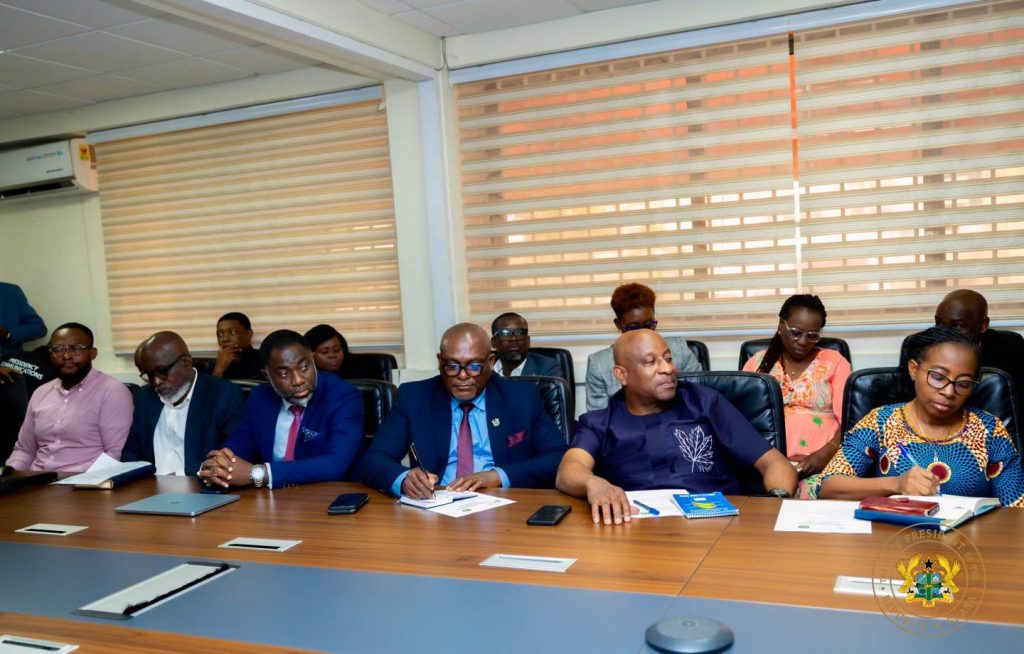
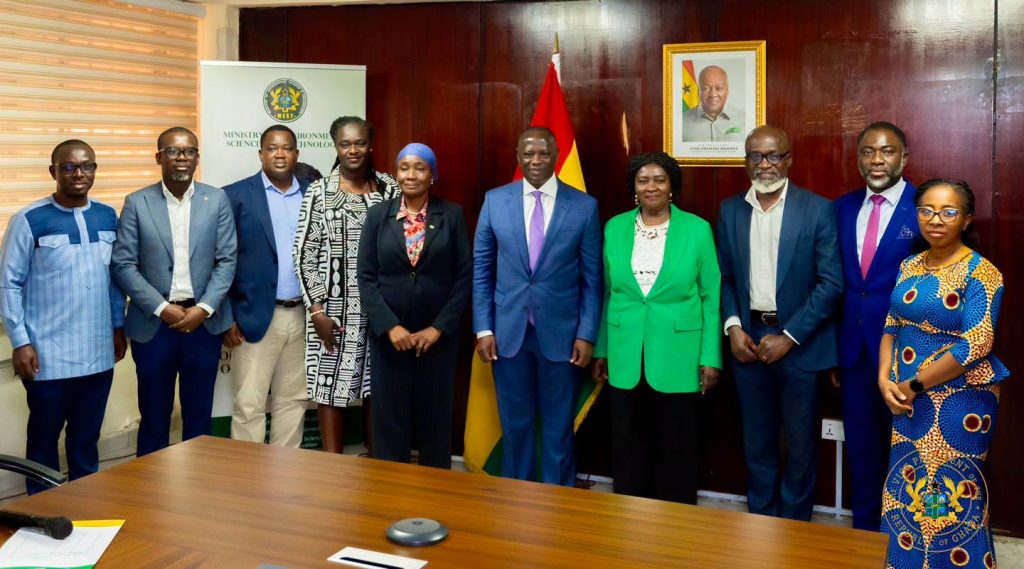
The Vice President made the remarks during a working visit to the Ministry of Environment, Science, Technology and Innovation (MESTI), where she was received by the Acting Minister, Emmanuel Armah-Kofi Buah, the Chief Director, management, and heads of the Ministry’s agencies.
During the meeting, ministry officials briefed the Vice President on MESTI’s oversight role for key institutions, including the Council for Scientific and Industrial Research (CSIR), the Ghana Atomic Energy Commission (GAEC), the Environmental Protection Authority (EPA), the National Biosafety Authority, and the Nuclear Regulatory Authority. According to the Ministry, these agencies play a central role in advancing scientific research, environmental protection, technological innovation, and sustainable resource management.
Officials also outlined progress in implementing the government’s environmental and industrial transformation agenda. They cited initiatives such as the Circular Economy Policy on plastics, the National Foundry and Machine Tools Project, programmes promoting green jobs and clean cooking technologies, advances in electronic waste management, climate-smart agricultural research, strengthened environmental regulation, efforts toward establishing a Ghana Space Agency, and Ghana’s participation in international carbon market initiatives under the Paris Agreement.
The Ministry further highlighted ongoing efforts to bridge the gap between scientific research and commercial application through the National Science, Technology and Innovation Forum.
However, officials identified inadequate funding, shortages of scientific personnel, ageing laboratory infrastructure, and the need to strengthen environmental legislation as major challenges confronting the sector.

Responding to the briefing, Prof. Opoku-Agyemang commended the Acting Minister, management, and staff of the Ministry for their commitment and dedication to advancing Ghana’s scientific and environmental agenda.
She emphasized that effective governance requires not only sound policymaking but also consistent implementation, monitoring, and evaluation to ensure public policies deliver measurable improvements in the lives of Ghanaians.
The Vice President also underscored the importance of public education, describing science as a universal discipline that influences every aspect of national development.
Referring to recent flooding in parts of the country, she said enforcing environmental laws must be complemented by sustained public awareness campaigns to encourage responsible behaviour and compliance.

Addressing climate change, Prof. Opoku-Agyemang noted that although Africa contributes only a small share of global greenhouse gas emissions, the continent continues to suffer disproportionately from the effects of climate change.
She said this reinforces the need for Ghana to remain actively engaged in international climate negotiations while positioning itself to access global climate financing opportunities.
She further encouraged closer collaboration between MESTI and other government institutions to strengthen local manufacturing, promote research commercialization, create employment opportunities, and support the government’s broader industrialization agenda.
The Vice President also stressed the importance of protecting public lands from encroachment and strengthening environmental governance to safeguard national assets.
She reaffirmed the government’s commitment to supporting the Ministry’s efforts to harness science, technology, and innovation as key drivers of sustainable national development.
Source: www.kumasimail.com