


































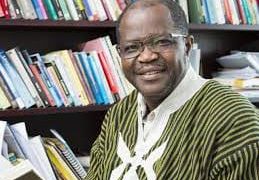






When former Minister of Education, Dr. Yaw Osei Adutwum, described some university programmes as “useless,” his comments immediately ignited a national conversation.


He argued that certain programmes produce graduates for jobs that do not exist and cited examples such as Development Studies and BA Education (Non-Teaching), insisting that universities should align their programmes with the country’s labour market needs.
His remarks have divided public opinion. Some have applauded his courage in saying what many employers have whispered for years. Others have criticised the statement as unfair to students, lecturers, and entire academic disciplines.
The question, therefore, is not whether Dr. Adutwum was provocative. The real question is whether he was right.
The case for Dr. Adutwum’s position
There is no denying that graduate unemployment in Ghana has reached worrying levels. Every year, thousands of young people graduate from universities only to spend years searching unsuccessfully for employment.
Many employers continue to complain that graduates possess certificates but lack practical skills, digital competencies, communication abilities, and workplace experience.
From this perspective, Dr. Adutwum raises a critical issue.
Universities should not merely award degrees; they should prepare graduates to solve real societal problems. If a programme consistently produces graduates who struggle to find employment or contribute meaningfully to national development, it deserves serious review.
Countries that have transformed their economies such as Singapore, South Korea, and Finland regularly revise university curricula to match changing industry demands. Their universities collaborate closely with employers, ensuring graduates possess relevant competencies.
Ghana cannot ignore this reality.
Artificial Intelligence, cybersecurity, renewable energy, robotics, data science, digital agriculture, biotechnology, and advanced manufacturing are rapidly reshaping the global economy. Universities must continuously adapt if they are to remain relevant.
In this regard, Dr. Adutwum’s challenge should be viewed as a call for curriculum reform rather than an attack on higher education itself.
The case against the statement
However, describing an entire university programme as “useless” is both simplistic and potentially damaging.
Education serves purposes far beyond immediate employment.
Universities exist to create knowledge, preserve culture, develop critical thinkers, and prepare responsible citizens. If higher education were judged solely by today’s labour market, many respected disciplines including Philosophy, History, Sociology, Literature and even Mathematics in certain periods might wrongly be considered unnecessary.
Yet history proves otherwise.
Many of today’s innovations emerged because people studied subjects whose value was not immediately obvious.
Development Studies, for example, has contributed significantly to policy formulation, community development, governance, poverty reduction, and NGO management across Africa. Likewise, graduates of Education (Non-Teaching) work in educational administration, curriculum development, educational technology, research, publishing, training, and policy analysis.
The problem may therefore not be the programmes themselves but how they are designed and delivered.
A degree that combines theory with practical experience, entrepreneurship, digital literacy, and problem-solving is far more valuable than one based solely on classroom lectures.
The real problem is curriculum relevance.
Ghana is asking the wrong question.
Instead of asking whether certain courses are useless, we should ask: Are university curricula responding to today’s economy?Are students acquiring practical, transferable skills?
Are employers involved in curriculum design? Are universities conducting regular labour market assessments before introducing new programmes? Are graduates equipped to create jobs rather than merely seeking jobs? These questions strike at the heart of the issue.
Indeed, no discipline is inherently useless. What becomes obsolete is an outdated curriculum that fails to evolve with society. Universities must rethink employability.
The world no longer rewards degrees alone.
Employers increasingly seek graduates who can think critically, solve problems, analyze data, communicate effectively, collaborate across disciplines, and adapt to technological change.
Whether one studies engineering, education, economics or development studies, these competencies are becoming essential. This means every programme should integrate:
Digital literacy and Artificial Intelligence applications,
Entrepreneurship and innovation,
Industry internships,
Community-based projects Research and problem-solving!
Soft skills and leadership
Such reforms would make graduates more employable without eliminating valuable academic disciplines.
A shared responsibility
Universities also cannot shoulder the blame alone. Government must provide reliable labour market data to guide programme development. Industry must collaborate more closely with universities by offering internships, apprenticeships, and curriculum input.
Students themselves must recognise that learning does not end with graduation. Continuous professional development has become the norm in today’s knowledge economy.
Conclusion
I believe Dr. Adutwum deserves credit for drawing national attention to an issue that has been ignored for too long. His concern about graduate employability is legitimate and deserves serious discussion.
However, labelling entire academic programmes as “useless” oversimplifies a far more complex challenge. The value of a university course is determined not merely by its title but by the quality of its curriculum, its relevance to society, its integration of practical skills and its ability to prepare graduates for an evolving world.
The debate should therefore move beyond naming and shaming programmes.
Instead, Ghana must embark on a comprehensive review of higher education- one that aligns academic excellence with national development, preserves intellectual diversity, and equips graduates with the skills needed for the future.
In the end, the question is not whether some courses are useless.
The real question is whether our universities are producing graduates who are ready to lead, innovate and transform Ghana in the twenty-first century. That is the conversation worth having.
Bright Appiah, PhD candidate, Ghana Communication Technology University Accra, Ghana