





















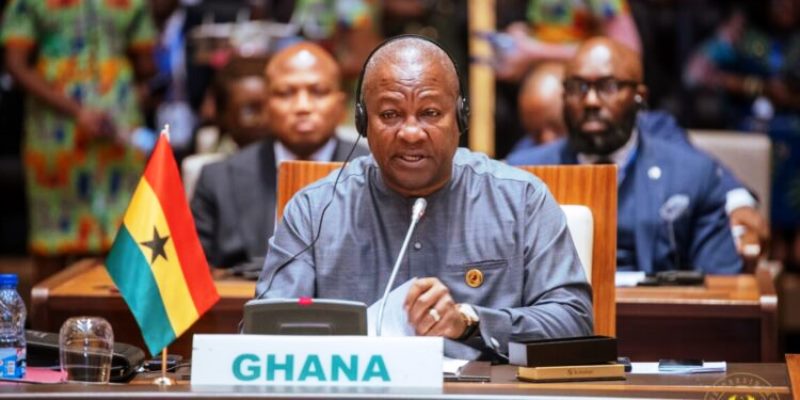
Ghana has intensified preparations for President John Dramani Mahama’s assumption of the rotating Chairmanship of the African Union (AU) in 2027, with a High-Level Committee of Experts established to shape his continental agenda having completed its work.


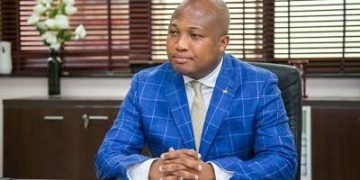
The committee, chaired by Foreign Affairs Minister Samuel Okudzeto Ablakwa, has presented five reports to President Mahama, containing a proposed strategy document, priority pillars and a work programme to guide Ghana’s leadership of the continental body.
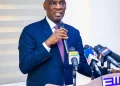
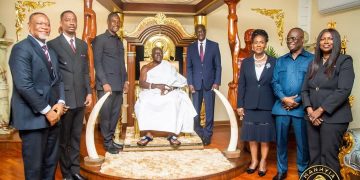
Mr Ablakwa, who handed over the reports to the President at the Presidency on Friday, said the committee’s work was intended to lay a strong foundation for what he described as a potentially “transformative and impactful” tenure for President Mahama.
He said the committee had been honoured to contribute to preparations for Ghana’s leadership of the AU and expressed confidence in the President’s vision for Africa.
“The High-Level Committee of Experts established by President John Mahama to put together a Strategy Document, Priority Pillars and a Work Programme for President Mahama’s 2027 African Union Chairmanship has concluded its mandate and presented five reports to President Mahama,” Mr Ablakwa stated.
The committee, he added, conveyed its best wishes to the President ahead of his assumption of the AU Chairmanship in January 2027.
What the AU Chairmanship means
The AU Chairmanship is a one-year political leadership position held by a sitting African head of state or government. The Chairperson is selected by the Assembly of Heads of State and Government following consultations among member states.
The position is distinct from that of the Chairperson of the African Union Commission, who serves as the AU Commission’s chief executive and is elected for a four-year term.
The AU Assembly is the Union’s supreme policy and decision-making organ, bringing together the heads of state and government of all member states. It determines the organisation’s policies, sets priorities, adopts its annual programme and monitors implementation of AU decisions.
As Assembly Chairperson, President Mahama will therefore occupy a pivotal position in providing political direction to the Union during Ghana’s one-year tenure.
The role gives the holder an opportunity to influence the continental conversation, build consensus among member states and help drive implementation of decisions on issues affecting Africa’s peace, security, development and global standing.
The AU’s agenda encompasses some of the continent’s most pressing challenges, including peace and security, economic integration, infrastructure, trade, industrialisation, democratic governance, climate change, health and Africa’s role in global affairs.
The Chairmanship also provides an important platform for advancing the implementation of Agenda 2063, the AU’s long-term development framework aimed at building an integrated, prosperous and peaceful Africa that plays a stronger role in the global arena.
A continental rather than national assignment
For Ghana, President Mahama’s AU Chairmanship will extend beyond national diplomatic interests.
The office requires the chair to act as a unifying figure capable of building consensus among countries with different political systems, economic interests and security concerns.
Africa’s 55-member continental organisation frequently has to navigate complex and sometimes competing national positions on issues ranging from armed conflicts and unconstitutional changes of government to trade, debt, migration and international representation.

The Chairmanship consequently carries considerable political and diplomatic significance, although it does not give the chair unilateral authority over member states.
Decisions of the AU are ultimately made through its established organs, particularly the Assembly, which determines the Union’s policies and priorities.
The effectiveness of a Chairperson therefore depends substantially on the ability to mobilise consensus, maintain diplomatic engagement and translate agreed priorities into collective action.
An opportunity for Ghana
For Ghana, the 2027 Chairmanship presents an opportunity to place some of its longstanding foreign-policy priorities more prominently on the continental agenda.
The country has historically played a prominent role in Africa’s political and diplomatic affairs, dating back to the leadership of Ghana’s first President, Dr Kwame Nkrumah, in the struggle for African independence and continental unity.
Ghana previously chaired the Organisation of African Unity/African Union in 2007. The AU records that Ghana was unanimously appointed to the Chairmanship that year in recognition of the country’s contribution to African unity and independence and as part of celebrations marking Ghana’s 50th independence anniversary.
President Mahama’s return to the AU Chairmanship would therefore give Ghana another opportunity, nearly two decades later, to project its diplomatic influence and demonstrate its capacity to provide continental leadership.
Mahama already has experience with specific AU responsibilities. The AU lists him as an AU Champion on Gender and Development Issues in Africa and as AU Champion on Reparations.
These roles could provide a foundation for some of the issues Ghana may seek to promote during its 2027 leadership.
Why the preparation matters
The decision to establish a High-Level Committee well ahead of the 2027 Chairmanship signals an attempt to move beyond ceremonial leadership and develop a structured programme with clearly defined priorities.
The five reports presented to President Mahama are expected to provide the strategic framework for identifying the issues Ghana intends to champion, the mechanisms for implementing them and the partnerships required to secure support from other African countries and development partners.
That preparation could prove particularly important given the range of challenges confronting the continent.
At the AU’s 39th Ordinary Session in February 2026, African leaders highlighted the need for greater solidarity, financial independence, peace and security, institutional reform and a stronger African voice in global affairs. The summit also underscored the importance of strengthening Africa’s strategic partnership with the United Nations and advancing reforms to give the continent greater representation in global decision-making.
Against this background, Ghana’s 2027 Chairmanship will come at a time when African countries are seeking stronger continental responses to both internal challenges and an increasingly complex international environment.
Beyond the presidency
The significance of the Chairmanship will ultimately be measured not only by the issues President Mahama places on the AU agenda but also by the extent to which Ghana can build broad African ownership around them.
The success of the tenure will depend on translating the proposed strategy and priority pillars into practical initiatives, securing support from member states and working closely with the AU Commission and the continent’s Regional Economic Communities.
For Ghana, it is also an opportunity to showcase its diplomatic tradition, strengthen its voice in continental affairs and use the platform to promote issues with wider African relevance.
With the High-Level Committee having completed its preparatory work, attention will now shift towards refining the strategy, building consensus among member states and preparing President Mahama for the demands of the continental assignment.
If successfully executed, the 2027 Chairmanship could provide Ghana with an influential platform to contribute to Africa’s search for greater unity, peace, economic integration and a stronger voice in global affairs.
Source: www.kumasimail.com