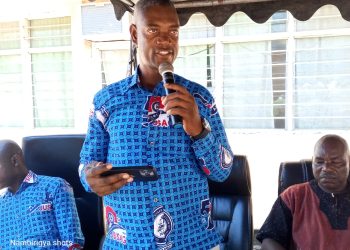














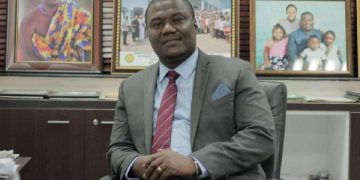








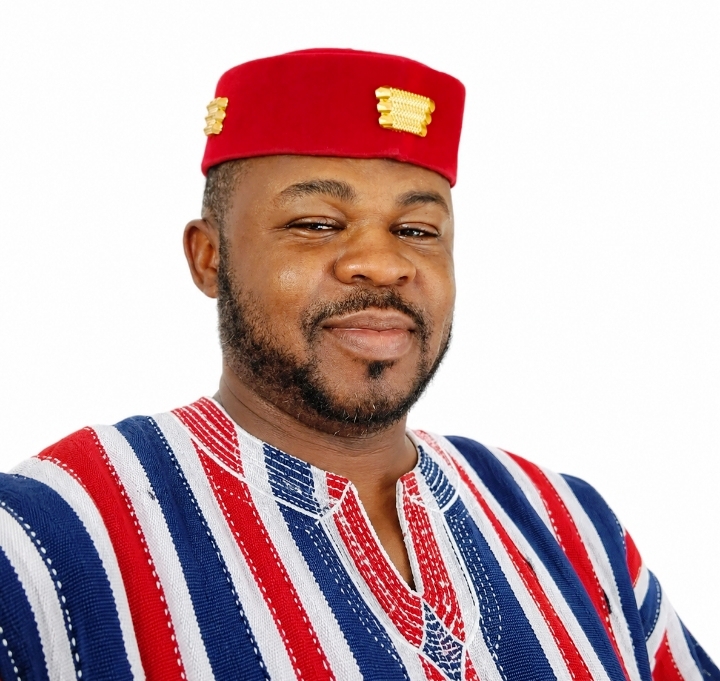
New Patriotic Party (NPP) parliamentary aspirant for Nandom, Lawyer Sylvester Isang, has rejected the idea that political office must come first before individuals can make meaningful contributions to the development of their communities.


Lawyer Isang, who is seeking to represent the Nandom Constituency in Parliament, says his interventions in the constituency will continue regardless of whether he secures political power, arguing that community development should be driven by personal commitment rather than the pursuit of public office.
“One should not wait to get political appointment before you intervene in addressing problems facing your people,” he said in a Facebook post on Friday.
The Master of Chambers of Isang@Law, a leading private law firm based in Tamale, said he had set himself an ambitious 15-year target of contributing to the training of at least 20 lawyers, 20 engineers and 20 medical doctors and other graduates from Nandom.
“My dream is to see that within the next 15 years I would have contributed to the production of not less than 20 lawyers, 20 engineers and 20 other medical doctors and graduates in other disciplines for Nandom,” he said.
He believes the impact of such an intervention would extend beyond the immediate beneficiaries, as the professionals could subsequently support their families and contribute to the development of other people in the constituency.
“I believe that if these beneficiaries replicate the gesture to others or even take care of their own parents and siblings back home in Nandom, many lives would have been touched,” he said.
‘Don’t wait for political power’
Lawyer Isang said one of the principles underpinning his vision was that people should be prepared to sacrifice from their existing resources instead of waiting to accumulate wealth or secure political appointments before helping others.
“Life should not just be about you or your immediate family,” he said.
He argued that even people with limited financial resources could make a difference if they developed a clear vision and remained committed to it.
“If you have a vision and you commit to it in the midst of limited funds, God will always make a way for satisfaction of your personal needs, that of your immediate family and other members of society bit by bit,” he said.
To illustrate his philosophy, Lawyer Isang invoked the biblical story of the widow’s offering in Mark 12:41-44, arguing that the significance of giving lies not necessarily in the size of the contribution but in the sacrifice behind it.
“In fact, there is more blessing in sacrificing your hard-earned little money in touching the lives of others than to hope to have excess maybe from public office before you touch lives,” he said.
Political power as a ‘boost’, not the beginning
Lawyer Isang said his political ambition should therefore not be interpreted as the beginning of his community interventions.
“My interventions predate my desire for political power,” he said.

He maintained that securing political office would instead enable him to scale up his interventions through what he described as the political will needed to secure Nandom’s fair share of national resources.
“My interventions… would continue in an enhanced state when I have political power because of political will that will secure the fair share of the National Cake,” he said.
But he stressed that the interventions would continue even if his political ambitions did not materialise.
“Certainly my interventions will continue even when I do not get political power and after I exit active politics until the day I return to my Maker,” he said.
Beyond his own lifetime, Lawyer Isang said he hoped to establish a foundation whose work could be sustained by his children and continue supporting people in Nandom after his death.
His position places human capital development at the centre of his emerging political message, with the NPP aspirant presenting education and professional development as long-term investments capable of creating a chain of beneficiaries within the constituency.
For Lawyer Isang, the ultimate measure of public service, therefore, should not begin and end with occupying political office, but with what an individual is prepared to sacrifice to improve the lives of others before, during and after holding power.
Source: www.kumasimail.com