







































The government is preparing to deploy solar power systems across Ghana’s public universities in a major renewable-energy intervention expected to reduce their reliance on conventional electricity and lower the cost of powering academic facilities.


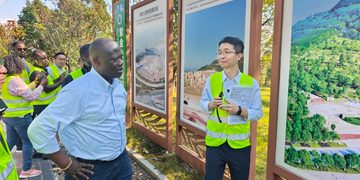
The Minister for Energy and Green Transition, John Abdulai Jinapor, announced the initiative after engaging the leadership of Vice Chancellors Ghana (VCG) on stronger collaboration between industry and academia to support Ghana’s energy transition and broader economic transformation.
Under the proposed programme, government intends to provide solar power systems for academic facilities across public universities, allowing lecture halls, laboratories, libraries and other academic infrastructure to meet their electricity needs through renewable energy.
The intervention will also include the installation of all-in-one solar-powered streetlights across university campuses.
The scale of the initiative is potentially significant. Ghana currently has 26 public universities in the two main university categories listed by the Ghana Tertiary Education Commission (GTEC): 16 traditional universities and 10 public technical universities.
A nationwide deployment would therefore place renewable-energy infrastructure across a substantial portion of Ghana’s public higher education system, with implications not only for electricity costs but also for energy security and sustainability on university campuses.
For universities operating large campuses with extensive academic, administrative and residential infrastructure, the shift towards solar could reduce exposure to rising electricity costs and help provide a more reliable source of power for critical facilities.
The solar-powered streetlights could similarly reduce the cost of campus lighting while providing more reliable illumination for roads, walkways and other public spaces, with potential benefits for campus security.
Jinapor said the discussions with VCG also focused on the role of universities in driving research, innovation and knowledge exchange as Ghana pursues its green transition.
He said government recognised the importance of academia in shaping the country’s future energy landscape and would continue to create the conditions for universities to contribute meaningfully to the transition.
“Our universities have an important role to play in this transformation,” the Minister said.
The proposed solar programme could also provide universities with a practical platform for research and innovation in renewable energy, allowing students and researchers to study the performance, management and integration of solar technologies within large institutional settings.

It could further strengthen links between universities and the energy industry by creating opportunities for research partnerships, technology development and knowledge transfer.
Vice Chancellors Ghana describes itself as the association of vice-chancellors of Ghanaian universities and currently has 16 member institutions, according to its official website.
The government’s engagement with the association therefore provides an avenue for coordinating academia’s contribution to the wider energy-transition agenda, while the planned solar deployment could make public university campuses some of the country’s largest institutional users of renewable energy.
The initiative forms part of the government’s broader push to expand renewable-energy use and create a more sustainable energy system for Ghana.
Source: www.kumasimail.com