





























A major government programme backed by the African Development Bank (AfDB) is targeting 22,000 direct jobs, 28,500 women and youth for skills training, and 8,000 MSMEs for access to credit under a four-year intervention designed to tackle unemployment and strengthen social cohesion.


The Ghana Women and Youth Employment and Social Cohesion Programme (GWYESCO) is being implemented from 2026 to 2029 across seven regions, including the five northern regions, as well as the Eastern and Central Regions.
The programme, funded by the AfDB and implemented by the Social Investment Fund (SIF) under the Ministry of Finance, is Ghana’s first AfDB-supported results-based financing operation. The Bank approved more than US$71 million in grants for the programme.
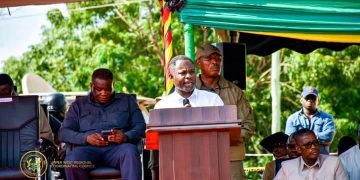
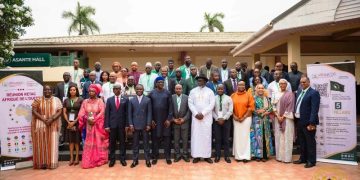
The Wa Metropolitan Chief Executive, Alhaji Nurah Issah Danwana, disclosed details of the intervention when he joined regional leaders, implementing partners and financial institutions at a stakeholder engagement on GWYESCO in Wa.
He said the programme would target young women and men aged 18 to 35, women aged 36 and above, persons with disabilities, MSMEs and cooperatives.
22,000 direct jobs
Under the first component, the Youth Employment Agency (YEA) will train and deploy beneficiaries in areas including green jobs, beauty care, hospitality and domestic services.
The green jobs component includes biodigester installation, sustainable charcoal production, sustainable transportation and farming, while beneficiaries will also receive training in pedicure, manicure, make-up artistry and hair styling.
Hospitality and domestic care training will cover commercial cleaning, laundry and fabric care, housekeeping, childcare, elderly care, cooking, catering and home management.
For 2026, 4,500 beneficiaries are targeted, comprising 1,000 for biodigester installation, 1,000 for sustainable charcoal production and 2,500 for hospitality and domestic care.
Eight TVET centres
GWYESCO will also support the renovation, construction and equipping of eight TVET centres across the seven participating regions.
The SIF has completed a rapid assessment of 13 TVET schools, while advertisements have been published for consultants to undertake design and supervision. Model workshops are expected to be constructed in 2026.
28,500 to receive skills training
Another component targets 28,500 women and youth for training in science, technology, engineering and mathematics (STEM), digital skills and creative industries.
The GRATIS Foundation is expected to train 7,000 people in agro-processing, fabrication and agricultural mechanisation, including 2,000 in 2026.
The Responsible Cooperative Mining and Skills Development Programme (rCOMSDEP) will provide alternative livelihood training in areas such as welding and fabrication, electric vehicle and solar installation, leather works, fashion design, shea butter processing, digital skills and heavy-duty equipment operation.
The programme will also support the reclamation of two hectares of degraded land.
The National Entrepreneurship and Innovation Programme (NEIP) will train 6,000 beneficiaries through its EMPOWER and CREATE programmes, with 3,000 targeted in 2026.
8,000 MSMEs to access credit
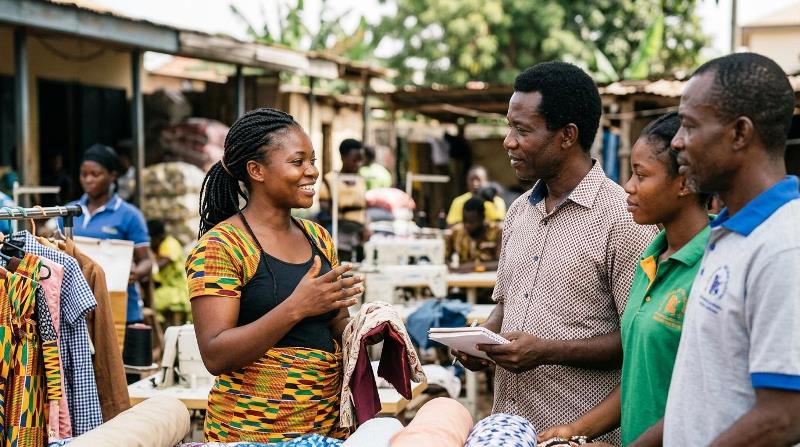
GWYESCO is also targeting 8,000 MSMEs for access to credit to start or expand businesses.
Loans will be channelled through selected financial institutions, including GCB Bank, Consolidated Bank Ghana and Apex Bank, following application, appraisal, approval, mandatory business development training and disbursement.
Beneficiaries will subsequently be monitored to assess loan performance.
The programme also includes institutional strengthening and conflict-prevention measures, with 530 Metropolitan, Municipal and District Assembly staff expected to receive training on incorporating conflict-prevention strategies into their Medium-Term Development Plans.
GWYESCO uses a results-based financing model, meaning funding is linked to measurable and verifiable results rather than simply inputs or activities.
Registration, training and start-up support
The programme is designed to cover the process from beneficiary registration through training and business support.

Applications will be accepted through the YEA job portal, SIF website and direct field registration, followed by screening and selection.
Successful beneficiaries will undergo training and certification through the Commission for Technical and Vocational Education and Training (CTVET), before receiving start-up kits, market linkages, mentorship and monitoring.
The programme also incorporates environmental and social safeguards, including measures to promote energy efficiency, protect water bodies and vegetation, and improve participation by women and vulnerable groups.
Alhaji Danwana described the initiative as timely for addressing youth unemployment, economic vulnerability and social cohesion in the Wa Metropolis and the wider Upper West Region.
The programme is part of a broader national effort to expand employment, entrepreneurship, skills development and access to finance for women and young people, particularly in underserved communities.
Source: www.kumasimail.com