

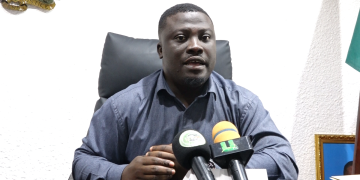
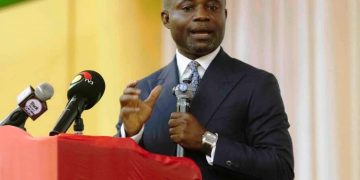
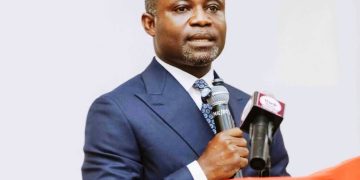
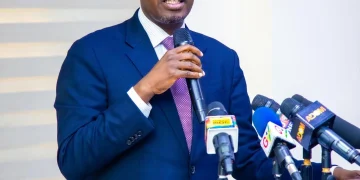
























The Governor of the Bank of Ghana, Johnson Pandit Asiama, has opened the 130th Monetary Policy Committee (MPC) meeting with a caution that rising global uncertainties, particularly the ongoing Middle East conflict, pose significant risks to Ghana’s economic outlook despite recent domestic gains.


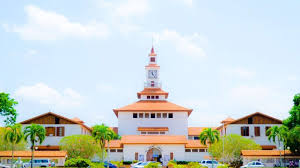
Speaking at the opening of the three-day meeting at Bank Square in Accra on Monday, Dr. Asiama said Ghana’s economy had shown meaningful improvement since the last MPC meeting in March 2026, reflecting the impact of sustained economic reforms.
However, he noted that worsening global conditions, especially rising energy and commodity prices triggered by the conflict in the Middle East, were creating new economic pressures that policymakers must address carefully.
“The overall picture since end-March is one of a domestically resilient economy navigating an increasingly difficult external environment,” he stated.
Dr. Asiama explained that the prolonged conflict and the closure of the Strait of Hormuz had caused a sustained increase in global energy prices, with direct implications for Ghana through higher fuel prices, transportation costs, import bills and consumer inflation.
According to him, the International Monetary Fund (IMF) has revised global growth projections for 2026 downward from 3.3 per cent to 3.1 per cent due to the economic impact of the conflict.
He disclosed that inflation in Ghana had recorded its first increase since December 2024, while concerns remained over domestic energy supply disruptions and external commodity price pressures.
Despite the risks, the Governor highlighted several positive developments in the economy, including stronger current account performance, improved investor confidence and successful domestic bond issuances by the Government.
He revealed that Ghana’s current account surplus for the first quarter of 2026 exceeded the same period in 2025 by approximately US$652 million.
Dr. Asiama also noted that Government plans to raise US$1 billion through local currency bonds to finance cocoa purchases for the 2026/2027 crop season represented a major shift away from reliance on foreign currency borrowing.
He added that the Government had introduced temporary reductions in regulatory margins on petroleum products to cushion consumers against rising crude oil prices.
On Ghana’s engagement with the IMF, the Governor said an IMF mission that visited Accra from April 29 to May 15 had concluded discussions on the sixth and final review of the Extended Credit Facility (ECF) programme and negotiations for a new 36-month non-financing Policy Coordination Instrument (PCI).
He explained that the PCI would focus on sustaining fiscal discipline, strengthening debt sustainability, enhancing monetary and exchange-rate policies, reinforcing financial sector stability and supporting inclusive economic growth.
According to him, the programme would also support reforms aimed at improving the Bank of Ghana’s monetary policy framework, liquidity forecasting systems and inflation-targeting regime.
Dr. Asiama stressed that maintaining financial stability and ensuring the banking sector supports credit expansion would remain central to policy decisions going forward.
He identified the prolonged Middle East conflict, domestic energy challenges, inflation risks, reserve vulnerabilities and fiscal pressures as key concerns to be addressed during the meeting.
“With these few remarks, I declare the 130th Monetary Policy Committee Meeting open,” he said.
Source: www.kumasimail.com