





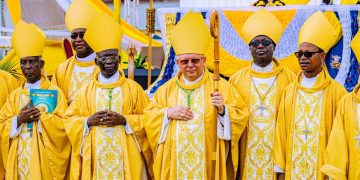



















The Alliance of Christian Apologists, Ghana, has called on the Government and the Bank of Ghana (BoG) to remove the image of the Larabanga Mosque from the newly introduced GH¢2 banknote, arguing that its inclusion contradicts the country’s commitment to religious freedom and diversity.


The group wants the image removed before the Ghana Cedi Heritage Series enters circulation on December 1, 2026, insisting that the historic religious character of the Larabanga community raises questions about the suitability of the mosque as a national symbol of religious freedom.
In a press statement issued on Monday, November 16, the Alliance said its objection was not directed at Islam or the preservation of Ghana’s Islamic heritage but at what it described as an inconsistency between the mosque’s historical significance and the message being communicated through its appearance on the national currency.
It argued that although the Larabanga Mosque was an important Islamic heritage site, its historical association with restrictions on other religious practices made its selection for the banknote problematic.
The Alliance cited a July 2023 report by the Daily Graphic which documented comments by community leadership indicating that churches and traditional shrines had historically not been permitted in Larabanga.
According to the report, Mashud Dramani, spokesperson for the Chief Imam and secretary of the mosque, said the community did not permit other religious practices because of the history and religious beliefs of its forefathers.
The Alliance questioned how a community with such a historical position on other religious practices could be represented on the national currency in a manner intended to celebrate religious freedom and diversity.
“How can a community known for restricting the establishment of other faiths’ places of worship be presented on Ghana’s national currency as a symbol of religious tolerance and diversity?” the group asked.
It maintained that national currency was more than a medium of exchange, describing it as a representation of the country’s collective identity, values and history.
The group further argued that placing the mosque on the currency under the banner of religious freedom risked giving national recognition to what it considers religious exclusivity.
Calls for alternative national symbols
Beyond its demand for the removal of the mosque, the Alliance urged the government to reconsider the criteria used in selecting historical monuments and personalities for the new banknotes.
It argued that Ghana had several individuals and institutions whose contributions to national development deserved greater recognition.
Among the areas it wants considered are education and teacher training, healthcare and medical development, vocational and technical skills training, constitutional governance and democratic institutions.
The group said the country’s national heritage should reflect the contributions of Ghanaians and non-Ghanaians who had played meaningful roles in its development rather than religious monuments associated with what it described as intolerance.
It consequently called on the government and the central bank to review the selection process and give greater consideration to personalities and institutions whose contributions had demonstrably advanced education, healthcare, skills development, freedom and democracy.
New cedi notes enter circulation December 1
The controversy comes days after President John Dramani Mahama officially launched the Ghana Cedi Heritage Series on November 12, with the Bank of Ghana announcing December 1, 2026, as the date for its introduction into circulation.

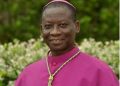
The redesigned GH¢2 note features Cardinal Peter Poreku Dery on the front and the historic Larabanga Mosque on the reverse, with the denomination highlighting religious freedom.
The new series is designed to celebrate Ghana’s national heroes, historical sites, cultural identity and heritage, alongside improved security features and durability.
The Alliance insists that the inclusion of the Larabanga Mosque under the religious freedom theme requires reconsideration, stressing that its position should not be interpreted as an attack on Muslims or Islam.
It maintained that its demand was about historical accuracy and consistency in the representation of Ghana’s national identity.
“If Larabanga Mosque is presented as an Islamic heritage monument, we have no objection. But if it is presented as a symbol of religious tolerance and diversity, then the historical record demands serious reconsideration,” the statement said.
The Alliance is therefore urging the government and the Bank of Ghana to act before December 1 to remove the mosque from the new banknotes.
Source: www.kumasimail.com