





































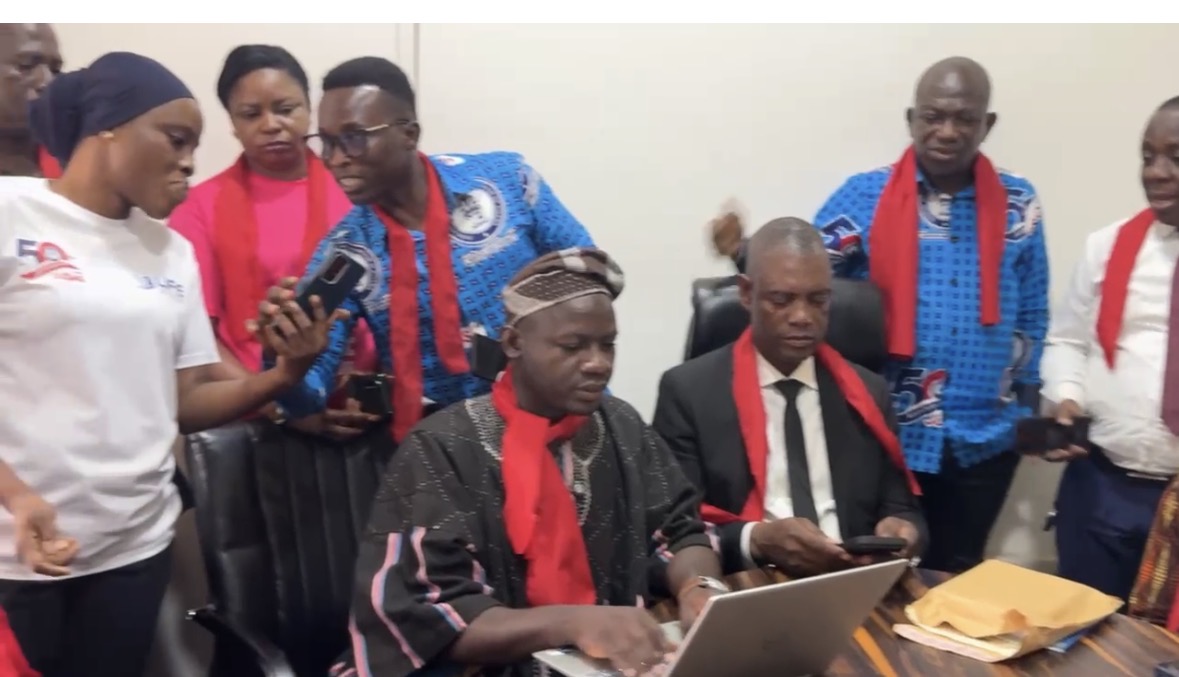
The Judicial Service Staff Association of Ghana (JUSAG) has declared an indefinite strike effective Monday, November 2, 2026, over the government’s failure to approve recommendations for the review of salaries of Judicial Service employees.


The association has directed all staff of the Judicial Service not to report for work until the government approves the proposed salary adjustments and pays the revised salaries in November, together with arrears covering January to October 2026.
In a statement signed by its General Secretary, Abdulai Yakubu, on behalf of the National Executive Council (NEC), JUSAG said the decision followed what it described as prolonged delays and unsuccessful engagements with government and relevant authorities to secure the 2026 salary review.
The association said it formally notified the National Labour Commission (NLC) of its intention to embark on an indefinite strike on Friday, October 23, 2026, after exhausting several avenues of dialogue.
According to JUSAG, it submitted proposals for the 2026 salary review to the Judicial Council in December 2025. The Council subsequently completed its work and submitted recommendations to the President for determination in accordance with Article 149 of the 1992 Constitution and the Judicial Service (Terms and Conditions of Service) Regulations, 2026 (C.I. 141).
However, the association said approval from the Office of the President had not been forthcoming despite repeated reminders and appeals to government.
JUSAG also cited engagements at its Second Quadrennial Delegates’ Conference in Tamale in August 2026, the 45th AMJG Conference in Accra in September 2026, and the Chief Justice’s Staff Durbar in Tamale, also in September, as part of efforts to resolve the matter.
The association said its National Executive Council subsequently demanded that government approve the Judicial Council’s recommendations by October 30, 2026, and ensure payment of the revised salaries in November, together with all outstanding arrears from January to October.
It warned that failure to meet the demands by Sunday, November 1, would trigger an indefinite strike from the following day.
JUSAG expressed dissatisfaction with the response of the National Labour Commission and the Ministry responsible for labour relations, accusing both institutions of failing to act with the urgency required to prevent the industrial action.
It said although the NLC directed the Ministry to convene a meeting of the parties on October 26, the Commission asked the parties to report back by November 6, four days after the planned commencement of the strike.
The association further criticised the Labour Ministry for scheduling its meeting for Tuesday, November 3, a day after the strike would have begun.
It also rejected a proposal from the Ministry of Finance to pay the salary arrears in three instalments, arguing that the proposal lacked clear timelines and was issued without consultation with JUSAG.
The association maintained that the proposed arrangements fell short of the demands of its members and their entitlements under C.I. 141.
Under the strike directives, security personnel are expected to remain at their posts to protect Judicial Service properties, while drivers have been instructed to hand over official vehicles to the Transport Department and refrain from driving official vehicles, officers or judges throughout the industrial action.
Registrars have also been directed not to open or allow any registry or court to be used during the strike.
JUSAG further instructed its regional executive boards and committee members to monitor compliance, adding that any staff member pressured or threatened by management to report for duty should decline and immediately report the matter to the association.
The association warned against any attempt by government or management officials to intimidate or coerce workers during the strike, saying it would respond collectively through lawful means.
Despite declaring the industrial action, JUSAG said its leadership remained open to genuine and good-faith engagement with government but would no longer accept promises without concrete action.
The association said the decision was taken after consultation with the Senior Staff Association of the Judicial Service of Ghana (SSAJUG) and other key stakeholders.
It called on all Judicial Service employees to remain united and committed to the industrial action until the government’s demands were met.
Source: www.kumasimail.com