






































Lands Minister says proposed Mining Act will introduce a five-year limit for exploration licences, strengthen local content and ensure mining communities benefit directly from mineral resources.


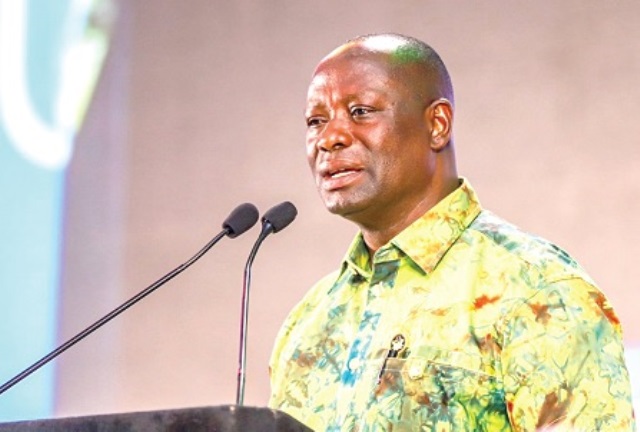
The Minister of Lands and Natural Resources, Emmanuel Armah-Kofi Buah, has outlined proposed reforms to Ghana’s mining sector, including stricter conditions for exploration licences, increased royalties during periods of high gold prices and mandatory community development agreements.
He said the reforms were aimed at ensuring that Ghana derives greater economic and social benefits from its mineral resources while protecting the environment and creating employment opportunities for its citizens.
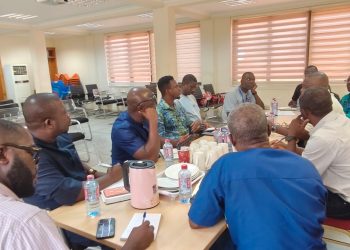
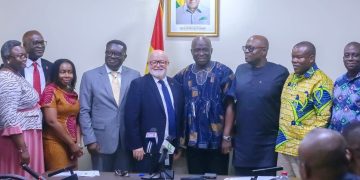
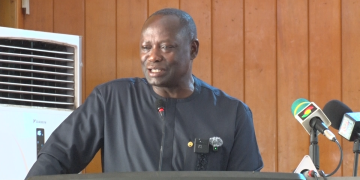
Speaking at a seminar at the Kwame Nkrumah University of Science and Technology (KNUST) on the theme, “From Rocks to Resources to Results – Leading Ghana’s Extractive Future,” Mr Buah urged engineering students to use their technical knowledge to transform the country’s natural resources into sustainable development.
He stressed that the mining industry must go beyond mineral extraction to improve livelihoods, create jobs, support local businesses and provide essential services to communities.
The Minister said the government was working on a new Mining Act that would introduce a five-year period for mineral exploration licences, subject to stringent conditions.
He explained that the proposed measure was intended to address the practice where some individuals and companies acquire exploration licences but fail to undertake meaningful exploration activities, leaving large areas of land tied up without productive use.
Under the proposed arrangement, companies that fail to discover commercially viable minerals within the stipulated period would be required to relinquish the land for other uses, including farming.
Mr Buah also announced plans to introduce community development agreements as part of mining lease arrangements signed by the government.
He said the agreements would require mining companies and communities in affected areas to negotiate and agree on development priorities before mining operations commence.
According to him, the initiative would ensure that communities hosting mining operations receive tangible benefits and are not left with degraded lands and limited opportunities after mineral resources have been exhausted.
He said the proposed agreements would also provide a framework for communities to participate in decisions affecting their lands and livelihoods, ensuring that mining activities contribute to long-term development.
The Minister further highlighted the importance of Ghana’s Local Content Act, recalling efforts by the previous administration under President John Dramani Mahama to ensure that Ghanaian businesses and professionals had opportunities to participate in the country’s emerging oil and gas industry.
He said the introduction of local content requirements initially faced strong opposition from some international stakeholders who argued that the policy could undermine the industry.
However, he maintained that the policy had helped Ghanaian businesses develop the expertise and capacity to participate in the oil and gas sector within a relatively short period.
Mr Buah also cited the establishment of the Petroleum Revenue Management Act as an important measure to promote transparency, accountability and the prudent management of oil revenues.
He recounted the challenges involved in establishing the Atuabo Gas Processing Plant, explaining that the decision was driven by the need to utilise Ghana’s associated gas instead of allowing it to go to waste through gas flaring.
According to him, the facility, which became operational around 2014 and 2015, significantly reduced the country’s expenditure on fuel imports and increased domestic gas supply.
On mining royalties, the Minister defended the introduction of a sliding-scale royalty regime, which adjusts the royalties payable by mining companies according to international gold prices.
He explained that the arrangement allows the state to receive higher royalties when gold prices increase while reducing the rate when prices decline, ensuring a fairer distribution of mineral wealth between the country and mining companies.
He said the policy had generated additional revenue for the state despite concerns and opposition from some international stakeholders.
Mr Buah also expressed concern about the environmental consequences of illegal mining, particularly the destruction of forest reserves and pollution of major river systems.
He disclosed that nearly 9,000 hectares of forest had been destroyed, describing the situation as a serious environmental crisis that threatens water resources and the livelihoods of communities.
He identified the Western and Western North Regions as among the areas severely affected, with the Pra and Ankobra river systems facing significant pollution challenges.
The Minister called for collective action to protect the country’s natural resources, stressing that mining must be conducted in a sustainable and environmentally responsible manner.
He urged engineering students to see themselves as important partners in the transformation of Ghana’s extractive industry, emphasising that technical competence, innovation and responsible leadership were essential to achieving sustainable development.
He said the government’s mining sector reforms were also intended to strengthen local capacity and create employment opportunities for young professionals graduating from institutions such as KNUST.
Mr Buah maintained that Ghana’s natural resources must translate into improved public services, infrastructure, jobs and economic opportunities for present and future generations.
He challenged the students to approach engineering challenges with determination, evidence-based thinking and a commitment to finding solutions, stressing that sound technical expertise and responsible public policy must work together to secure the country’s extractive future.
Source: www.kumasimail.com