















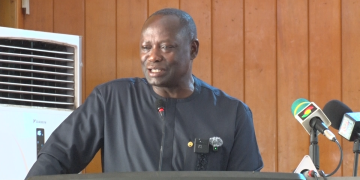






















Nearly 9,000 hectares of forest have been destroyed through illegal mining activities in Ghana, raising concerns about the growing threat to the country’s natural resources, the Minister of Lands and Natural Resources, Emmanuel Armah-Kofi Buah, has disclosed.


The Minister described the scale of forest destruction as a serious environmental crisis, warning that the continued degradation of forest reserves and pollution of major river systems pose significant threats to water security and the livelihoods of communities.
Speaking at Geological Engineering students seminar at the Kwame Nkrumah University of Science and Technology (KNUST) on the theme, “From Rocks to Resources to Results – Leading Ghana’s Extractive Future,” Elembele MP called for urgent and collective efforts to protect the country’s forests and water bodies.
He identified the Western and Western North regions as among the areas severely affected by illegal mining, popularly known as galamsey, noting that the Pra and Ankobra river systems were facing significant pollution challenges.
According to him, the destruction of nearly 9,000 hectares of forest underscores the urgent need for responsible mining practices and stronger measures to safeguard Ghana’s environment.
Mr Buah stressed that the country’s mineral resources must be exploited in ways that support economic development without compromising environmental sustainability or the wellbeing of future generations.
He called on stakeholders, particularly young professionals in the engineering and mining sectors, to contribute their technical expertise and innovative ideas towards addressing the environmental challenges confronting the extractive industry.
The Minister said the government was also working on a new Mining Act to introduce reforms aimed at promoting responsible mining and ensuring that the country derives greater benefits from its mineral resources.
Among the proposed reforms is a five-year limit for mineral exploration licences, subject to stringent conditions, to prevent individuals and companies from holding large tracts of land without undertaking meaningful exploration activities.
He explained that companies that fail to discover commercially viable minerals within the stipulated period would be required to relinquish the land for other productive uses, including farming.
Mr Buah further announced plans to introduce mandatory community development agreements under mining lease arrangements to ensure that communities hosting mining operations benefit directly from mineral extraction.
He said the agreements would require mining companies and affected communities to negotiate development priorities before mining operations begin, providing a framework for local participation in decisions affecting their lands and livelihoods.
The Minister maintained that Ghana’s mineral wealth must translate into improved living conditions, employment opportunities and essential services rather than leave behind degraded lands and environmental destruction.
He urged engineering students to see themselves as partners in protecting the country’s natural resources, stressing that technical competence, innovation and responsible leadership were critical to building a sustainable extractive industry.
Source: www.kumasimail.com