



















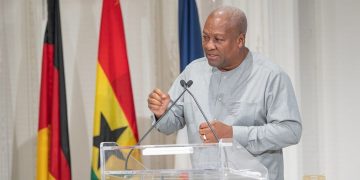


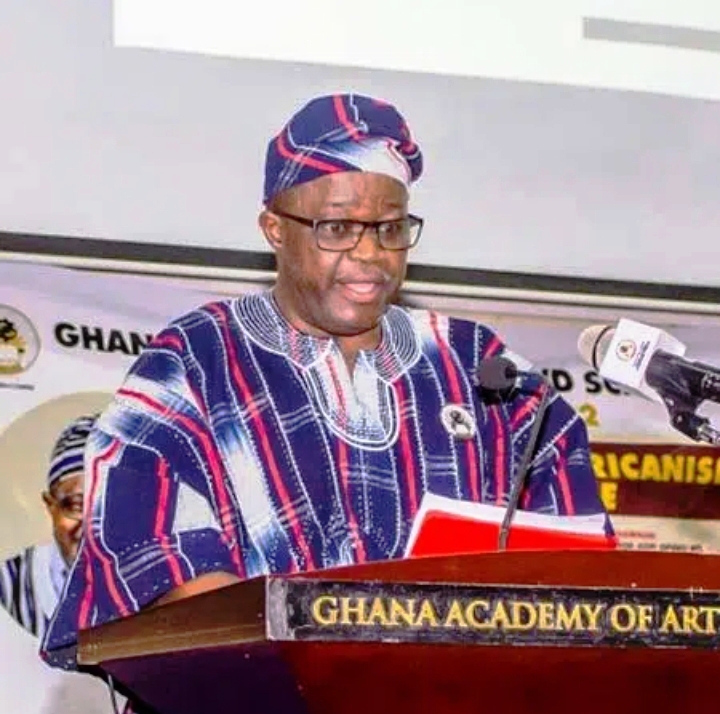
Professor Dr. Adams Bodomo, Professor of Linguistics and African Literatures at the University of Vienna, has called on African governments to make university and other tertiary education tuition-free, arguing that public resources should be used to remove tuition barriers for all students.


Prof. Bodomo said African countries were unnecessarily complicating the financing of tertiary education by attempting to determine which families could afford to pay tuition and which should receive state support.
In a statement shared on his Facebook page, the academic argued that a universal tuition-free system would be fairer, less bureaucratic and less vulnerable to corruption than means-tested arrangements that require governments to determine the financial circumstances of individual families.
“The best and simplest way is to have a tuition-free education system for ALL students, irrespective of their family background,” he said.
Prof. Bodomo maintained that most families, regardless of their economic status, contribute to national development through taxation and should therefore benefit from public investment in education.
He argued that government-funded tuition would allow families to concentrate their resources on other education-related expenses, including accommodation and boarding.
‘Why emulate expensive systems?’
Drawing on his experience as a student, lecturer and professor in Europe, the United States and China, Prof. Bodomo said he preferred the Nordic model of financing tertiary education, where tuition is largely free, followed by the Chinese model, where students pay relatively minimal fees.
He ranked the American model, characterised by comparatively high tuition costs even for citizens, as his least preferred option.
He questioned why African countries should seek to replicate what he described as the expensive North American and British approaches to university financing instead of adopting models that place greater public responsibility on funding education.
“Why do we want to complicate things by emulating the hefty North American and British systems of tuition fees? Why not emulate the EU/Nordic system?” he asked.

Prof. Bodomo said the argument that families who could afford tuition should pay was likely to create opportunities for corruption, favouritism and fee evasion, while also producing an inequitable system.
He argued that a means-tested tuition regime would require a large supervisory bureaucracy to determine who qualifies for assistance, creating another layer of administrative cost and potential abuse.
Africa has the resources
The University of Vienna academic also rejected the argument that African countries lack the resources to provide tuition-free education from basic to tertiary levels.
He said the continent had sufficient resources but needed to make education a stronger national priority.
According to him, European countries had demonstrated that governments could use tax revenues to make significant investments in education when political leaders treated education as a strategic national priority.
“Africa has more resources than Europe, so it is only a matter of priority,” he argued.
Prof. Bodomo said African governments could similarly finance tuition-free education from primary school through university if they reorganised national priorities and committed sufficient public resources to education.
His proposal would, however, make a distinction between tuition and other education-related costs, with government absorbing tuition while families could continue to meet expenses such as accommodation, boarding and other personal costs.
A wider debate on tertiary education financing
The proposal comes against the backdrop of persistent concerns across Africa about the cost of higher education and unequal access to universities.
In Ghana, for example, the Constitution provides for the availability and accessibility of higher education and envisages its progressive introduction, subject to available resources. The country already operates free tuition at the basic level and has introduced major public interventions to expand access at the secondary level.
Prof. Bodomo’s intervention, however, pushes the debate further by arguing that ability to pay should not determine whether a qualified student pays university tuition.
He believes a universal system would not only widen access but also eliminate the administrative and social problems associated with determining which students are financially deserving of government support.
His central argument is that higher education should be treated as a public investment rather than primarily as a private financial burden on students and their families.
“African governments can implement a tuition-free educational system from Primary School to University if we set our priorities right!” Prof. Bodomo said.
Source: www.kumasimail.com