




































The government is expanding irrigation infrastructure to put an additional 175 hectares of farmland under an all year round cultivation as it intensifies efforts to increase domestic rice production and reduce Ghana’s dependence on imports.


Minister of Food and Agriculture, Eric Opoku, said the irrigation facility at Anumso in the Sekyere East District of the Ashanti Region forms part of the government’s Feed Ghana Programme’s “Irrigation for Wealth Creation” initiative and will provide rice farmers with a more reliable supply of water.
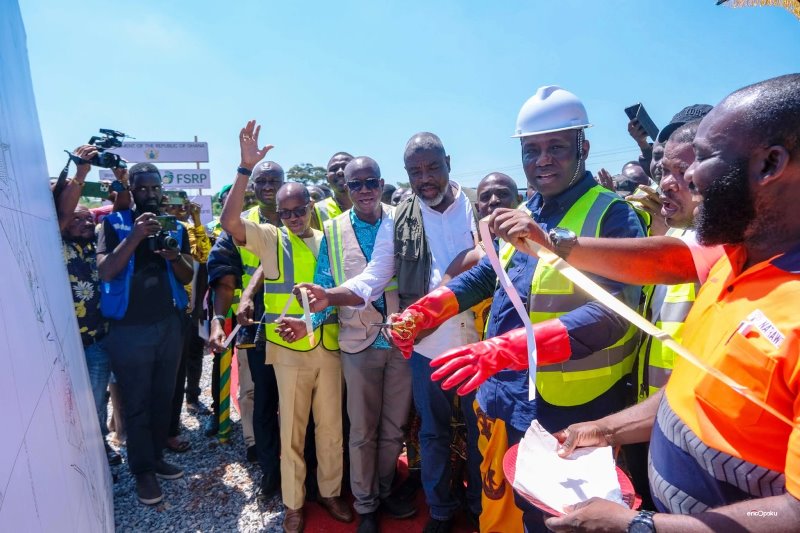
Mr Opoku announced this after leading a delegation to the site for a sod-cutting and site-possession ceremony for construction of the facility.
The project is also being implemented under the West Africa Food System Resilience Project, which seeks to strengthen agricultural resilience and food security, including through investments that improve farmers’ ability to withstand climate and production shocks.
According to the Minister, the new facility will enable farmers to cultivate throughout the year instead of depending largely on rainfall, potentially increasing the volume and consistency of rice produced in the area.
He said other sites earmarked for development include Pong, Tano, Bia and Wietha, as government pushes to expand the country’s irrigated farming capacity.
The move comes as irrigation remains a major pillar of the Feed Ghana Programme, which identifies improved access to irrigation as a key means of increasing crop productivity and includes “Irrigation for Wealth Creation” under its infrastructure development component.
The programme’s broader objective is to increase domestic agricultural production, reduce import dependence, strengthen food security, create jobs and generate wealth through agriculture. Rice is among the priority commodities targeted under the programme.
Recent figures released by the Feed Ghana Programme indicate that Ghana’s rice self-sufficiency rate has increased from 42% to 56% since the programme was introduced in April 2025, although officials say challenges remain in areas including storage, transportation, processing and market access.

Mr Opoku said the government’s ambition was to build on these gains by substantially increasing rice production and positioning Ghana to move beyond meeting domestic consumption to participating more strongly in continental and global rice markets.
The investment is particularly significant for a country where agriculture remains heavily dependent on rainfall. The World Bank has noted that less than three per cent of Ghana’s cultivated land is irrigated, leaving farmers vulnerable to changing rainfall patterns, prolonged dry periods and other climate-related disruptions.
Mr Opoku said the irrigation expansion would therefore not only increase production but also improve the resilience of farming communities by giving farmers greater control over when and how often they cultivate their fields.
The ceremony was attended by the Deputy Minister for Food and Agriculture, the Chief Director of the Ministry, local leaders from Sekyere East and traditional authorities from Anumso.
Source: www.kumasimail.com