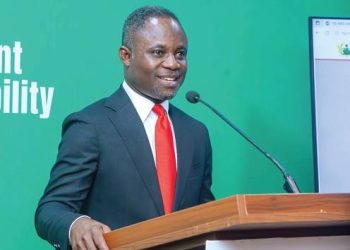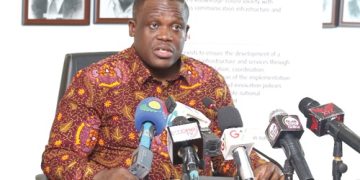


































Dr. Evans Duah, an Independent Researcher, Chartered Accountant, Lecturer and Financial Economist, today unveils the latest insights from a three-wave nationwide delegate preference study on the upcoming New Patriotic Party (NPP) presidential primaries.


The study, conducted from August 2025 to January 9, 2026, tracks the evolution of delegate preferences post the 2024 general election loss, benchmarked against the 2023 primaries outcomes. The findings highlight Kennedy Ohene Agyapong (KOA) as the national (party) frontrunner.
The methodology employed a rigorous multi-wave tracking approach to capture dynamic shifts in delegate preferences, recognizing that post-election environments involve gradual recalibration rather than instant changes.
Full national coverage was achieved across all 16 administrative regions and 276 constituencies, targeting 40,988 delegates. A total of 31,556 interviews were successfully completed and validated.
Data collection remained consistent across waves, with only verified responses retained after quality assurance. To address uncertainty transparently, results are analyzed under Worst-Case (conservative) and Best-Case (full allocation of undecided/undisclosed delegates) scenarios, ensuring robust interpretations.
Under the Best-Case scenario in the final wave, which allocates undecided and undisclosed delegates proportionally, the national standings are as follows:
- Kennedy Ohene Agyapong (KOA): 52.59%
- Dr. Mahamudu Bawumia (DMB): 36.24%
- Dr. Bryan Acheampong (DBA): 8.60%
- Dr. Yaw Osei Adutwum (DYOA): 2.05%
- Kwabena Agyei Agyapong (KAA): 0.52%
In effect, Hon. Kennedy Ohene Agyapong is on course to be elected as the flagbearer of the New Patriotic Party, in the upcoming contest.
These figures reflect a contest shaped by early post-2024 reassessment, where delegates reevaluated leadership based on electability, coalition reach, regional balance, and recovery potential.
Kennedy Ohene Agyapong (KOA) secures the lead through the largest positive net movement, rising steadily across waves due to broad geographical gains in delegate-dense regions like Ashanti, Greater Accra, Eastern, Central, Western, and Volta. His growth stems from effective post-election reassessment, consistent messaging on resilience, jobs and strong ground engagement.
Dr. Mahamudu Bawumia (DMB) experiences a net decline, driven by erosion outside his core northern strongholds amid delegates’ recalibration of electability post-2024. While retaining dominance in aligned regions, limited expansion into southern and middle-belt areas—constrained by structural geography—capped national recovery, with changes more tied to regional weighting than late persuasion.
Dr. Bryan Acheampong (DBA) influences margins rather than challenging leadership, showing a non-linear trajectory from initial decline to rebound. His support, rooted in organizational networks and contested regions, compresses gaps between frontrunners through selective consolidation and familiarity, acting as a systemic shaper without broad expansion.
Dr. Yaw Osei Adutwum (DYOA) holds low single-digit support, localized to clusters in Ashanti and Greater Accra, driven by sectoral and relational networks. This fails to scale nationally, as it intersects minimally with dominant post-election criteria like broad viability.
Kwabena Agyei Agyapong (KAA) registers the lowest shares, functioning as symbolic participation with diffuse, sub-1% regional presence. No momentum or clustering emerges, limiting impact on margins or structure.
Dr. Duah states: “This study documents a transitioned contest from fluid reassessment to structured consolidation, grounded in verified data and transparent assumptions. Kennedy Agyapong’s lead exemplifies how early post-loss judgments and strategic engagement in dense regions drive durable outcomes, providing a factual terrain for the primaries ahead.”
Source: www.kumasimail.com