







































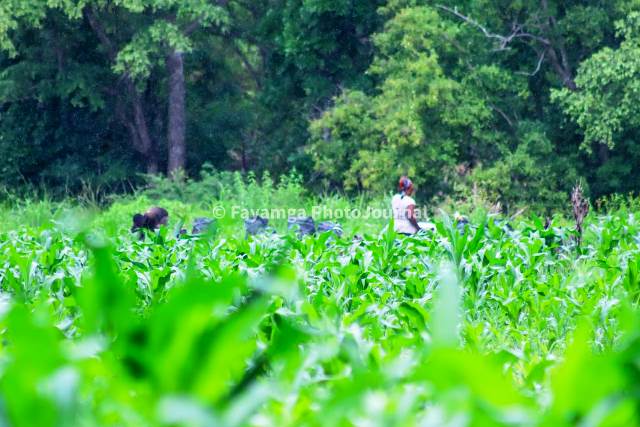
In the farming communities of the Sissala area in Ghana’s Upper West Region, the hands that feed homes are now empty.


Women who spend long days under the sun planting, weeding, harvesting, and carrying produce from farm to market are no longer assured of even the smallest return for their labour. Instead, many are being pushed into an old and humiliating system of survival — barter trade.
In Kowie, a community in the Sissala area, this painful reality came into sharp focus during a discussion with women farmers, whose stories revealed not just economic hardship, but the slow crushing of dignity among some of the region’s hardest-working people.
For these women, farming is a way of life. It pays school fees, buys salt and cooking oil, covers hospital bills, and keeps food on the table.
But today, many say the market has failed them so badly that cash has become a luxury. Their maize sits unsold. Their sweat brings no reward. And their only option is to exchange produce for whatever they can get to keep their families alive.
Ali Sanatu, a 35-year-old mother who trades in tomatoes and vegetables in nearby communities, described how women often approach her not with money, but with bowls of maize.
They come not because they want to bargain, but because they have no other option.
She said many of them are mothers and breadwinners who cannot find buyers for their maize unless they agree to shamefully low prices. So instead of selling for cash, they try to exchange what they have harvested for tomatoes, vegetables, and ingredients to cook for their children.
Her account was confirmed by other women in the discussion, who said they too have tried to use their farm produce to obtain basic household needs. But even that path is failing them, as many traders are unwilling to accept produce in exchange.
What remains is frustration, despair, and hunger in homes built on farming.
The crisis is visible beyond the villages. In Tumu, the municipal capital of Sissala East, two tricycles were seen carrying six 100-kilogram bags of maize back to their communities after the owners had reportedly combed the town in search of buyers without success.
Six heavy bags. A long journey. No sale.
One of the tricycle riders, Tommie, could not hide his disappointment. He warned that if this situation continues, many farmers may not have the strength or courage to return to their farms in the next season.
His fear is understandable.
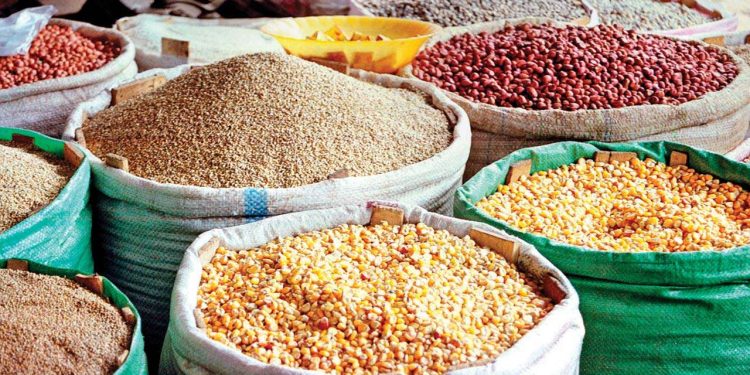
Checks in town revealed that a 100-kilogram bag of maize is selling for just GH¢200, while a 100-kilogram bag of soya beans goes for GH¢450. For farmers who invest in seeds, labour, transportation, and months of hard work, such prices are not just unfair — they are devastating.
But the suffering does not end at the point of sale.
Some women said the few buyers who dominate the market now exploit their desperation. Before payment is made, farmers are allegedly forced to re-bag their own produce, help weigh it, and even assist in loading it onto waiting long trucks. For weak, elderly, or exhausted women, this means paying loading boys out of the little money they are already struggling to earn.
So after months of farming, they lose in the field, they lose in the market, and they lose again at the truck side.
An elderly woman, Nma Asibi, spoke with the bitterness of someone who has watched the state turn its back on the people who feed it. She lamented the silence of the government and said farming in Ghana appears to have been left to the poor, the forgotten, and the helpless.
That statement lands heavily in a region where farming is not a side activity but a lifeline.
This is not merely a story about low prices. It is a story about women being abandoned by a market system that should protect them. It is a story about mothers swapping grain for vegetables because money has disappeared from their local economy. It is a story about farmers returning home with unsold food while their own families struggle to survive.
And above all, it is a story that should disturb the conscience of the nation.
Because when women who grow food cannot sell it, when maize has no market, when labour earns no dignity, and when survival itself depends on barter, then the crisis is no longer local.
It is national.
Source: www.kumasimail.com/Ayamga Bawa Fatawu