






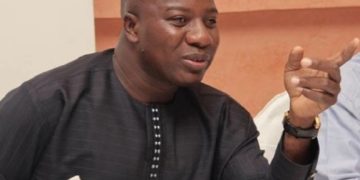













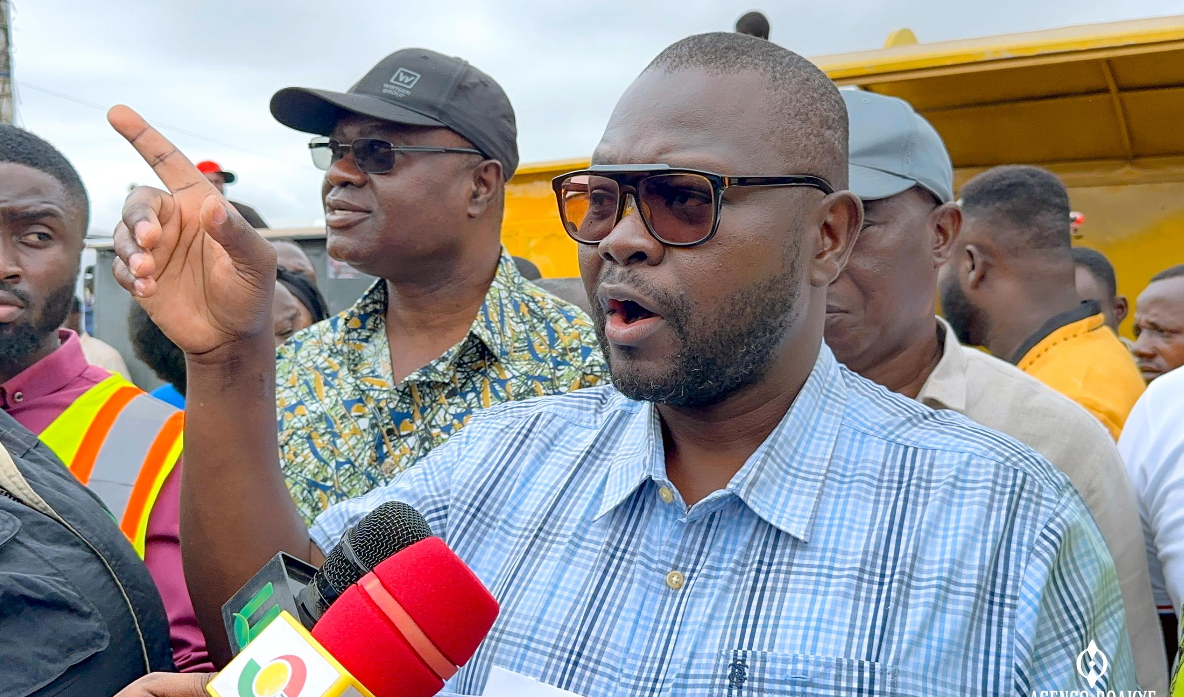
Former Minister for Works and Housing and Member of Parliament for Kwadaso, Francis Asenso-Boakye, has accused the government of slowing the implementation of the Greater Accra Resilient and Integrated Development (GARID) Project, citing a recent World Bank assessment which he says confirms significant setbacks in Ghana’s flagship flood mitigation programme.


In a statement issued Thursday, Asenso-Boakye said the World Bank’s latest assessment indicates that the GARID Project has experienced significant delays as a result of fiscal measures introduced by the Ministry of Finance in 2025. According to him, the measures have led to unpaid contractors, delayed Interim Payment Certificates (IPCs), slower execution of works and a downgrade in the project’s implementation performance.
“The recent World Bank assessment of the Project confirms what many have observed,” Asenso-Boakye stated. “Ghana’s flagship flood mitigation programme has been significantly delayed by fiscal measures introduced by the Ministry of Finance in 2025, resulting in unpaid contractors, delayed Interim Payment Certificates, slower execution of works, and a downgrade of the project’s implementation performance.”
The GARID Project, supported by the World Bank, is designed to tackle flooding and waste management challenges within the Odaw Basin in Accra through major drainage infrastructure, flood control interventions and environmental management measures.
Asenso-Boakye argued that the Akufo-Addo administration had already moved the project from the planning stage to active implementation before leaving office.
“It is particularly unfortunate because the NPP government did not leave GARID as a concept on paper. It secured World Bank financing, completed the engineering designs, awarded the contracts and commenced implementation of the country’s most comprehensive flood control programme,” he said.
According to the former minister, several key interventions had either been completed or were actively underway by the end of the previous administration. These included the commencement of performance-based dredging of the Odaw River, the award and mobilisation of contractors for the Achimota-Abofu Drain, South Kaneshie Drain, Dr. Busia Highway Drain and Nima–Paloma–Odawna Drain improvement projects.
He also noted that the Atomic East land protection works had been completed, while the Accra Flood Early Warning System had been procured, installed and was ready for operationalisation.
Additionally, engineering designs for the Atomic East and West Detention Ponds had been completed, with procurement ready to begin.
However, Asenso-Boakye claimed that the implementation of several of these projects has either slowed considerably or come to a halt.
“According to both the World Bank and the current project status, the Odaw dredging and Achimota-Abofu Drain works have slowed because contractors have not been paid. The Dr. Busia Highway Drain project is on hold. The Nima–Paloma–Odawna Drain project has stalled after the contractor abandoned site,” he said.
He further stated that no progress has been made on the planned Atomic East and West Detention Ponds despite completed engineering designs, while other critical interventions, including the Dome Bridge and Alajo Drain improvement projects, also remain stalled.
The Kwadaso MP maintained that the World Bank’s assessment shows the problem is not the availability of funding but rather the implementation of fiscal controls.
“The World Bank makes an important point: the problem is not the availability of funding. The project remains fully financed. The delays have largely resulted from fiscal controls imposed by the Ministry of Finance, which disrupted cash flows, delayed payments to contractors and slowed implementation,” he said.
He urged the government to prioritise the completion of the flood control projects, arguing that continued delays could expose more lives and property to the devastating effects of flooding.
“At a time when lives continue to be lost to flooding, the priority should not be political rhetoric but the urgent completion of the critical flood control projects that were initiated under the NPP. Every rainy season lost to delays places more Ghanaian lives and property at risk,” Asenso-Boakye stated.
The World Bank assessment referenced by the former minister was not independently reviewed by KumasiMail at the time of publication. The Ministry of Finance and the GARID Project Coordination Unit had also not publicly responded to the claims contained in Asenso-Boakye’s statement by the time this report was filed.
Source: www.kumasimail.com