
































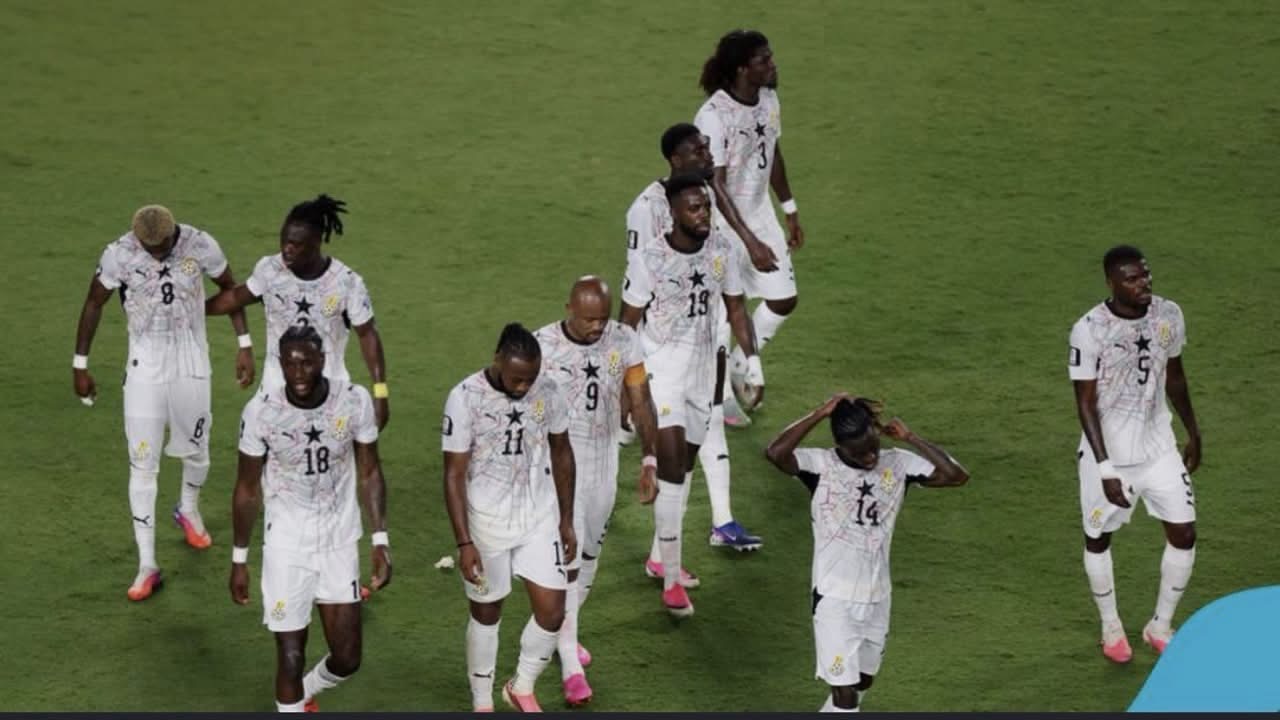
Ghana’s latest FIFA World Cup disappointment has reignited calls for sweeping reforms in the country’s football administration, with renewed focus on building sustainable structures rather than relying on short-term fixes and individual brilliance.


While the Black Stars continue to command unrivalled national support at every major tournament, critics argue the team’s familiar cycle of optimism followed by disappointment reflects deeper institutional failures that have remained unresolved for two decades.
The latest assessment insists Ghana remains one of Africa’s richest producers of football talent but has consistently failed to create the systems needed to nurture that potential into sustained international success.
According to the analysis, football in Ghana continues to generate significant financial returns through FIFA prize money and corporate sponsorships, yet little visible investment has been made in modern infrastructure capable of supporting elite player development.
Since Ghana’s first World Cup appearance in 2006, the Black Stars are estimated to have earned more than $55 million in FIFA participation and performance bonuses alone, excluding sponsorship revenue from major corporate partners. Despite those earnings, concerns remain over the absence of a dedicated world-class national training centre, with the senior national team still relying on private hotels and temporary training facilities during international camps.
The piece contrasts Ghana’s progress with that of countries such as Cape Verde and Morocco, both of which have invested heavily in football infrastructure and youth development over the past decade.
Morocco’s long-term strategy has drawn particular praise after producing a generation of players developed through a structured pathway combining home-grown talent and diaspora footballers integrated from youth level.
Youth development under the spotlight
Central to the proposed reforms is the creation of two national football academies—one serving northern Ghana and another in the south—where the country’s most talented Under-12 footballers would receive education, accommodation and elite football coaching under government scholarship.
The proposal also calls for closer collaboration between the Ministry responsible for Sports, the Ghana Football Association (GFA), the Ghana Education Service (GES) and the National Sports Authority (NSA) to establish a merit-based talent identification system beginning at the basic school level.
Under the suggested model, selected players would remain together through the various national youth teams, creating continuity before progressing to the Black Stars.
Supporters of the proposal argue such an approach would reduce the frequent rebuilding of national teams and strengthen cohesion—qualities they believe were instrumental in Ghana’s successful generations of the past.
Lessons from the past
The analysis points to Ghana’s golden era, when the nucleus of the country’s 2006 FIFA World Cup squad—including Michael Essien, Sulley Muntari, John Mensah, Stephen Appiah and John Paintsil—had already played together through the Under-17, Under-20 and Olympic teams before reaching senior level.
By contrast, concerns have been raised that many players in the current Black Stars squad have had limited opportunities to develop partnerships before representing the senior national team, making tactical cohesion difficult during major tournaments.
The article also highlights Ghana’s declining fortunes at youth level, noting that the country has struggled to qualify consistently for FIFA Under-17 and Under-20 World Cups despite previously being recognised as one of Africa’s strongest producers of young talent.
Diaspora strategy
Rather than relying on last-minute recruitment of foreign-born players eligible to represent Ghana, the proposal recommends establishing scouting offices in key European football hubs such as London, Amsterdam and Hamburg.
Former Black Stars players could then identify eligible youngsters early and integrate them into Ghana’s youth national teams, allowing them to develop alongside locally trained players before progressing to senior football.
The model mirrors Morocco’s approach, where many of its European-born internationals represented the country at youth level long before becoming senior stars.
A long-term vision
The proposed reforms aim to produce a generation capable of competing at the highest level by the 2034 FIFA World Cup, with advocates insisting meaningful success can only be achieved through patience, transparency and sustained investment.
The analysis concludes that Ghana’s football problems are not rooted in a shortage of talent but in inadequate planning, weak governance and inconsistent player development.
With the Black Stars once again left to reflect on another disappointing campaign, the debate over whether Ghana should continue with familiar routines or embark on a genuine reset is expected to dominate discussions on the future of the national game.