








































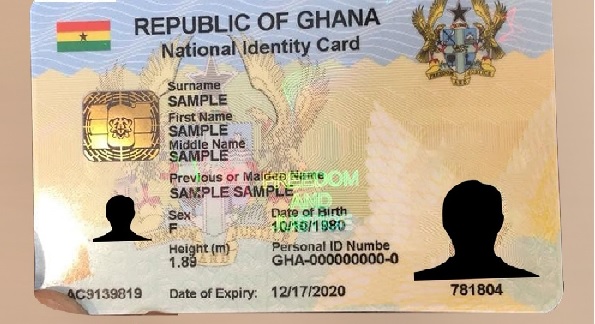
Organisations and individuals can no longer photocopy or rely on visual inspection of the Ghana Card to verify identity for transactions following the coming into force of the National Identity Register (Amendment) Regulations, 2026 (L.I. 2523).


The new Legislative Instrument makes biometric verification the legally recognised method for authenticating the Ghana Card in transactions, a move expected to significantly curb identity fraud, impersonation and document forgery.
Chief Executive Officer of the National Identification Authority (NIA), Wisdom Kwaku Deku, announced on Wednesday that any institution that continues to photocopy or visually inspect the Ghana Card instead of conducting biometric verification commits an offence under the new law.
Under L.I. 2523, organisations that violate the regulations are liable on summary conviction to fines ranging from 500 to 2,000 penalty units, while individuals who breach the law face fines of between 50 and 500 penalty units.
The amendment, which was laid before Parliament three months ago, has now completed the required legislative process and has been gazetted, making its provisions enforceable.
The Ghana Card serves as Ghana’s primary national identity credential and has become mandatory for a wide range of services, including banking, SIM registration, passport applications, tax administration, pensions, healthcare, social protection and other public and private sector transactions. The National Identity Register was established to provide every eligible person with a unique and secure identity while enabling accurate verification of identity whenever required in the public interest.
The NIA has consistently argued that photocopying identity cards and relying on visual inspection expose citizens and institutions to identity theft and fraud because such methods cannot conclusively establish that the person presenting the card is its legitimate holder. Biometric verification, by contrast, authenticates the cardholder against records in the National Identity Register using fingerprint or other biometric data, providing a more secure means of confirming identity.
Mr. Deku said the Minister for the Interior, who has oversight responsibility for the National Identification Authority, is expected to brief the nation in the coming days on enforcement measures and the implementation roadmap for the new regulations.
The latest amendment represents one of the most significant reforms to Ghana’s identity verification regime since the introduction of the Ghana Card, as authorities seek to transition all identity-dependent transactions from manual document inspection to secure digital biometric authentication.
Source: www.kumasimail.com