




































Minister for Education and Member of Parliament for Tamale South, Haruna Iddrisu, has reaffirmed the government’s commitment to accelerating the development of the University for Development Studies (UDS), with particular emphasis on completing key infrastructure at the Yendi Campus and expanding the university’s teaching hospital.


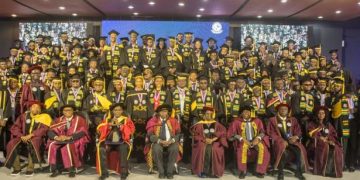
The assurance was given on Wednesday, July 22, 2026, when the Minister received the newly inducted Vice-Chancellor of UDS, Professor Mohammed Muniru, at his office for discussions on the future direction and strategic growth of the university.
Professor Muniru officially assumes leadership of UDS, succeeding Professor Seidu Al-Hassan, whose tenure was marked by significant institutional growth, academic expansion, research excellence and increased international collaborations that further enhanced the university’s reputation.
During the meeting, both leaders discussed measures to fast-track the development of the UDS Yendi Campus. Haruna Iddrisu said the government remained committed to providing additional infrastructure to complete the campus in honour of the late Overlord of Dagbon, Yaa-Naa Abubakari Mahama II.
According to the Minister, the late Yaa-Naa played a pivotal role in championing the establishment and expansion of the Yendi Campus, making its completion a fitting tribute to his enduring legacy and commitment to higher education in Northern Ghana.
The discussions also centred on plans to expand the UDS Teaching Hospital to increase the training capacity for medical doctors while improving specialist healthcare services across the Northern Savannah Ecological Zone.
Haruna Iddrisu further underscored the need to amend the recently enacted UDS Act to review the composition of the University’s Governing Council, explaining that the proposed changes would align the council with the new legal framework and strengthen institutional governance.
The University for Development Studies was established by an Act of Parliament in 1992 as Ghana’s first public university located in the northern part of the country. Unlike conventional universities, UDS adopted a unique multi-campus system spread across Tamale, Nyankpala, Navrongo, Wa and later Yendi, with a mandate to promote practical, community-centred education, research and development.
Over the past three decades, the university has grown from a modest institution into one of Ghana’s leading public universities, producing thousands of graduates in medicine, agriculture, engineering, nursing, education, business, law, allied health sciences, natural sciences and the humanities. UDS pioneered the Third Trimester Field Practical Programme (TTFPP), an innovative community-based training model that immerses students in rural communities to address real-life development challenges while gaining practical experience.
The university has also established itself as a leading centre for research in agriculture, climate resilience, public health, food security and sustainable development, earning recognition both locally and internationally. Its School of Medicine and Teaching Hospital have become key contributors to healthcare delivery and the training of medical professionals, particularly for underserved communities across Northern Ghana.
The latest discussions between the Education Minister and the new Vice-Chancellor underscore the government’s determination to consolidate these achievements while positioning UDS for further expansion as a centre of excellence in higher education, research and community development.
Source: www.kumasimail.com