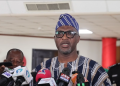
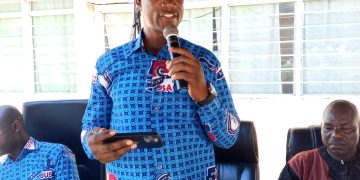

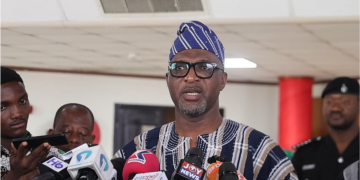

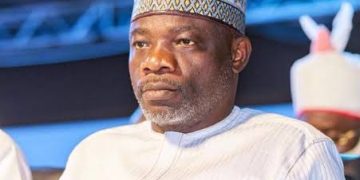


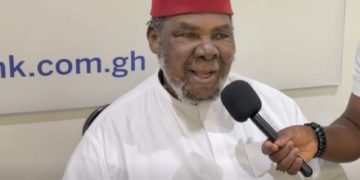










President of the National Concerned Small Scale Miners Association of Ghana, Michael Kwadwo Peprah, has mounted a strong defence of the Ghana Gold Board (GoldBod), describing it as a critical opportunity to reform Ghana’s gold trading system and ensure that the country and its small scale miners derive greater value from the mineral resource.


Mr Peprah said small scale miners had for years complained about a gold trading system in which foreign buyers wielded considerable influence over the purchase and pricing of gold, often leaving Ghanaian miners with limited control over the value of their production.
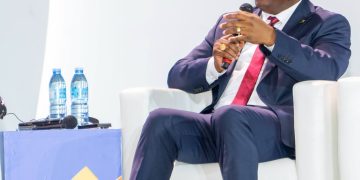
Speaking during a plenary session at the National Mining Dialogue 2026 in Accra on Tuesday, he urged stakeholders not to undermine GoldBod but rather support the institution to build a more structured and transparent gold market that works in the interest of Ghanaian miners and the national economy.
He said the establishment of GoldBod was rooted in concerns that small scale miners had raised over the years about the gold trading regime and the exploitation of miners by foreign interests.
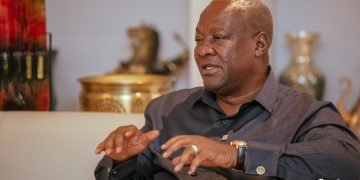
Mr Peprah disclosed that discussions between his association and then presidential candidate John Dramani Mahama contributed to the conception of a centralised gold buying structure, with the objective of securing fairer prices for miners and reducing the smuggling of Ghana’s gold out of the country.
He said GoldBod therefore represented an opportunity to correct longstanding weaknesses in the gold value chain and retain a greater proportion of the wealth generated from Ghana’s mineral resources within the country.

But beyond purchasing gold, Mr Peprah said GoldBod must become an important instrument for the transformation of the small scale mining sector.
He called for the institution to support miners with modern mining equipment, financing, geological information and environmentally responsible mining technologies, arguing that such interventions would enable small scale miners to operate more efficiently while reducing the environmental damage associated with illegal and poorly regulated mining.
His association had earlier welcomed proposals for GoldBod to support equipment financing, concession viability studies, sustainable environmental management and concessional financing for small-scale miners.
Mr Peprah’s defence of GoldBod formed part of a broader call for Ghana to distinguish between small scale mining and illegal mining (galamsey), warning against treating the two as synonymous.
He maintained that small scale mining remains a significant contributor to Ghana’s economy and provides livelihoods for large numbers of Ghanaians.
The answer, he argued, should therefore not be to eliminate small scale mining but to formalise, regulate and transform the sector so that miners can earn legitimate livelihoods while meeting environmental and other regulatory requirements.
He called for stronger collaboration among government, traditional authorities, regulatory agencies and mining communities to establish and enforce clear rules under which small scale miners can operate.
His position was delivered against the backdrop of the broader national debate over illegal mining, environmental degradation and the future of Ghana’s mining industry.
The National Mining Dialogue 2026, held under the theme “Rethinking the Social Licence to Operate,” brought together government officials, traditional leaders, mining companies, regulators, small scale miners and other stakeholders to examine how the country’s mining sector can secure greater community acceptance while delivering sustainable economic, social and environmental benefits.
For Mr Peprah, securing that social licence requires more than confronting illegal miners. It also requires creating a mining system in which legitimate Ghanaian operators have access to the resources, markets, technology and financing needed to operate responsibly.
He argued that the country’s response to illegal mining must therefore address the underlying economic realities that make mining a source of livelihood for thousands of people.
He described mining as a “bread and butter issue”, stressing that unemployment and limited economic opportunities remain important factors driving people into illegal mining.
His argument is that removing people from mining sites without providing viable alternatives risks leaving the underlying problem unresolved.
He consequently advocated stronger support for legitimate small scale miners, improved regulation and access to the equipment and financing required to move miners from informal and environmentally damaging practices into responsible, commercially viable operations.
Mr Peprah also challenged approaches that treat all small scale miners as criminals, insisting that the country must distinguish between licensed operators working within the law and illegal miners destroying forests, farmlands and water bodies.
He said Ghana could protect its natural resources while preserving small scale mining as a major source of employment and economic activity if the sector was properly regulated and supported.
His intervention at the dialogue consequently put the reform of Ghana’s small scale mining sector and the role of GoldBod at the centre of the conversation on the industry’s social licence — arguing that the country’s mineral wealth must create greater value for Ghanaian miners and communities while being extracted in an environmentally responsible manner.
Source: www.kumasimai.com