

















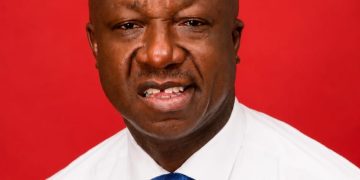

















The Executive Director of Africa Education Watch (Eduwatch), Kofi Asare, has proposed charging fees for boarding at Category A senior high schools to generate funds to establish more elite public secondary schools across Ghana.


He said the revenue from wealthier families who could afford to pay should be channelled into expanding the number of Category A schools, particularly in regions that currently have few or none.
Mr Asare said Ghana had developed a strong appetite for Category A secondary education, reflecting rising educational aspirations, but noted that fewer than 100 of the country’s estimated 1,000 public second-cycle institutions currently met the Category A standard.
He argued that limited public funding and competing demands from basic and tertiary education made it difficult for government to build enough schools to meet the growing demand.
According to him, a proposal by the former President of the Ghana National Association of Teachers (GNAT), Angel Carbonu, to make boarding in Category A schools fee-paying could provide an alternative source of financing for expansion.
Eduwatch had previously proposed in 2022 that 50 per cent of admissions to Category A schools could be privatized while the remaining 50 per cent continued under the Free SHS programme.
Mr Asare estimated that if about 100,000 Category A students paid an annual fee of GH¢20,000, the arrangement could generate about GH¢2 billion every year.
He said a Category A school with boarding capacity for about 3,000 students could cost approximately GH¢100 million to establish.
“That means the fees paid by the ‘rich’ could potentially finance 20 new Category A schools every year,” he said.
He proposed prioritising deprived regions such as Oti, Western North and Bono East, pointing out that Oti and North East currently had no Category A schools.
According to him, sustaining the financing model for five years could result in about 100 additional Category A schools, significantly widening access to elite public secondary education.
He, however, expressed doubts about the political feasibility of the proposal, arguing that partisan politics could make it difficult for successive governments to adopt a system that requires wealthier families to pay for access to Category A boarding education.
Source: www.kumasimail.com