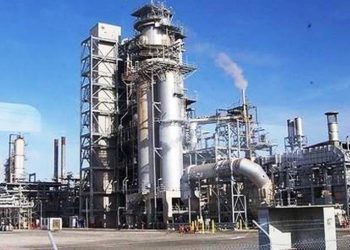















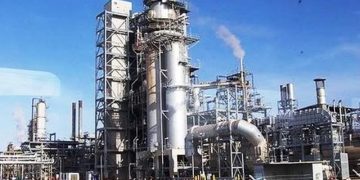

























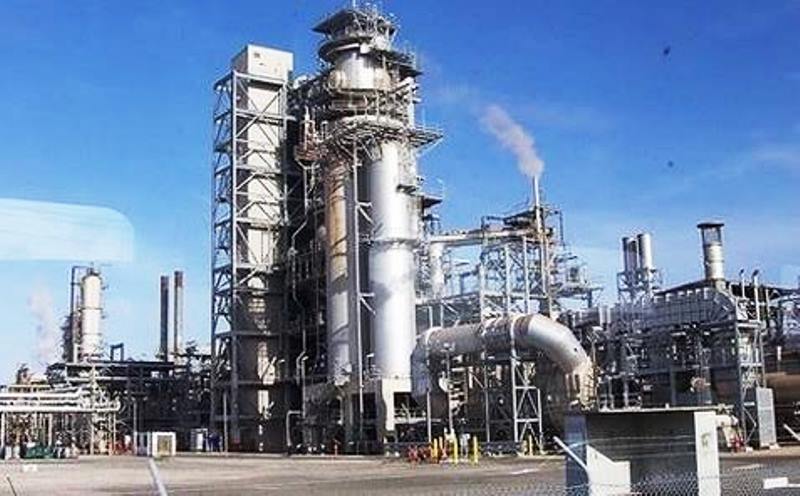
The Tema Oil Refinery (TOR) has resumed crude processing after years of operational shutdowns, with management pursuing an expansion programme to increase capacity to 100,000 barrels per stream day as Ghana targets greater reliance on locally refined petroleum products.


Managing Director Edmond Kombat disclosed this at the Government Accountability Series, where he outlined the refinery’s operational recovery, crude supply arrangements and plans to expand processing capacity.
According to him, crude processing resumed on December 19, 2025, following the completion of turnaround maintenance on the Crude Distillation Unit (CDU).
The maintenance works, which ran from August 1 to October 30, 2025, were funded entirely from the refinery’s internally generated funds and carried out by TOR engineers and technicians.
The National Petroleum Authority (NPA) subsequently inspected the plant, confirmed compliance with mandatory safety and operational requirements, and cleared the refinery to resume processing.
Mr Kombat said all product streams went into storage when processing restarted, marking the return of refinery operations after years of inactivity.
The CDU had been out of operation since April 2021, while the Residue Fluid Catalytic Cracking (RFCC) Unit had been shut down since 2019.
Crude supplies resume
Mr Kombat said TOR had received four crude cargoes of five million barrels each since May 2026, identifying them as Bonga, Baleine, Bonnie Light and Ghana’s Jubilee Medium Sweet crude.
The Jubilee cargo, delivered aboard the MT Apache on July 15, 2026, was paid for in full by TOR, making it the refinery’s first Jubilee crude cargo in a decade, he said.
On September 25, 2026, the refinery received another parcel of Ghanaian indigenous crude, comprising 950,000 barrels of Sankofa crude supplied by GNPC.
The return to domestic crude processing follows an earlier demonstration of TOR’s ability to refine Ghanaian crude. In December 2016, the refinery received its first delivery of indigenous crude from the TEN field aboard the MT Bodeira.
Mr Kombat said the refinery’s recovery was also reflected in increased product storage volumes.
According to him, storage volumes rose from 426,954 metric tonnes in 2024 to 1,107,389 metric tonnes in 2025, representing a 159.37 per cent increase.
Volumes increased further to 1.35 million metric tonnes in 2026, a 21.91 per cent rise over 2025.
The cumulative increase between 2024 and 2026 was 216.19 per cent, he said.
Capacity expansion
TOR is currently operating its CDU at approximately 28,000 barrels per stream day, but management intends to increase throughput to between 45,000 and 55,000 barrels per stream day.
Mr Kombat said engineers from Verga Engineering were working with TOR’s technical team to complete the tie-in and commission the F-61 crude heater.
The project is expected to enable the CDU to move towards its nameplate capacity.
In the medium term, management plans to install a new air cooler to increase processing capacity to 60,000 barrels per stream day.
The refinery also intends to replace its existing 6,500-barrel-per-day catalytic reformer with a 10,000-barrel-per-day continuous catalytic reformer.
A new 120-tonne boiler has been installed, while work continues on the RFCC turnaround and the supervisory control and data acquisition (SCADA) system.
The projects are intended to improve the refinery’s reliability, operational efficiency and ability to process crude into a broader range of petroleum products.
Government targets higher local refining
Mr Kombat said the President, on August 1, 2026, directed the Minister for Energy and Green Transition to work with the TOR Board and management on a strategic roadmap to increase the refinery’s capacity to 100,000 barrels per day, with a longer-term target of 200,000 barrels per day.
The government is targeting the supply of approximately 70 per cent of Ghana’s national fuel demand through local refining by 2028 as part of the broader expansion strategy.
Achieving that target will depend on the refinery’s ability to complete the planned upgrades, secure adequate crude supplies and sustain reliable production.
Management’s immediate priority remains completing outstanding maintenance and increasing throughput from the current operating level.
A refinery emerging from years of decline
Mr Kombat said the refinery inherited in January 2025 had suffered years of deferred maintenance, deteriorating infrastructure and financial difficulties.
At the time, 18 of TOR’s 59 storage tanks were out of service, while some had reportedly been unavailable since 2004.

The refinery had also been reduced largely to renting out storage space to petroleum service providers rather than performing its core function of processing crude oil.
Under Project Restore TOR, management has sought to rehabilitate the CDU, restart stalled infrastructure projects and improve security, logistics and staff welfare.
The recovery programme has also included the resumption of work on Boiler No. 8, the F-61 crude heater, the Residue Air Cooler and the Steam Turbine Generator.
The next phase will require the refinery to translate its return to operations into sustained production at higher capacity.
While the reported increase in storage activity indicates a significant expansion in the volume of petroleum products handled by TOR, storage volumes alone do not establish how much finished product was refined locally or how much of Ghana’s fuel demand the refinery currently meets.
The planned expansion and the government’s 2028 target will therefore depend on actual processing performance, infrastructure reliability, financing and the availability of crude supplies.
Source: www.kumasimail.com