























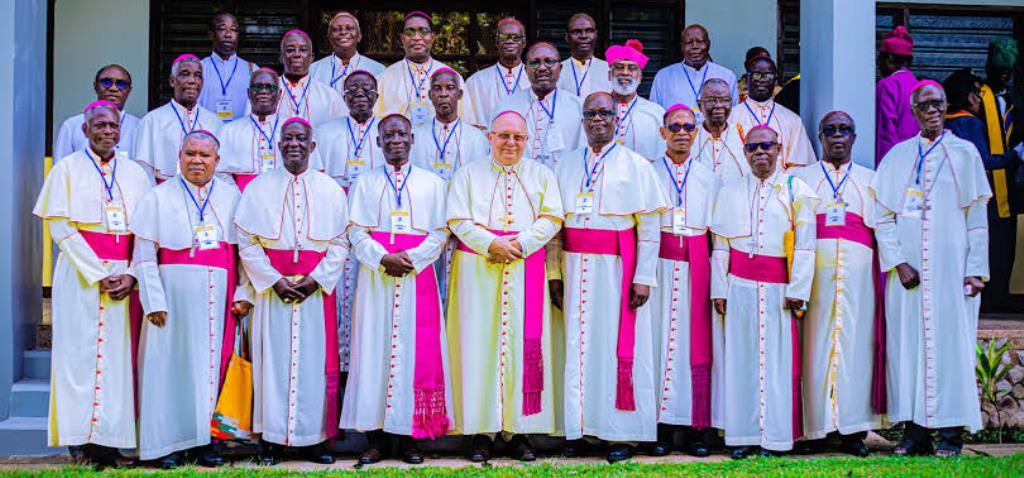
The Ghana Catholic Bishops’ Conference has called for the full and faithful implementation of recommendations contained in the report on the Kalba-Gbinyiri conflict, warning against selective application or unnecessary delays in resolving the protracted dispute.


The Bishops also urged parties involved in the conflicts in Bawku and Kalba-Gbinyiri to abandon violence and embrace dialogue, reconciliation and peaceful coexistence.
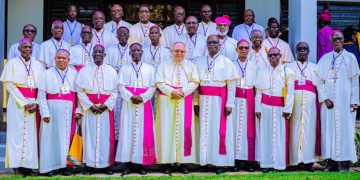
In a communiqué issued after their annual plenary assembly in Jamasi in the Ashanti Region, the Conference said the conflicts had inflicted devastating consequences on human lives, livelihoods, community cohesion and national security.
“We are deeply disturbed by the persistence of conflicts and communal tensions in various parts of the country, particularly those in Bawku and Kalba-Gbinyiri,” the Bishops stated.
The Gbinyiri conflict, which erupted on August 23, 2025, in the Sawla-Tuna-Kalba District of the Savannah Region, began over a disputed parcel of land reportedly sold by the community’s chief to a private developer.
According to reports, tensions escalated when some community members resisted the developer’s attempt to access the land, resulting in confrontations involving the chief and his son.
The dispute subsequently developed into violent clashes between Gonja and Lobi/Birifor communities, leaving several people dead, destroying properties and displacing tens of thousands of residents. The violence also spread to surrounding communities, with many affected residents seeking refuge in other parts of Ghana and neighbouring Côte d’Ivoire.
The government responded by deploying security personnel and initiating mediation efforts to restore calm.
On September 8, 2025, the Minister for the Interior, Muntaka Mohammed-Mubarak, inaugurated a seven-member Gbinyiri Mediation Committee following a directive from the National Security Council.
The committee, chaired by renowned conflict resolution expert Emmanuel Habuka Bombande, was tasked with facilitating the safe and dignified return of displaced residents, assessing the extent of the conflict and associated losses, promoting dialogue and reconciliation, and recommending sustainable measures to prevent a recurrence.
The committee subsequently developed a roadmap for inclusive engagement with affected communities and stakeholders, holding consultations with traditional authorities, youth groups, civil society organisations and security agencies.
It submitted its final report to the Interior Minister in February 2026, with recommendations intended to rebuild trust, restore social cohesion and provide a framework for lasting peace.
Among the key proposals highlighted during the presentation was the establishment of a monitoring mechanism to oversee the implementation of agreements reached under the peace process, in collaboration with relevant stakeholders, the Regional Security Coordinating Council, civil society organisations and development partners.
The committee also called for broader stakeholder participation, including the Vagla community, in the implementation phase of the peace process.
Receiving the report, Mr Muntaka expressed government’s readiness to implement its recommendations.
It is against this background that the Catholic Bishops have now called for the comprehensive implementation of the report, stressing that the recommendations should not be subjected to selective application or undue delay.
They acknowledged a recent reduction in violence in the affected areas but insisted that such developments should not be mistaken for a lasting resolution of the underlying disputes.
“While acknowledging the recent reduction in violence in these areas, we urge all parties to exercise restraint, renounce violence and embrace dialogue, reconciliation and peaceful coexistence,” the communiqué stated.
The Conference particularly stressed the need for the recommendations in the Kalba-Gbinyiri conflict report to be implemented comprehensively.
“We particularly call for the full and faithful implementation of the recommendations contained in the relevant report on the Kalba-Gbinyiri conflict, without selective application or undue delay,” the Bishops said.
Their intervention places renewed attention on the government’s responsibility to translate the mediation committee’s recommendations into concrete actions capable of addressing grievances, facilitating reconciliation and restoring confidence among affected communities.
The Bishops maintained that lasting peace could not be achieved through the mere absence of violence but required justice, mutual recognition, confidence-building and the protection of all affected communities.
“Lasting peace requires justice, mutual recognition, confidence-building and the protection of all affected communities,” they emphasised.
The Conference’s concerns reflect the broader national consequences of communal conflicts, particularly their impact on economic activities, social relationships and the delivery of essential services.

Beyond the two conflict areas, the Bishops also addressed traditional leadership and peaceful succession, commending the people of the Dagbon Traditional Area for their peaceful conduct following the demise of their king.
They urged traditional leaders across the country to uphold peace, unity and sustainable community development.
The Conference also congratulated the newly enstooled Paramount Chiefs of Mampong and Agona, wishing them successful reigns.
The Bishops further called on government, public institutions, religious leaders, traditional authorities and civil society organisations to exercise responsible leadership in addressing the challenges confronting the country.
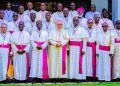
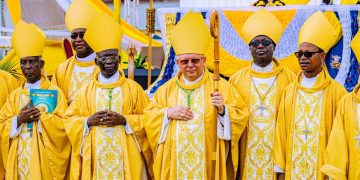
The communiqué was issued at the end of the Bishops’ annual plenary assembly held from November 3 to 14, 2026, at the Divine Providence Pastoral Centre in Jamasi.
The assembly was held under the theme, “Communion, Participation and Mission: Preparing the Catholic Church in Ghana for Her 150th Anniversary in 2030.”
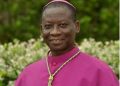
It was signed by Most Rev. Matthew Kwasi Gyamfi, Catholic Bishop of Sunyani and President of the Ghana Catholic Bishops’ Conference.
Source: www.kumasimail.com