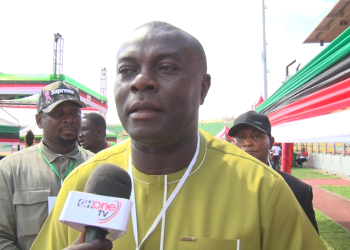



































A Policy Advisor at the Ghana Medical Trust Fund (GMTF), Dr Norbert Mantu Kipo, has rejected claims that the Fund is a wasteful duplication of the National Health Insurance Scheme (NHIS), insisting that its interventions are addressing critical gaps in the country’s healthcare financing system.


Dr Kipo’s response follows a strongly worded article by preventive medicine activist Naa Ziblim, who on Thursday, November 12, 2026, described the Fund, popularly referred to as MahamaCare, as useless and accused the government of creating a parallel healthcare financing structure at the expense of the NHIS.
But Dr Kipo insists that the criticism reflects a misunderstanding of the Fund’s mandate, arguing that the GMTF was established not to compete with the NHIS but to provide financial support for expensive specialist healthcare interventions that existing arrangements may not adequately cover.
In a response titled The Ghana Medical Trust Fund Is Not Useless. Let the Facts Speak, Dr Kipo cited more than 900 cancer patients reportedly receiving support from the Fund as evidence of its impact.
He argued that the beneficiaries represent Ghanaians whose access to specialist treatment would otherwise be severely constrained by financial difficulties.
Dr Kipo also disputed the suggestion that the GMTF duplicates the mandate of the NHIS under the National Health Insurance Act, 2012 (Act 852).
He explained that while the NHIS primarily provides financial risk protection through health insurance, the GMTF has a broader mandate covering patient financial support, healthcare infrastructure and equipment, specialist training and medical research.
He cited investments in catheterisation laboratories, MRI and CT scanners, mammography machines and ventilators, alongside training for specialist doctors, nurses, pharmacists and other healthcare professionals.
According to him, these interventions extend beyond the traditional health insurance mandate and are intended to strengthen Ghana’s capacity to manage complex medical conditions.
Funding controversy
One of the major concerns raised by Naa Ziblim is the allocation of 20 per cent of the National Health Insurance Fund (NHIF) to the GMTF.
He argues that the decision effectively takes resources away from an already struggling NHIS, which he claims is burdened with outstanding claims to healthcare providers, delayed payments and out-of-pocket expenses for patients.
He contends that the resources would have been better invested in expanding NHIS coverage, paying healthcare providers promptly and improving access to treatment for conditions such as kidney failure, cancer, diabetes and cardiovascular diseases.
However, Dr Kipo rejected the claim that the NHIS has been robbed to finance the GMTF.
He argued that the uncapping of the National Health Insurance Fund in 2025 increased the resources available to the NHIS, adding that the 20 per cent allocation to the GMTF must be considered within the context of the expanded funding envelope.
He further disputed claims that healthcare facilities are currently owed outstanding NHIS claims, insisting that the National Health Insurance Authority continues to make regular monthly payments to facilities.
Naa Ziblim, however, maintains that strengthening the NHIS should have taken precedence over establishing a separate fund with its own administrative structures.
Actuarial assessment and sustainability
The sustainability of the GMTF is another major point of contention.
Naa Ziblim argues that the Fund lacks a proper actuarial assessment to determine the long-term financial implications of covering expensive conditions such as cancer, kidney failure and stroke.
He estimates that the interventions could require about GH¢3 billion annually and questions whether the Fund can survive changes in government, particularly given its association with President John Mahama’s name.
He also argues that Ghana should have expanded the benefits of the NHIS rather than establish another institution to finance conditions already falling within the broader mandate of the health insurance authority.
But Dr Kipo described the allegation that no actuarial assessment had been conducted as false.
He said extensive actuarial studies had informed the selection of conditions, financial projections and funding provisions, adding that the GMTF had established a dedicated directorate for actuarial analysis to guide its interventions and ensure financial sustainability.
He maintained that the Fund was designed to address financing gaps in specialist and tertiary healthcare, where the cost of complex medical interventions can place enormous financial pressure on patients and their families.
Access to specialist treatment
Naa Ziblim has also questioned the Fund’s patient application and approval arrangements, arguing that its reliance on specialist referrals and applications through selected hospitals could exclude people in rural communities and those without easy access to specialist healthcare.
He further alleges that patients may have to wait up to 14 days for approval and that the Fund’s coverage is restricted to treatment in Ghana, leaving patients who require specialised procedures abroad without support.
His article also raises concerns about the absence of a publicly accessible patient register and claims-paid schedule as of November 2026, making it difficult for the public to independently establish the number of beneficiaries, particularly among kidney patients.
He cites complaints by the Renal Patients Association about delays as part of his argument.
Dr Kipo’s response, however, focuses on the need to strengthen local specialist healthcare capacity rather than expand dependence on overseas treatment.
He disclosed that the GMTF is collaborating with the Korle Bu Teaching Hospital to support kidney transplantation in Ghana, including patients scheduled for procedures in November.
According to him, the initiative involves strengthening local expertise, infrastructure and equipment to enable more complex medical conditions to be treated within the country.
He said the broader objective was to reduce Ghana’s dependence on overseas medical treatment while improving access to specialist services locally.
The bigger healthcare financing debate
Naa Ziblim argues that Ghana should draw lessons from countries such as the United Kingdom, Germany and Rwanda, which he says have prioritised strengthening existing healthcare financing arrangements rather than establishing parallel funds for expensive medical conditions.

He maintains that the government should have amended the NHIS Act, expanded its benefits, uncapped the National Health Insurance Fund and ensured timely payment of healthcare providers.
Dr Kipo, on the other hand, maintains that the existence of the GMTF does not undermine the importance of a strong NHIS, arguing that both institutions have complementary roles in achieving national healthcare objectives.
He said Ghana needs a strong NHIS, adequately equipped hospitals, trained specialist healthcare professionals and a dedicated financing mechanism to support patients facing the enormous costs of complex chronic diseases.
The competing positions have brought renewed attention to the country’s healthcare financing priorities, particularly the balance between strengthening universal health insurance coverage and providing dedicated funding for expensive specialist treatment.
While Dr Kipo insists that the Fund should be judged by its impact on patients and the healthcare system rather than the politics surrounding its establishment, Naa Ziblim argues that its funding structure, administrative costs and long-term sustainability raise fundamental questions about whether Ghana needs another healthcare financing institution.
The debate ultimately raises a critical question for policymakers: whether the GMTF represents a necessary complement to the NHIS in closing specialist healthcare financing gaps or whether its objectives could have been achieved more efficiently by strengthening the existing national health insurance system.
Source: www.kumasimail.com