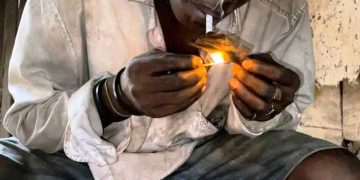



























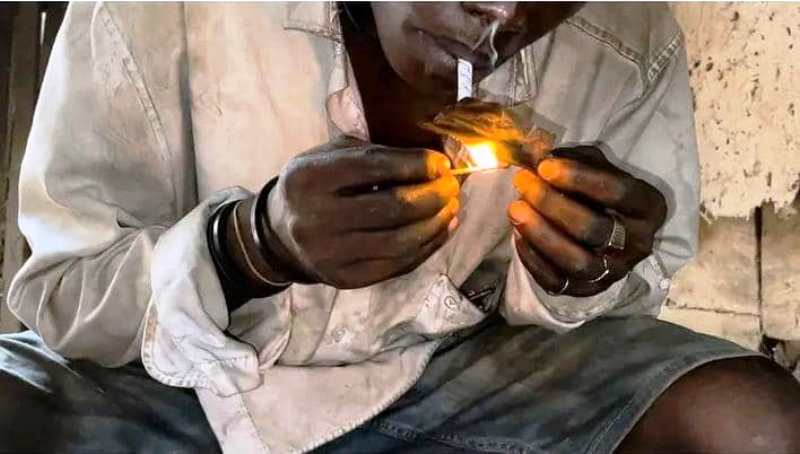
The Ghana Catholic Bishops’ Conference has warned that rising drug trafficking and substance abuse pose a serious threat to Ghana’s public health, family stability, youth development and national security, calling for stronger enforcement and rehabilitation measures to confront the problem.


The Bishops said the situation required a coordinated national response involving security institutions, families, schools and religious organisations, with particular attention to preventing substance dependency among young people.
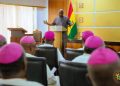
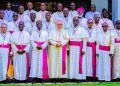
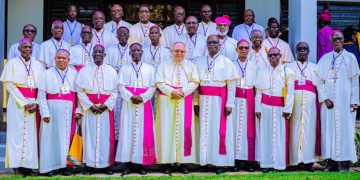
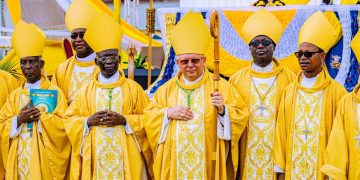
In a communiqué issued at the end of their annual plenary assembly in Jamasi in the Ashanti Region, the Conference expressed concern over what it described as the alarming rates of drug trafficking and substance abuse in the country.
“The alarming rates of drug trafficking and substance abuse, posing a threat to public health, family stability, youth development and national security, cause us great distress,” the Bishops stated.
They called on relevant institutions to intensify intelligence-led enforcement operations, strengthen border controls and ensure that offenders faced legitimate punishment.
However, the Conference stressed that enforcement alone would not be sufficient without sustained public education and accessible rehabilitation services.
“Families, schools and religious institutions must equally strengthen preventive education and support for persons affected by substance dependency,” the communiqué stated.
The Bishops’ concerns come against the background of recent findings by the Narcotics Control Commission (NACOC) pointing to significant levels of substance use among young people.
A baseline study conducted by the Research and Consultancy Centre of the University of Professional Studies, Accra, in collaboration with NACOC’s municipal command, found that 45.1 per cent of 1,039 young respondents surveyed across five communities in the La-Nkwantanang-Madina Municipality had used substances for non-medical purposes.
The study, whose findings were reported by the Ghana News Agency on November 12, 2026, covered Madina, Teiman, West Adenta, Pantang and Oyarifa.
Substance use prevalence approached three-quarters of respondents in Madina, according to the findings.
More worrying was the situation among young people outside formal education, where substance use was reported to be close to 80 per cent.
The study also found that friends accounted for more than 40 per cent of first-time substance use, highlighting the influence of peer pressure.
Despite widespread awareness of the dangers associated with drugs, access to treatment remained a major challenge.
According to NACOC Director-General Major General Maxwell Obuba Mantey, nearly eight out of every 10 substance users surveyed expressed a desire to quit, but only 10 per cent had received assistance, while less than one per cent had undergone formal treatment.
The findings prompted NACOC to identify Madina and surrounding communities as priority areas for intensified enforcement, community-based prevention and referral services for young people seeking treatment.
The national picture also reflects the scale of the drug trafficking challenge confronting security agencies.
In September 2026, Ghana reported that intelligence-led operations by NACOC and partner security agencies had resulted in 217 arrests and 165 prosecutions, alongside the interception of more than 8.5 tonnes of assorted narcotic drugs and 45.4 million tramadol tablets during the period under review.
The figures were presented by Ghana’s delegation at the 33rd Meeting of Heads of National Drug Law Enforcement Agencies, Africa, in Vienna, Austria.
The Narcotics Control Commission also highlighted the growing trafficking and diversion of pharmaceutical and synthetic substances, including tramadol and tapentadol, alongside cocaine, heroin and cannabis.

For the Catholic Bishops, the challenge requires society to confront both the supply of illicit substances and the conditions that make young people vulnerable to substance dependency.
Their call for stronger border controls and intelligence-led operations is therefore accompanied by an appeal for preventive education and rehabilitation.
The Conference maintained that families, schools and religious institutions have important responsibilities in helping young people resist substance abuse and supporting those already affected.
The Bishops’ intervention adds the voice of the Catholic Church to growing national concerns about the impact of drug trafficking and substance abuse on Ghana’s social and economic development.
The 2026 plenary assembly was held from November 3 to 14 at the Divine Providence Pastoral Centre in Jamasi under the theme, “Communion, Participation and Mission: Preparing the Catholic Church in Ghana for Her 150th Anniversary in 2030.”
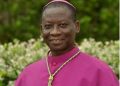
The communiqué was signed by Most Rev. Matthew Kwasi Gyamfi, Catholic Bishop of Sunyani and President of the Ghana Catholic Bishops’ Conference.
Source: www.kumasimail.com