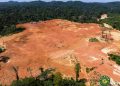































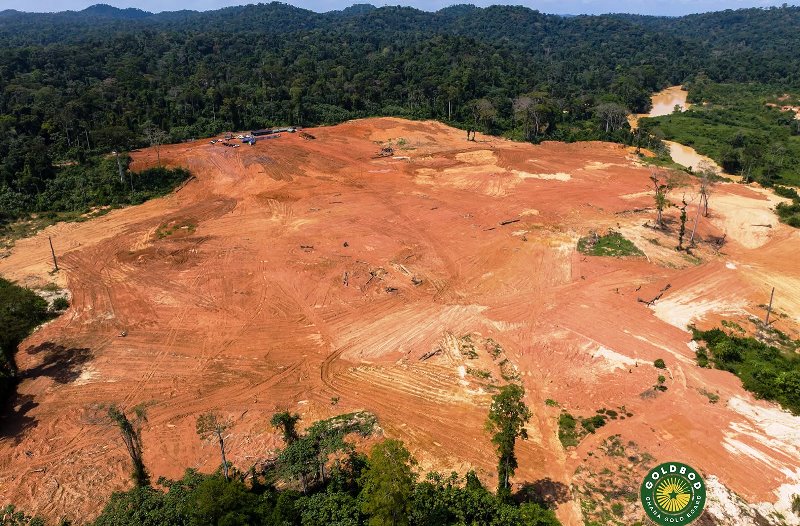
The Ghana Gold Board (GoldBod), in partnership with the Ghana Armed Forces, has completed the reclamation of 50 hectares of land devastated by illegal mining activities in the Tano-Nimiri Forest Reserve, marking a significant milestone in efforts to reverse environmental destruction in Ghana’s forest reserves.


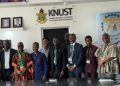
The first phase of the reclamation project, executed by the military’s 14 Engineer Brigade, has been completed, with the rehabilitated land formally handed over to GoldBod on November 18, 2026.
GoldBod is expected to transfer the reclaimed area to the Forestry Commission for reforestation, ecological restoration and long-term protection under a ten-year environmental restoration and monitoring arrangement.
The intervention forms part of GoldBod’s Corporate Social Responsibility (CSR) commitments and broader efforts to promote responsible mining, environmental sustainability and the protection of Ghana’s natural resources.
According to GoldBod, the engineering works involved reclaiming abandoned mining pits, stabilising degraded landscapes, reconstructing access infrastructure and establishing a Forward Operating Base to prevent renewed illegal mining activities.
Speaking during the handover, Commander of the 14 Engineer Brigade, Brigadier General Richard Kinney, disclosed that his team identified ten major abandoned mining pits within the affected section of the forest reserve, some measuring approximately 20 feet deep and between 30 and 50 metres wide.
The abandoned excavations had accumulated stagnant water and left the surrounding landscape severely disturbed, creating additional environmental and safety risks.
The military engineers undertook extensive earthworks, including dewatering, backfilling, soil stabilisation and landscape reshaping to restore the affected areas and minimise erosion.
The operation also involved reconstructing eight bridges and improving a 13.6-kilometre access road to facilitate the movement of personnel, equipment and heavy-duty machinery into the remote forest compartment.
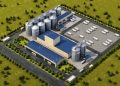
An important component of the project was the establishment of a Forward Operating Base comprising ten prefabricated containers designed to accommodate ten Forestry Commission personnel.
The facility is equipped with borehole, solar-powered electricity, washrooms, a kitchen and security fencing.
The base is expected to strengthen the Forestry Commission’s operational presence within the reserve and support surveillance and protection against further illegal mining encroachment.
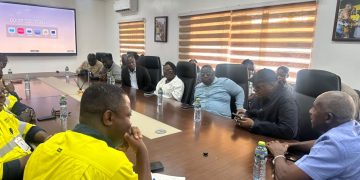
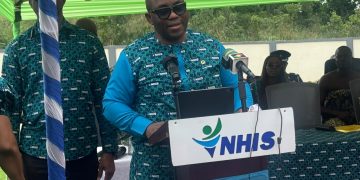
Representing GoldBod Chief Executive Officer, Sammy Gyamfi, the Board’s Deputy Director of Mining Operations, James German, described the intervention as evidence of how institutional collaboration and technical expertise could help reverse environmental degradation.
He stressed that responsible mining must extend beyond regulatory compliance to include practical environmental restoration and sustainable land management.
Mr German further disclosed that GoldBod’s partnership with the Forestry Commission provides for a ten-year commitment to sustained restoration and monitoring of the reclaimed area.
Under the arrangement, the Forestry Commission will lead tree planting and other ecological restoration activities to facilitate the recovery of the forest ecosystem.
GH¢35 million restoration investment
The completion of the engineering works follows a partnership formalised in June 2026 between GoldBod, the Ministry of Defence, the Ghana Armed Forces and the Forestry Commission.
The initial project was estimated to cost approximately GH¢35 million, comprising GH¢27.9 million for civil engineering and reclamation works and GH¢7.2 million for afforestation and restoration activities over ten years.
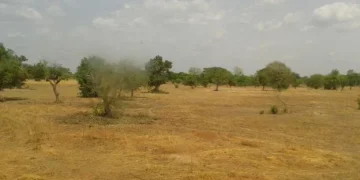
The Tano-Nimiri Forest Reserve was selected as the first beneficiary of GoldBod’s National Reclamation and Environmental Restoration Programme following assessments that revealed extensive destruction caused by illegal mining.
The initial intervention targets 50 hectares within Compartment 161 of the reserve, near Samreboi, although the wider degraded area was estimated at approximately 200 hectares.
A field report published by GoldBod in October 2026 indicated that illegal mining activities had destroyed approximately 192.4 hectares of woodland in the area between 2021 and 2024.
The destruction significantly affected vegetation, biodiversity and timber resources previously managed by Samatex Timber and Plywood Company.
The project is therefore expected to contribute not only to restoring vegetation cover but also to improving soil stability, protecting water resources and supporting the recovery of the surrounding ecosystem.
At the June partnership signing ceremony, former Deputy Defence Minister Ernest Brogya Genfi emphasised that tackling illegal mining required both preventive and restorative interventions.

He argued that while law enforcement remained necessary to prevent further destruction, equal attention must be given to rehabilitating lands already damaged by illegal mining.
Forestry Commission Chief Executive Dr Hugh C.A. Brown also welcomed the partnership, describing it as an important intervention in the country’s efforts to restore degraded forest landscapes.
He disclosed at the time that approximately 8,700 hectares of forest reserves across Ghana had been degraded by illegal mining as of the end of 2024, with the figure expected to increase following subsequent assessments.
The Tano-Nimiri intervention is expected to serve as a pilot for similar reclamation projects in other parts of the country.
GoldBod has also indicated plans to expand its reclamation programme, with further interventions expected in 2027.
The ten-year restoration commitment will be particularly important in determining whether the reclaimed land can sustain vegetation recovery and resist renewed illegal mining activities.
Source: www.kumasimail.com