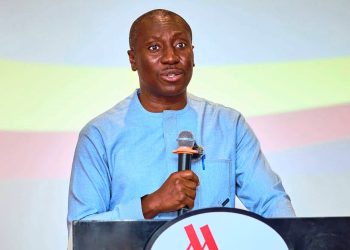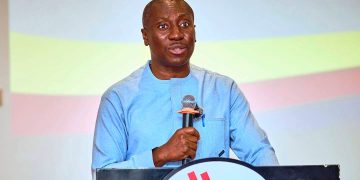


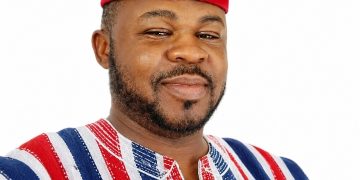
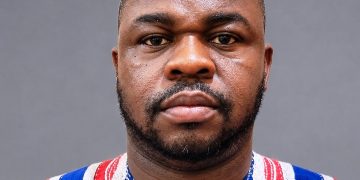




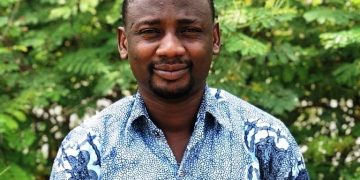








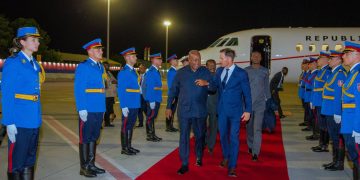


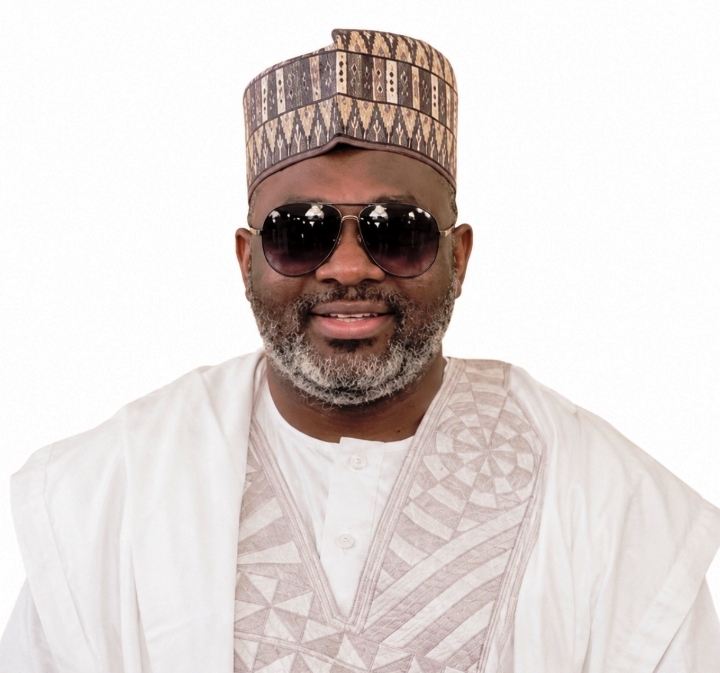
In Northern Ghana, where the names of politicians, traditional rulers and public officials often dominate conversations about power and influence, Alhaji Fuseini Yushawu, popularly known as Alhaji Fuzak, occupies a somewhat different space.


He is not a minister. He does not hold a government appointment. He is not a career politician.
He is a businessman. And his principal business is construction.
Through Fuzak Constructions Ltd, Alhaji Fuzak has established himself as a contractor associated with road, civil and building projects, while building a public profile that extends well beyond construction sites.
His growing visibility comes from a combination of business, political engagement and philanthropy — particularly interventions in education, healthcare, religion and community development. But beneath all these dimensions is one recurring theme. He builds.
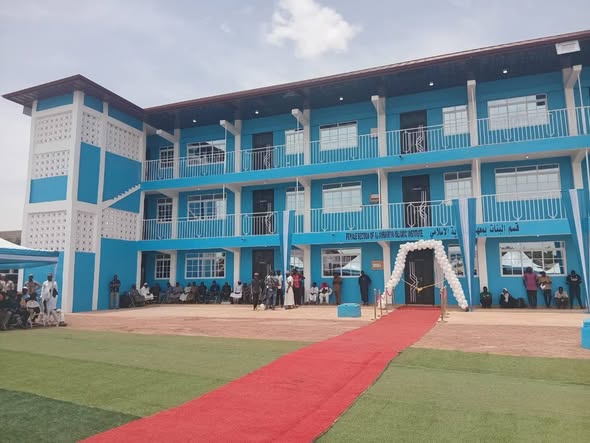
He builds roads through his construction business. He builds classrooms through philanthropy. He supports the construction of educational and religious infrastructure. And now, he wants to build a modern labour ward for one of Tamale’s major public hospitals.
That makes the story of Alhaji Fuzak less about a businessman who gives away money and more about a contractor whose understanding of development appears to be rooted in one simple idea: identify a need and build something that answers it.
Building the business
The strongest foundation of Alhaji Fuzak’s public profile remains Fuzak Constructions Ltd.
The company has been involved in building and civil engineering works, including major road projects in northern Ghana. Ghana Highway Authority records have previously listed Fuzak Company Ltd among contractors engaged on significant road projects. Among them are the 40.6-kilometre Yendi–Saboba road, with a stated contract value of approximately GH¢68.1 million, the 30-kilometre Tamale–Yendi road, valued at approximately GH¢19.9 million, and the 36-kilometre Tumu–Welembelle road in the Upper West Region, valued at about GH¢92.5 million.
The stated values of these three projects alone amount to roughly GH¢180.5 million. This figure should not be interpreted as Alhaji Fuzak’s personal wealth or as the current value of his company. Contract values represent project costs, not the contractor’s income or profit. But they do provide an indication of the scale at which Fuzak Constructions has operated. And that is important to understanding the man behind the philanthropy.
Alhaji Fuzak did not become prominent simply because he became a generous donor.
His influence has been built on a commercial enterprise operating in one of Ghana’s most important but challenging sectors: infrastructure. For a northern Ghanaian businessman to establish a name in that space and secure substantial civil works projects is itself part of his story. It also helps explain why infrastructure has become such a dominant feature of his philanthropy.
A contractor’s approach to giving
At Anbariya Islamic Institute in Tamale, Alhaji Fuzak’s philanthropic intervention has grown into something approaching a development programme.
On April 4, 2026, he commissioned a substantial classroom facility for the institution. The project, described in reports as a 15-unit, three-storey classroom block, was designed to expand the school’s capacity and improve the learning environment for its students.
But the classroom block was only one component of his support. He also provided two mechanised boreholes, 450 classroom furniture, while construction proceeded on a modern ICT facility intended to introduce students to digital learning and skills.
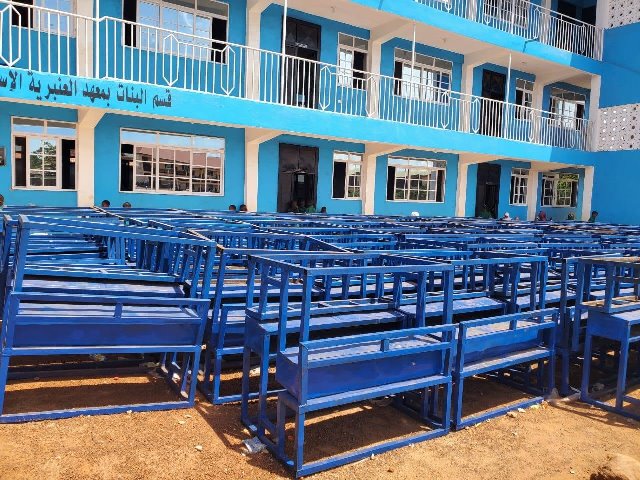
The intervention is significant because it reflects a pattern increasingly associated with Fuzak’s philanthropy. He does not appear content simply to make a cash donation. He tends to attach his support to tangible projects.
A school needs classrooms.
He builds classrooms.
It needs water.
He provides boreholes.
It needs digital infrastructure.
He supports an ICT facility.
It needs transport for religious outreach.
He provides a vehicle.
And when he identified what he regarded as a gap in the school’s recreational infrastructure, he pledged to construct an AstroTurf pitch. The pitch is expected to be completed by the end of 2026.
The result is a philanthropic footprint that looks remarkably similar to the work he knows professionally. It is project-based. It is infrastructure-driven. And it is designed to leave something behind.
Why Anbariya matters to him
There is also a personal dimension to the relationship between Alhaji Fuzak and Anbariya.
He has described himself as an “Anbariya boy” and regards his support for the institution as a responsibility rather than merely an act of charity.
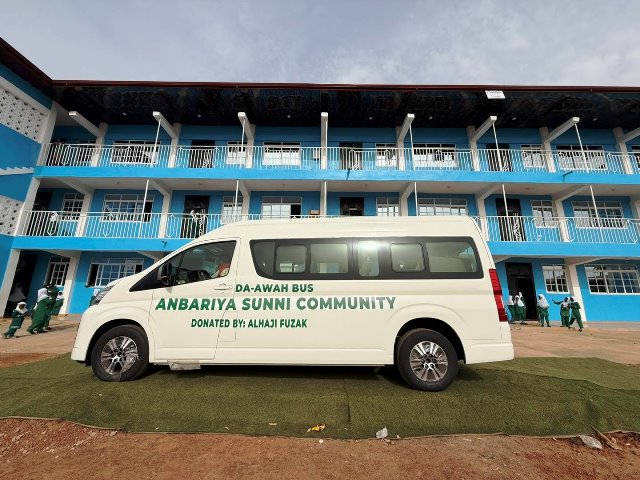
In April 2026, he also fulfilled a promise to provide a Da’wah bus to the Anbariya Sunni Community to support Islamic outreach.
The projects have given his relationship with the institution a permanence that goes beyond individual donations.
From classrooms to healthcare
The next major project could take that philosophy into an even more consequential area: maternal healthcare.
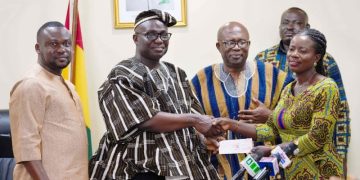
At the launch of Tamale West Hospital’s centenary celebrations in July 2026, Alhaji Fuzak’s aide, Tahiru Mohammed Habib Veron, announced that the businessman was prepared to fully fund the construction of a new labour ward for the hospital.
The announcement was significant because the absence of a dedicated labour ward has been identified as one of the facility’s major challenges.
According to the announcement, Alhaji Fuzak believes the hospital deserves a modern and befitting facility capable of supporting quality maternal healthcare.
A sod-cutting ceremony is expected to precede construction. If completed as planned, the project would become one of his most consequential philanthropic interventions.
Unlike many charitable projects whose impact is confined to a particular institution or community, a labour ward at a public hospital has the potential to serve women from across the wider Tamale area and beyond.
It also brings his philanthropy into direct contact with one of the most critical areas of public health: safe childbirth.
For a contractor, it is another building. For a mother, it could be something much more important.
His influence beyond construction
Alhaji Fuzak’s influence, however, cannot be understood solely through his company.
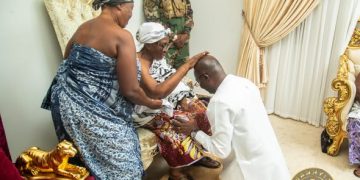
He has cultivated relationships across the religious, traditional and political landscape of northern Ghana. His support for traditional authorities has been particularly visible during major cultural and funeral events.
During the funeral of the late Yaa-Naa Abubakari Mahama II, for instance, his delegation presented substantial quantities of food, livestock and cash to several traditional authorities.
At each palace, the delegation reportedly presented 20 bags of rice, 20 cartons of cooking oil, 10 bags of maize, a bull and GH¢10,000.
Such interventions may appear modest compared with a road project or a multi-storey classroom block, but they illustrate the breadth of his relationships within Dagbon’s traditional establishment. They also demonstrate a form of philanthropy deeply connected to the social structures of northern Ghana.
The political dimension
There is another part of the Fuzak story that cannot be separated from his public influence: his political affiliation with the National Democratic Congress.
Alhaji Fuzak is an established supporter and financier of the NDC and played a role in the party’s grassroots mobilisation ahead of the 2024 general elections.
His political support has included direct assistance to party activists.
In 2021, he donated motorcycles reportedly worth more than GH¢620,000 to more than 100 NDC supporters in the Northern Region, particularly branch executives, to facilitate grassroots mobilisation during the party’s reorganisation.
His political engagement has continued to make him a recognisable figure within NDC circles in the region.
The construction of a reputation
What makes Alhaji Fuzak particularly interesting as a businessman is the way his commercial identity and public reputation have evolved alongside each other.
His company has undertaken major construction and road projects.
His political involvement has given him access to a powerful network of relationships.
His philanthropy has given him visibility among communities and institutions far beyond the construction industry.
And his support for traditional and religious institutions has deepened his social influence.
It is a combination that gives him an unusual position in northern Ghana’s public life.
He is a businessman. He is a political financier. He is a philanthropist.
The three identities overlap without becoming identical.
Building beyond the balance sheet
The most interesting question about Alhaji Fuzak may therefore not be how much he has accumulated.
There is insufficient reliable public information to put a credible figure on his personal wealth, and it would be misleading to equate the value of Fuzak Constructions’ contracts with his personal fortune.
The more meaningful question is what he is building with the influence and resources generated through his business.
The legacy question
For businessmen, success is often measured in contracts won, projects completed, assets accumulated and companies built.
For philanthropists, the measure is usually the number of people helped.
For political financiers, influence is measured through networks and mobilisation.
Alhaji Fuzak’s story sits at the intersection of all three.
The challenge now is sustainability.

Can the projects he supports remain functional long after their commissioning ceremonies?
Can the institutions he assists maintain and build upon the facilities?
Can the next generation of students who pass through the classrooms, ICT centre and sports facilities become the ultimate measure of the investment?
And can the proposed labour ward at Tamale West Hospital become a lasting contribution to maternal healthcare?
Those questions will determine the difference between philanthropy that attracts headlines and philanthropy that becomes legacy.
For now, however, the evidence of Alhaji Fuzak’s preferred method is clear.
He builds.
And in a region where infrastructure deficits remain one of the biggest obstacles to development, the significance of that choice is difficult to ignore.
The contractor builds roads. The philanthropist builds classrooms. The community builder builds institutions.
For Alhaji Fuseini Yushawu, popularly known as Alhaji Fuzak, the next chapter may be about whether all those structures ultimately add up to something bigger than the buildings themselves: a lasting legacy in Northern Ghana.
Source: www.kumasimail.com