
















Burkina Faso has taken a major step towards reducing its dependence on imported textiles and retaining more value from its cotton industry with the inauguration of a large-scale textile manufacturing complex dedicated to both military and civilian production.


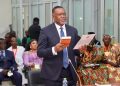
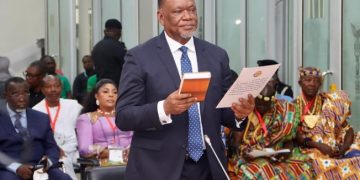
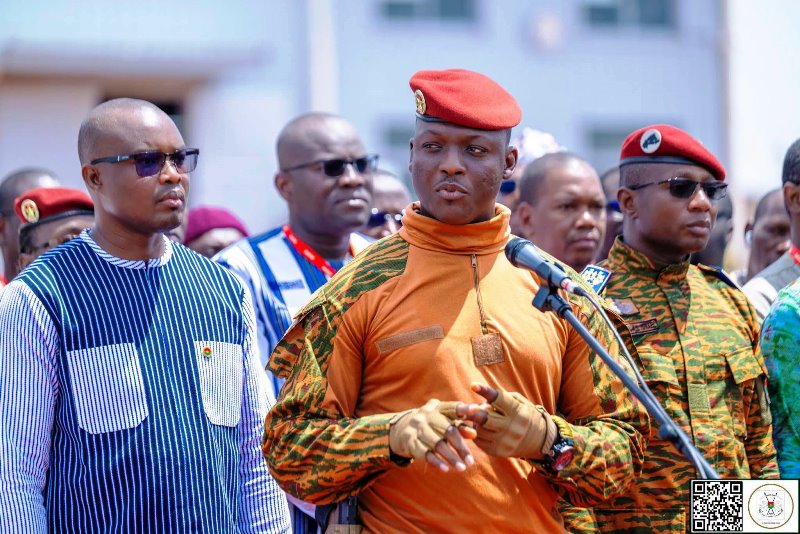
President Captain Ibrahim Traoré inaugurated the Burkina Faso Armed Forces Textile Industrial Complex, known as TEXFORCES-BF, at Logofourousso in the municipality of Bobo-Dioulasso on Wednesday, describing the facility as a strategic assertion of national sovereignty.
The project marks one of the clearest expressions yet of the Traoré administration’s drive to move Burkina Faso beyond the export of raw materials towards domestic processing and manufacturing.
TEXFORCES-BF will produce uniforms for the country’s Defence and Security Forces and Volunteers for the Defence of the Homeland, while also manufacturing clothing for the civilian market.
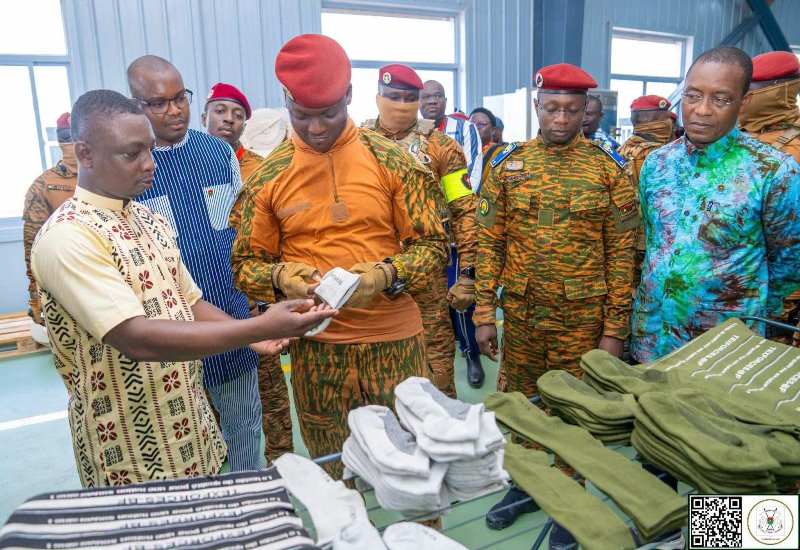
For a major cotton-producing country, the decision has significant economic implications. Instead of exporting cotton and importing finished textiles, Burkina Faso is seeking to capture more of the value generated along the production chain, including spinning, weaving, dyeing, finishing and garment manufacturing.
“For a long time, even within the sub-region, we exported our raw materials. With this complex, we have decided to assert our sovereignty in the textile sector,” Captain Traoré said after the inauguration.
He also linked the ability to manufacture clothing locally to national dignity and self-reliance.
From cotton producer to textile manufacturer
The scale of TEXFORCES-BF points to an ambition that goes well beyond supplying military uniforms.
According to the Chairman of the Board of Directors of TEXFORCES-BF, Brigadier General Ismaël Diaouari, the complex has annual production capacities of up to 20 million metres of woven fabric, five to six million knitted units, 20 million metres of dyed and finished fabric and between four and six million garments.
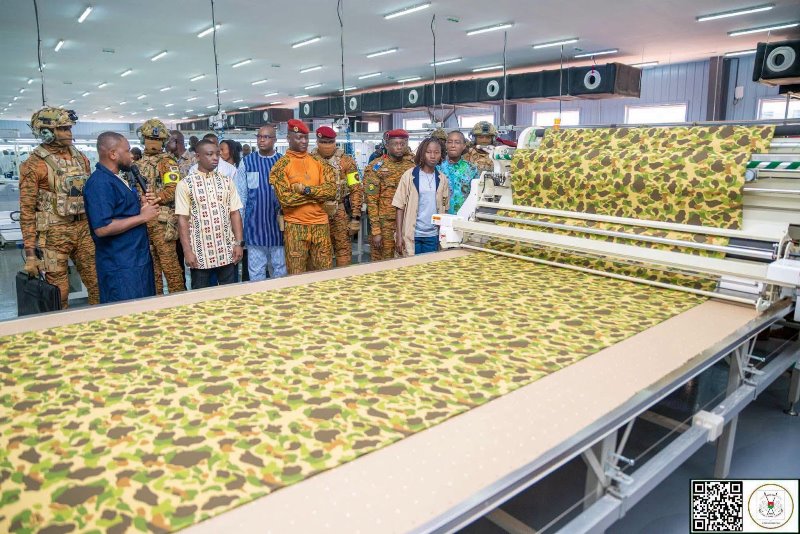
The facility is also expected to produce more than five million T-shirts and over one million pairs of socks annually.
The long-term plan is even more ambitious.
TEXFORCES-BF aims to eventually process up to 50,000 tonnes of cotton every year, expand weaving capacity to 100 million metres annually and produce more than 20 million finished garments each year.
That capacity could position Burkina Faso as a significant textile manufacturing centre in the sub-region, with the facility targeting not only domestic demand but also markets across West Africa and beyond.
Capturing value at home
Brigadier General Diaouari said the project was the industrial expression of President Traoré’s political vision.
“A cotton-producing country cannot indefinitely accept a situation where the bulk of the value added, jobs, expertise, and foreign currency earnings associated with this raw material are generated elsewhere,” he said.
The argument goes to the heart of Burkina Faso’s emerging economic policy under the Traoré administration, which has increasingly placed domestic production, local processing and economic self-reliance at the centre of its development strategy.
For Burkina Faso’s cotton sector, the significance is particularly important.
Cotton production can generate substantially greater economic benefits when the raw material is processed domestically into yarn, fabric and finished garments rather than exported in raw or semi-processed form.
The textile complex therefore has the potential to create a wider industrial ecosystem involving cotton farmers, textile workers, designers, transport operators, equipment suppliers and other businesses connected to the manufacturing chain.
A political statement with economic consequences
The inauguration also carries a strong political message at a time when Burkina Faso and its Alliance of Sahel States partners, Mali and Niger, are pursuing greater independence from traditional external partners.
The three countries have increasingly framed economic sovereignty as a critical component of their broader political and security agenda.
Against that backdrop, the decision to manufacture strategic items such as military uniforms locally gives TEXFORCES-BF significance beyond its commercial value.
It reduces reliance on external suppliers for an essential military requirement while simultaneously creating industrial capacity that can serve the civilian economy.
Minister of Industry, Trade and Handicrafts Serge Gnaniodem Poda, who delivered the address on behalf of President Traoré, described the complex as “a living symbol of our sovereignty” and evidence that Burkina Faso could produce, process and innovate to meet its own strategic needs.
The bigger economic question
The real test for TEXFORCES-BF will now be whether its production capacity can be translated into sustained commercial activity, competitive prices, jobs and export earnings.

If the facility reaches its long-term production targets, Burkina Faso could move from being primarily a supplier of cotton to becoming a manufacturer and exporter of finished textile products.
That would represent a significant shift in the country’s position in the global cotton value chain.
It could also strengthen regional trade by supplying garments and textiles to neighbouring West African markets, while reducing the amount of foreign exchange spent importing finished clothing.
For supporters of Burkina Faso’s current economic direction, the project is therefore more than a factory.
It is a bet that sovereignty can be built not only through political decisions, but through the capacity to produce what a country consumes, process what it grows and retain more of the wealth created from its own resources.
Source: www.kumasimail.com