







































The controversy over the Ghana Education Service’s (GES) relationship with Prospectus Ghana Limited, operators of the EduPack programme, has escalated, with the Good Governance Advocacy Group Ghana (GGAGG) accusing the Service of facilitating the “force buying” of boarding items by parents.


GGAGG Executive Director, Listowel Nana Kusi-Poku, has described the arrangement as a potential financial burden on struggling families and questioned the authority under which the programme is being implemented.
But the GES has rejected the allegation, insisting that its Memorandum of Understanding (MoU) with Prospectus Ghana Limited does not compel parents or students to purchase the company’s products.
The competing positions have thrown the EduPack programme into a fresh controversy, with questions now being raised over the exact terms of the agreement between the GES and Prospectus Ghana and how the arrangement is being communicated to schools and parents.
‘A calculated plot to drain families’
Mr Kusi-Poku, in a strongly worded statement, accused the GES of allowing a commercial arrangement that, in his view, undermines the relief parents are supposed to derive from the Free SHS programme.
He described the situation as a “massive extortion scheme” and alleged that parents were being compelled to purchase standardised prospectus items from Prospectus Ghana.
“This agenda isn’t about ‘convenience’ or ‘bedbug protection’; it is a calculated plot to drain the meager resources of struggling families,” he said.
According to him, making payments mandatory while some parents allegedly report not receiving the items they paid for has turned the matter into a growing controversy.
“Making payments mandatory and yet reports are already flooding in that many parents have NOT even received the items make this whole thing a GROWING SCANDAL,” he stated.
He further alleged that some families were left without the items on reporting day.
“Families were being left empty handed on reporting day,” Mr Kusi-Poku said.
GGAGG questions GES approval
The GGAGG Executive Director also questioned the process through which the arrangement was allegedly introduced, claiming that the GES Director-General, Prof. Ernest Davis, pushed the directive without the necessary ministerial or executive approvals.
He described this as an alleged “abuse of power” requiring accountability.
“The most unfortunate thing about this bad policy is that the Director General reportedly pushed this nationwide directive through without any Ministerial or Executive approvals, bypassing standard government checks and balances,” he alleged.
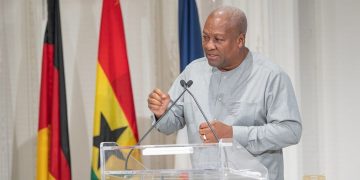
Mr Kusi-Poku called for investigations into the arrangement and urged President John Dramani Mahama to intervene.
He went further to demand the removal of the GES Director-General, saying: “President John Dramani Mahama must step in and sack the Director General immediately before this administration’s reputation is completely compromised by this rogue agenda.”
GES: ‘Purchasing these items is strictly voluntary’
The GES, however, has firmly rejected the central allegation that its agreement with Prospectus Ghana makes the purchase of EduPack items compulsory.
In a clarification issued on September 21, 2026, the Service acknowledged that it has an MoU with Prospectus Ghana Limited.
But it stressed that the agreement does not authorise compulsory purchases.
“While the GES maintains a Memorandum of Understanding (MoU) with Prospectus Ghana Limited to introduce its educational products and services to schools, purchasing these items is strictly voluntary,” the Service stated.
“The MoU does not make the acquisition of Prospectus Ghana products compulsory, nor does it empower any external body to impose them as required school items.”
The Service also warned against any attempt to impose unauthorised financial obligations on parents.
“The Ghana Education Service remains unyieldingly committed to protecting learners and parents from unauthorised fees, compulsory product purchases, and unapproved financial levies in all public schools,” it said.
GES distances itself from national PTA body
The Service’s clarification also sought to distance itself from the National Council of Parent-Teacher Associations (NCPTA), whose earlier interventions had raised concerns about the EduPack arrangement.
The GES said the NCPTA had “not been mandated, appointed, or authorised by the Ghana Education Service to represent, speak, or enter into commercial agreements on behalf of the Service, public schools, parents, or students.”
It further stated that Parent-Teacher Associations operate at the individual school level.
“PTAs function strictly at the individual school level, working directly with local school authorities on matters concerning learner development and school welfare,” the Service said.

The GES also declared that it does not recognise a national PTA structure with the authority to issue directives or negotiate commercial arrangements on behalf of all public schools and parents.
“The GES does not recognise a national PTA structure empowered to issue directives, negotiate sales arrangements, or represent all parents and schools under the Service,” it stated.
The unanswered question
While the GES insists the EduPack purchase is voluntary, Mr Kusi-Poku’s allegations have placed the implementation of the programme under renewed scrutiny, particularly over reports of parents being asked to make payments and concerns about delivery of items.
The GGAGG Executive Director has consequently called on parents and guardians who have allegedly been compelled to pay for EduPack to speak out.
“Dear Parents/Guardians/Students, have you been forced to pay for EduPack?” he asked.
The dispute now places the spotlight on the practical implementation of the GES’s stated position: if EduPack is voluntary, whether schools and officials across the country are clearly communicating that position to parents and ensuring that no student is disadvantaged for choosing not to buy the products.
The controversy also leaves questions about the GES-Prospectus Ghana MoU at the centre of the debate, particularly its precise scope and the extent of authority it gives the private company within public schools.
The GES, for its part, has maintained that it will “uphold institutional integrity, enforce compliance across all public basic and senior high schools, and ensure that access to education remains transparent and unburdened by unapproved levies.”
Source: www.kumasimail.com