


















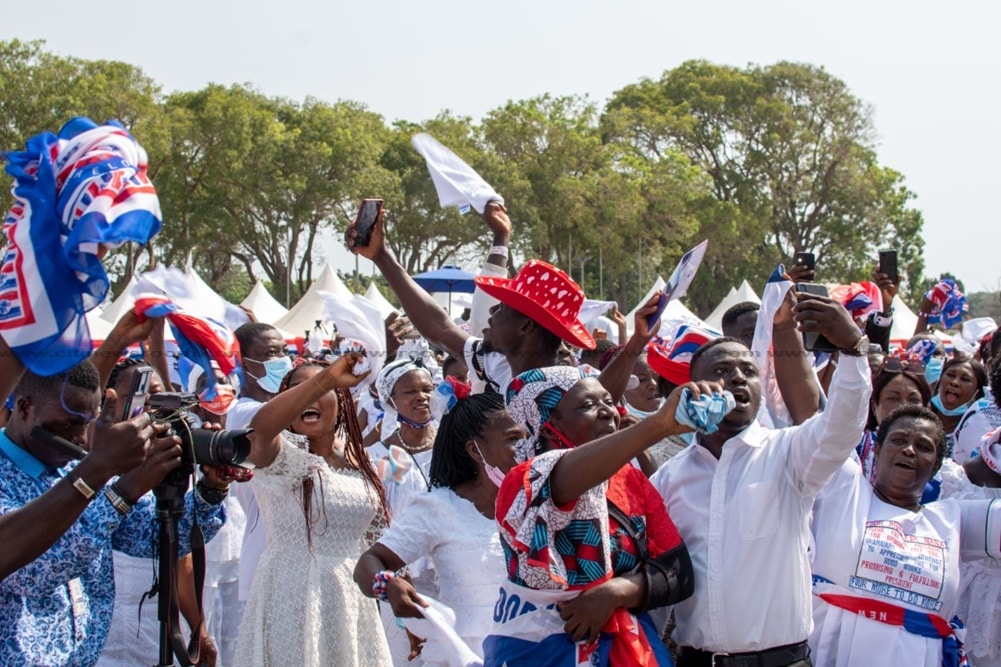
Elections Watch Ghana has commended the New Patriotic Party (NPP) for what it described as the successful conduct of its delegates’ election, while calling for reforms to improve the cost, inclusiveness and overall quality of internal party elections in Ghana.


In a statement issued on October 4, 2026, the organisation congratulated the successful candidates and urged them to discharge their responsibilities with integrity, accountability and a commitment to democratic values.
Elections Watch Ghana said the election demonstrated the importance of internal democracy and participation in strengthening Ghana’s democratic institutions.
The organisation also commended the Electoral Commission for its management of the process, particularly what it described as a reduction in electoral errors.
It further praised the security agencies for maintaining peace and order during the election.
However, the group expressed concern about the long-term sustainability and cost of deploying more than 3,000 police officers for a single internal party election.
While acknowledging the importance of election security, Elections Watch Ghana said security arrangements should be regularly reviewed to ensure they are proportionate, efficient and sustainable.
The organisation also called for greater investment in election-related education for citizens, delegates, candidates and other stakeholders. It urged the strengthening of specialised electoral monitoring and election-security training for security personnel deployed for electoral duties.
Concerns over women’s representation
Elections Watch Ghana identified the representation of women in political leadership as another area requiring attention.
According to the organisation, the presence of only one woman among the elected executives raises concerns about the level of female representation in the party’s leadership.
It urged the NPP to consider gender balance and inclusiveness in future appointments and leadership opportunities, arguing that greater participation by women is essential to ensuring that political institutions reflect the diversity and experiences of the Ghanaian population.
Rising cost of internal elections
The organisation also raised concerns about the increasing cost of internal party elections, particularly expenses related to transportation, feeding, accommodation and other logistical arrangements.
It said such costs could place significant financial pressure on candidates and potentially make financial capacity an important factor in determining electoral success.
Elections Watch Ghana proposed that political parties consider centrally organising and financing basic logistical arrangements for accredited delegates rather than leaving individual aspirants to bear those costs.
According to the organisation, such measures could help create a more level playing field and reduce the influence of money in internal party contests.
Call for greater focus on ideas and competence
The group further expressed concern about what it described as an increasing emphasis on candidates perceived to be politically aggressive, influential or financially capable.
It urged delegates to give greater consideration to candidates’ ideas, track records, integrity, leadership abilities and commitment to public service.
“Political leadership should ultimately be about vision, competence, character, service, and the ability to develop and implement policies that improve the lives of citizens,” the organisation said.
Elections Watch Ghana said the quality of leadership emerging from internal party elections could have implications beyond individual political parties and ultimately affect the country’s democratic governance.
It therefore urged delegates to look beyond popularity, political connections, personal influence and financial capacity when choosing party leaders.
The organisation concluded by commending the NPP, Electoral Commission, security agencies, candidates, delegates and other stakeholders for contributing to the peaceful conduct of the election.
It said the exercise also provided an opportunity for stakeholders to address challenges relating to the cost of internal elections, the influence of money, gender representation, electoral education and security arrangements.
“Ultimately, the responsibility for building a better political system rests with all of us,” Elections Watch Ghana said, emphasising the role of individual delegates in shaping the direction of political parties and, by extension, the country’s democratic future.
If you want, I can also turn this into a Ghanaian newspaper-style version with a stronger headline, tighter lead, and more punchy paragraphs suitable for online publication.