
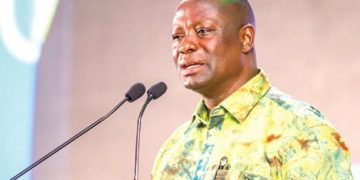

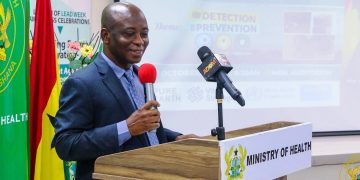









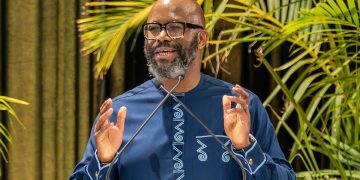





















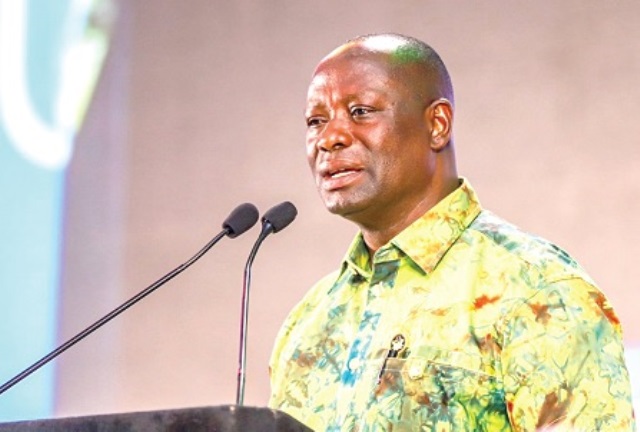


The Minister of Lands and Natural Resources, Emmanuel Armah-Kofi Buah, has announced plans by government to decentralise the mining licensing process as part of proposed reforms in the mining sector aimed at strengthening community participation and addressing illegal small-scale mining.
Under the proposed legislation currently before Parliament, the licensing process will begin at the district and community levels where mining activities are intended to take place, rather than being handled exclusively by regulatory institutions in Accra.
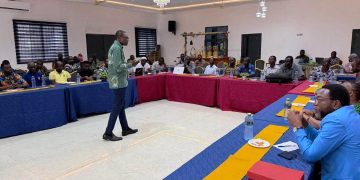
Speaking at a national conference for Metropolitan, Municipal and District Chief Executives (MMDCEs) on illegal small-scale mining in Kumasi, the minister said the reforms would establish district mining committees comprising District Chief Executives to ensure that local authorities are actively involved in decisions concerning mining operations.
He said the existing licensing arrangement had created coordination challenges, with some mining operators obtaining licences without adequate knowledge of the communities, farmlands and forest reserves affected by their operations.
Mr Buah explained that the proposed law would also introduce medium-scale mining opportunities for Ghanaians while tightening the conditions for holding exploration licences.
According to him, exploration licences would be limited to a maximum of five years, with companies expected to demonstrate progress within the first two years.
He said operators who fail to discover commercially viable mineral deposits within the stipulated period would be required to surrender the concessions to allow communities to return the lands to productive use.
The minister further disclosed that the proposed reforms would eliminate reconnaissance licences and address situations where individuals hold large mining concessions for several decades without undertaking meaningful exploration activities.
On community participation, Mr Buah said government intended to make mining companies enter into community mining agreements as part of their broader mining leases.
He stressed that mining communities must benefit directly from the resources extracted from their lands, particularly through investments in education, healthcare and the development of local expertise.
He said mining companies would be required to work with communities to produce geologists and mining engineers over the next decade, insisting that such commitments should go beyond conventional corporate social responsibility initiatives.
The minister also raised concerns about the environmental consequences of illegal mining, particularly the destruction of forest reserves and pollution of freshwater bodies.
He disclosed that approximately 9,000 hectares of forest reserves had been destroyed through mining activities, describing the scale of environmental degradation as a major national concern.
Mr Buah said government was also prioritising the reclamation of degraded lands and the restoration of forest reserves through tree-planting initiatives.
He further expressed concern that more than 60 per cent of Ghana’s water bodies had been polluted, warning that the situation posed serious environmental and public health risks, particularly in mining communities.
As part of efforts to address the challenge, he said government had commenced reclamation initiatives and trained about 2,500 people across more than 10 regions to support environmental restoration activities.
On enforcement, the minister acknowledged coordination gaps among security agencies and the National Anti-Illegal Mining Operations Secretariat (NAIMOS).
He said government would strengthen collaboration between NAIMOS, Regional Ministers, MMDCEs and other relevant stakeholders to ensure that anti-illegal mining operations were properly coordinated.
Mr Buah maintained that local authorities must be involved in enforcement activities, stressing that intelligence-led operations should not undermine the coordination responsibilities of Regional Ministers and district assemblies.
He also outlined government’s Responsible Cooperative Mining Programme as a key alternative to illegal small-scale mining.
According to him, the initiative has trained more than 10,000 miners and established over 20 mining cooperatives, with government targeting the establishment of 70 cooperatives by the end of the year.
He explained that the programme seeks to organise small-scale miners into regulated cooperatives, provide them with technical expertise and training, and create opportunities for responsible mining.
Mr Buah said government, through the Minerals Commission and the Environmental Protection Authority (EPA), was identifying and assessing suitable areas for cooperative mining before granting the necessary approvals.
He cautioned miners against entering identified areas to undertake mining activities before completing the required licensing and regulatory procedures.
The minister emphasised that government was not seeking to abolish mining but to ensure that the sector operated responsibly, with adequate protection for the environment and the country’s water resources.
He said the proposed reforms, strengthened enforcement and responsible cooperative mining programme formed part of government’s broader strategy to address illegal small-scale mining and promote sustainable management of Ghana’s mineral resources.