

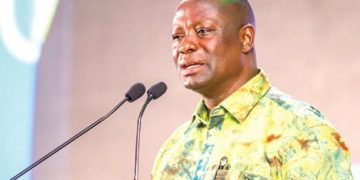

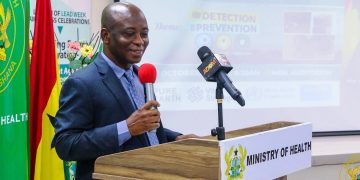


































The Minister of Environment, Science and Technology, Dr. Zanetor Agyeman-Rawlings, has warned that illegal mining poses a growing threat to Ghana and neighbouring Côte d’Ivoire relationship, following concerns over the pollution of shared river systems by mining activities.


She said the pollution of rivers, including the Tano and Bia, could result in contaminated water crossing Ghana’s borders into Côte d’Ivoire, making illegal mining not only an environmental challenge but also a threat to regional relations and national security.
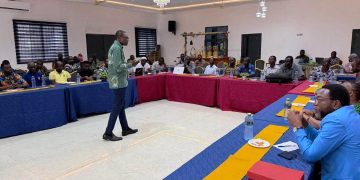
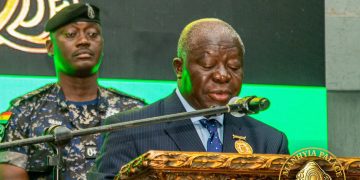
Speaking at a national conference for Metropolitan, Municipal and District Chief Executives (MMDCEs) on small-scale mining, Dr. Agyeman-Rawlings said the situation required urgent and coordinated action from government, traditional authorities, security agencies and local communities.
She noted that illegal mining was also contributing to wider security concerns, warning that proceeds from the activity were allegedly financing violent extremism and terrorism in parts of the Sahel.
According to her, Ghana must not allow inaction or silence over illegal mining to make the country complicit in activities that could threaten security across the sub-region.
Dr. Agyeman-Rawlings further warned that the destruction of forests and pollution of water bodies were undermining the country’s food security and exposing future generations to serious health risks.
She said Ghana could not depend solely on gold production at the expense of agriculture, water security and other essential sectors of the economy.
The minister cautioned that the anticipated El Niño weather phenomenon, coupled with the effects of climate change, could worsen the country’s environmental challenges, particularly as rainfall patterns continue to change and temperatures rise.
She stressed that trees played an important role in regulating temperatures, sustaining local climates and supporting life, warning that their indiscriminate destruction through illegal mining would further worsen the situation.
Citing scientific evidence, she referred to studies on the Odaw River in the Ashanti Region, which she said had highlighted severe pollution associated with mining activities.
She also pointed to assessments by the Environmental Protection Authority (EPA) and its partners that had identified dangerous levels of heavy metals, including mercury, lead, arsenic and cadmium, in mining-affected environments.
As a medical doctor, Dr. Agyeman-Rawlings expressed concern about the potential impact of such pollution on public health, particularly children, pregnant women and newborn babies.
She warned that contaminated water sources could expose communities beyond illegal mining sites to health risks, citing instances where boreholes located several kilometres from mining areas could become sources of drinking water for schoolchildren.
The minister said such contamination could have devastating consequences for future generations if urgent measures were not taken to address the problem.
Turning her attention to local government authorities, she described MMDCEs as critical actors in the fight against illegal mining, insisting that the battle could not be won through decisions taken in Accra alone.
She reminded the MMDCEs of their responsibility under the Local Governance Act, 2016 (Act 936), which requires prior written approval from the relevant assemblies before physical development takes place within their jurisdictions.
According to her, district assemblies were strategically positioned to identify illegal mining activities, monitor the arrival of excavators, detect changes in river conditions and report the destruction of farmlands and forests.
She urged the MMDCEs to use their positions on the various security committees, including the Regional Security Councils (REGSECs), Municipal Security Councils (MUSECs) and District Security Councils (DISECs), to strengthen surveillance and enforcement.
Dr. Agyeman-Rawlings also called on traditional authorities to support government efforts, stressing that their role as custodians of lands and natural resources was indispensable to the success of the campaign.
On measures being implemented to address illegal mining, she said the Environmental Protection Authority had monitored 19,079 undertakings, including mining operations, in 2025, with approximately one-third found to be non-compliant.
She said the authority had responded with enforcement notices, closures and prosecutions.
The minister further disclosed that the EPA had banned the importation, assembly and use of changfan machines in mining, particularly in water bodies, with customs and security agencies expected to enforce the directive.
She added that the authority had piloted water treatment interventions in the Birim, Tano and Bia rivers and subsequently introduced a water restoration framework to guide dredging and reclamation activities within a 100-metre buffer zone on both banks of affected rivers.
Under the PlanetGOLD programme, she said about 370 small-scale miners, including more than 100 women, had received training in mercury-free gold processing.
She also disclosed that a clean mining demonstration centre had been completed at Tinga in the Savannah Region.
Additionally, through the Ghana Landscape Restoration and Small-Scale Mining Project, more than 1,000 hectares of degraded land had been restored, while 1,604 hectares of riparian vegetation had been re-established.
Despite these interventions, Dr. Agyeman-Rawlings said restoration efforts would remain ineffective if illegal mining activities continued to pollute rivers and degrade the environment.
She therefore called for stronger collaboration among government institutions, security agencies, traditional leaders and mining communities to ensure effective monitoring, enforcement and accountability.
The minister also warned against political and institutional interference in the fight against illegal mining, insisting that no individual, regardless of position, should be shielded from prosecution.
She said illegal mining could not thrive without some level of protection or complicity, urging politicians, public officials, traditional leaders and security personnel to refrain from interfering when persons suspected of engaging in the activity were arrested.
Dr. Agyeman-Rawlings called on all stakeholders to take collective responsibility for protecting the country’s natural resources, warning that failure to act could jeopardise the survival and well-being of future generations.
Source : www.kumasimail.com