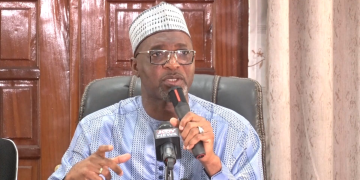


































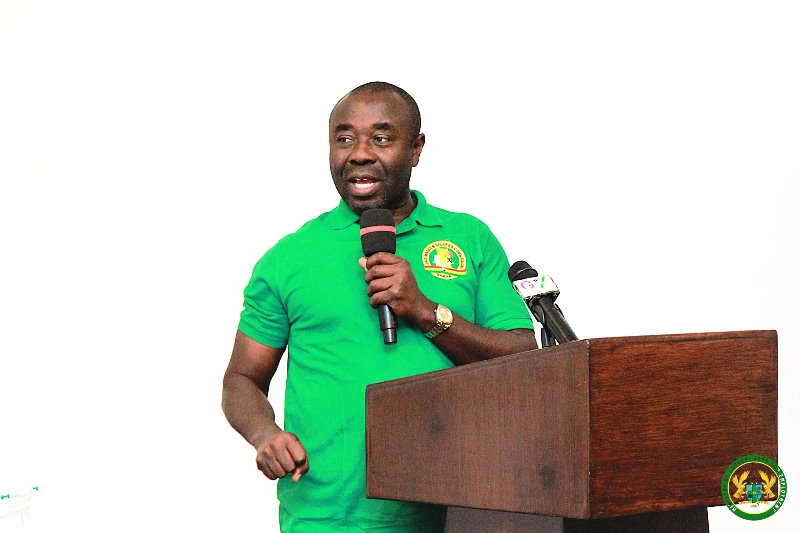
The Minister for Labour, Jobs and Employment, Emmanuel Kwadwo Agyekum, has urged State-Owned Enterprises (SOEs) to actively contribute to the proposed transition from the Fair Wages and Salaries Commission (FWSC) to an Independent Public Emoluments Commission (IPEC).


Mr Agyekum said the reform was a presidential priority aimed at building a more coherent, transparent and sustainable public sector remuneration system, and urged SOEs to provide practical input rather than wait for the new framework to be imposed on them.
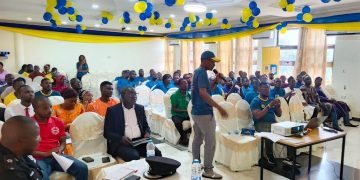
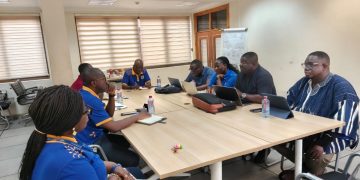
He was speaking at a stakeholder engagement organised by the FWSC in Accra on Friday, September 25, 2026, bringing together chief executives, deputy chief executives, finance and human resource directors from more than 100 SOEs, as well as representatives of the State Interests and Governance Authority (SIGA), development partners and the media.
The engagement was held on the theme: “Towards an Independent, Equitable & Sustainable Compensation System: Stakeholder’s Perspectives on Ghana’s Public Sector Pay Reforms.”
Mr Agyekum stressed that IPEC was not being created to strip SOE boards of their existing responsibilities.
“This is not coming to take your powers. We want you to support, we want you to contribute, we want you to give any other input that will be able to help us to bring in something that is new. Let it be the best system,” he said.
He also rejected the idea that Ghana was simply importing a foreign remuneration model.
“We are not just lifting something from the UK or lifting something from another country and putting it here,” he said, urging stakeholders to help develop a system suited to Ghana’s own circumstances.
The Minister said the proposed transition would follow the necessary legal and constitutional processes and assured participants of the President and Cabinet’s support for the reform.
Boards to retain key role
Chief Executive of the FWSC, Dr George Smith-Graham, said the proposed IPEC would not impose a uniform salary structure on SOEs or render their boards irrelevant.
He said boards would continue to assess the circumstances of their respective enterprises and submit evidence-based remuneration proposals.
“What changes is not the relevance of the board, but the governance architecture within which its proposals are considered,” Dr Smith-Graham said.
He explained that differences in remuneration would be expected where justified by factors including the size and complexity of an enterprise, profitability, financial sustainability, capacity to pay, productivity, organisational performance, market conditions and scarcity of skills.
He further said IPEC would complement rather than duplicate SIGA’s role, with boards originating remuneration proposals, SIGA providing governance and financial-performance oversight, and IPEC providing compensation oversight on behalf of government as shareholder.
The FWSC says the reform is intended to address fragmentation and disparities in Ghana’s public sector remuneration while introducing a more integrated, transparent and productivity-driven national emoluments framework.
Concerns over autonomy
The engagement also exposed concerns among some SOE executives over the implications of IPEC for existing collective agreements, market premiums, allowances and the ability of boards to attract and retain critical talent.
Dr Smith-Graham assured participants that performance-based incentives would not be scrapped but would be streamlined under a proposed National Emoluments Policy and National Negotiation Framework.
He also disclosed plans for a nationwide job evaluation exercise to establish a modern grading structure and a National Productivity Framework to strengthen the link between remuneration, productivity and performance.
The FWSC says inputs from the SOE consultations will feed into the draft IPEC Bill, which is expected to be laid before Parliament in October 2026.
Article 71 also in focus
The proposed IPEC has also emerged from a broader national debate over the determination of public office holders’ emoluments.
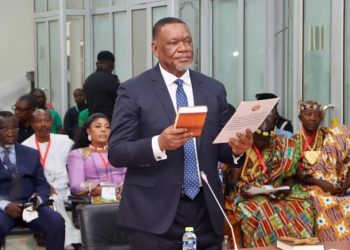
In July, Attorney-General and Minister for Justice Dr Dominic Ayine said government had accepted the Constitutional Review Committee’s recommendation for an Independent Public Emoluments Commission to determine the salaries and benefits of Article 71 office holders.

However, Dr Smith-Graham told the SOE engagement that IPEC was not being established solely to deal with Article 71 office holders.
The proposed reform is therefore being presented as a broader restructuring of Ghana’s public sector compensation architecture, with SOEs forming a significant part of the consultation process.
The stakeholder engagement was followed by a technical session on the legal and policy framework for IPEC led by Dr Abdul-Baasit Aziz-Bamba, Director-General of the Value for Money Office.
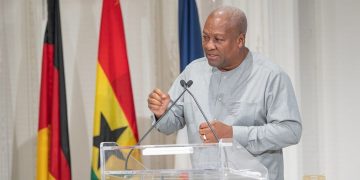
The consultations come weeks after President John Dramani Mahama told the 2026 Governing Boards and CEOs’ Conference that the proposed commission should link the remuneration of SOE chief executives and board members to institutional performance. He also called for greater discipline in the use of public resources and stronger separation between board oversight and executive management.
Source: www.kumasimail.com