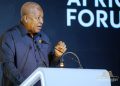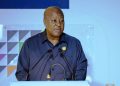
































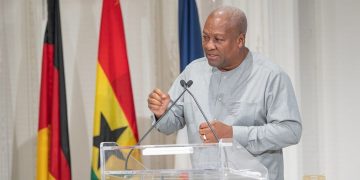



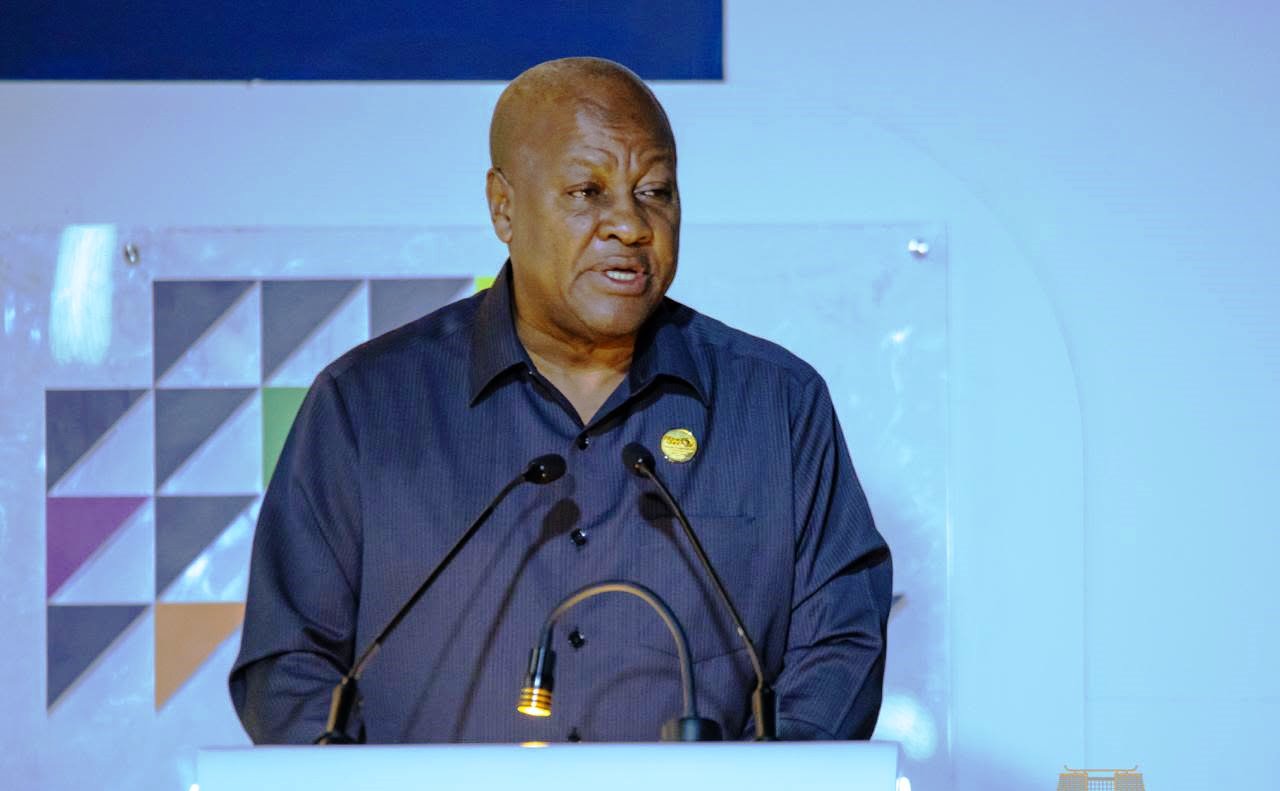
President John Dramani Mahama has challenged African governments and investors to abandon the traditional view of healthcare as a drain on public finances, arguing that the sector offers one of the continent’s biggest opportunities for economic growth and industrialisation.


Addressing the Alamein Africa Forum in Egypt, President Mahama said Africa’s approach to healthcare financing must fundamentally change if the continent is to achieve health security and strengthen its economies.
“For decades, African Finance Ministers and global investors have made a fundamental error: they have treated health as a line-item cost,” he said.
He insisted that health was “not a charitable cause” but an “investable, high-growth economic sector” capable of driving human capital development, manufacturing, job creation and macroeconomic stability.
President Mahama cited research showing that a targeted package of basic emergency maternal and newborn care could generate $87 in economic and social returns for every $1 invested.
He also referenced findings from the Lancet Commission that falling mortality rates accounted for nearly a quarter of total income growth in developing economies during the early 2000s.
He said the economic argument for investing in Africa’s pharmaceutical industry had become even stronger because of the continent’s rapidly growing population and its enormous unmet demand for medicines.
Africa’s population is projected to reach 2.5 billion by 2050, while the continent currently imports more than 70 per cent of its pharmaceuticals and nearly 99 per cent of its vaccines.
According to the President, this dependence represents not only a health vulnerability but also a massive investment opportunity.
He said local pharmaceutical production could conserve foreign exchange, create high-value jobs, reduce exposure to global supply disruptions and make medicines more affordable.
He pointed to the African Continental Free Trade Area as a major opportunity, arguing that a pharmaceutical factory established in Africa would no longer be limited to serving the relatively small market of an individual country but could potentially serve a continental market of about 1.4 billion people.
President Mahama also warned that declining traditional donor assistance made it increasingly urgent for African countries to mobilise domestic and private capital for health.
He said OECD projections indicated that health aid to Africa could decline by between 29 and 46 per cent compared with 2024 levels, creating further pressure on governments to develop sustainable financing models.
He therefore called on commercial banks, institutional investors, industrial developers and sovereign funds to treat pharmaceutical manufacturing as a serious investment opportunity.
“Governments cannot and should not fund this transition alone,” he said.

President Mahama challenged financiers to develop de-risking and blended-finance instruments capable of attracting long-term capital into pharmaceutical manufacturing.
He also urged industrialists to move Africa beyond the importation and packaging of medicines into the production of active pharmaceutical ingredients.
“Let us stop treating health as a line-item expense. Let us build factories, integrate supply chains, fund innovators, and secure our citizens’ future,” he said.
His remarks form part of his broader push for African health sovereignty, following Ghana’s hosting of the African Union Extraordinary Summit on Universal Health Coverage in July and the launch of the Accra Reset Presidential Council’s health sovereignty report in September.
Source: www.kumasimail.com