


































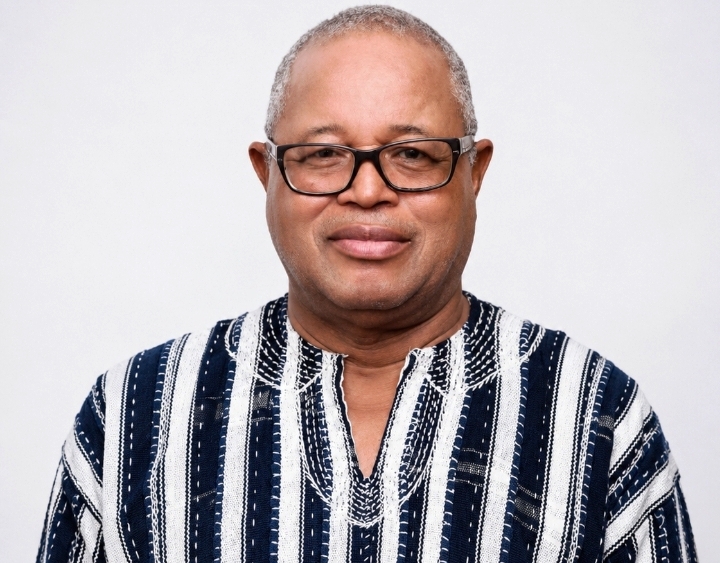
President John Dramani Mahama has recorded a net approval rating of 65 per cent in the Nandom Constituency, while the area’s National Democratic Congress (NDC) Member of Parliament, Richard Kuuire, has scored -22 per cent in a September poll conducted by Global InfoAnalytics.


The figures have triggered concerns among some Nandom constituents and NDC delegates, who have attributed the MP’s poor rating to what they describe as weak leadership, inadequate lobbying for development projects and limited efforts to secure employment opportunities for constituents.
The poll, which assessed the net approval ratings of MPs and President Mahama across 83 constituencies in Ghana’s 16 regions, shows a significant gap between the President’s rating and that of the Nandom MP.
In the Upper West Region, President Mahama recorded an 84 per cent net approval rating in Nadowli-Kaleo, where MP Anthony Sumah scored 20 per cent. In Lambussie, the President obtained 62 per cent, compared with 60 per cent for the constituency’s MP Prof. Titus Beyuo.
Nandom was the only one of the three constituencies featured in the poll where their MP recorded a negative net approval rating, despite the President maintaining a positive rating.
Global InfoAnalytics did not provide constituency specific explanations for the figures, leaving the reasons behind Kuuire’s rating open to further investigation.
However, some constituents and NDC delegates who spoke to Kumasimail on condition of anonymity said they believed the MP’s approach to leadership and his perceived inability to lobby effectively within government had contributed to the outcome.
One constituent argued that Mr. Kuuire needed to appreciate that parliamentary representation required a different approach from his previous position as Director-General of the Ghana Prisons Service, where he served in a command structure.
“The era of being a director general of prisons service where you command hundreds of men and women under you is gone. This is politics and as an MP he must be a serious lobbyist otherwise he cannot and will not be able to match the record of his predecessor Ambrose Dery,” the constituent said.
The source alleged that the MP had not been sufficiently proactive in approaching ministers and other government officials to secure jobs and development projects for Nandom, adding that political representation required relationship building and persistent engagement with decision-makers.
Road infrastructure was among the issues raised by the delegates, who questioned why several roads in the constituency remained in poor condition despite the NDC controlling the presidency and parliament.
One delegate cited the condition of roads within Nandom township and the absence of major construction projects on some key routes, arguing that the MP should be doing more to attract government investment to the area.
“Look at how roads construction are going on in many constituencies across the country but when you come to the North it’s only 24hour markets, schools and CHPS compounds financed by the district assembly common fund that you see. So our 15 MPs including Hon. Kuuire can’t lobby for the construction of our township roads?” the delegate asked.
The delegate further questioned why the road linking Nandom to Hamile and the stretch between Baselbe and Nandom town had not received the attention they deserved.
“Nandom roads are full of potholes and it’s just recently the Assembly started patching them up. From Nandom to Hamile is less than 30km. Between Baselbe and Nandom town is less than 20km and yet our MP can’t lobby the President and his colleague Road Minister to award them on contract. Why?” the delegate queried.
The concerns come as the NDC prepares to hold its constituency executive elections on October 24, with some party members arguing that the conversation about leadership and representation should extend beyond the election of new executives to the choice of a parliamentary candidate for the 2028 general election.
One delegate said the party needed to consider a candidate with a clear vision for Nandom and the ability to lobby effectively for development, irrespective of whether the NDC remained in government.
“As we prepare to elect new and capable constituency executives to manage the affairs of the party in Nandom, we must as a party also start thinking of picking a more capable person to represent the NDC as parliamentary candidate come 2027 when nominations are open. We need a strategic thinker, someone with vision for a better Nandom, who can lobby in and out of government to get Nandom the kind of development that can propel growth,” the delegate said.

Another delegate also questioned whether Mr. Kuuire, who is 71, should seek another parliamentary term, arguing that the party needed to consider its future representation ahead of the next election.
“Our MP is tired at 71. By 2028, he’ll be 73 and so this should be his last opportunity,” the delegate added.
Global InfoAnalytics, in a statement accompanying its broader assessment, said the performance ratings of MPs across the 16 regions would provide insight into whether the composition of parliament could change significantly in 2028 if existing conditions persisted.
The firm also disclosed that it had started collecting data on the likelihood of MPs being re-elected if they contested again in 2028, but said the findings would remain confidential until closer to the elections.
The Nandom figures do not, on their own, predict the outcome of the next parliamentary election. Net approval ratings measure public assessments of officeholders and are distinct from voting intentions.
Source: www.kumasimail.com