








































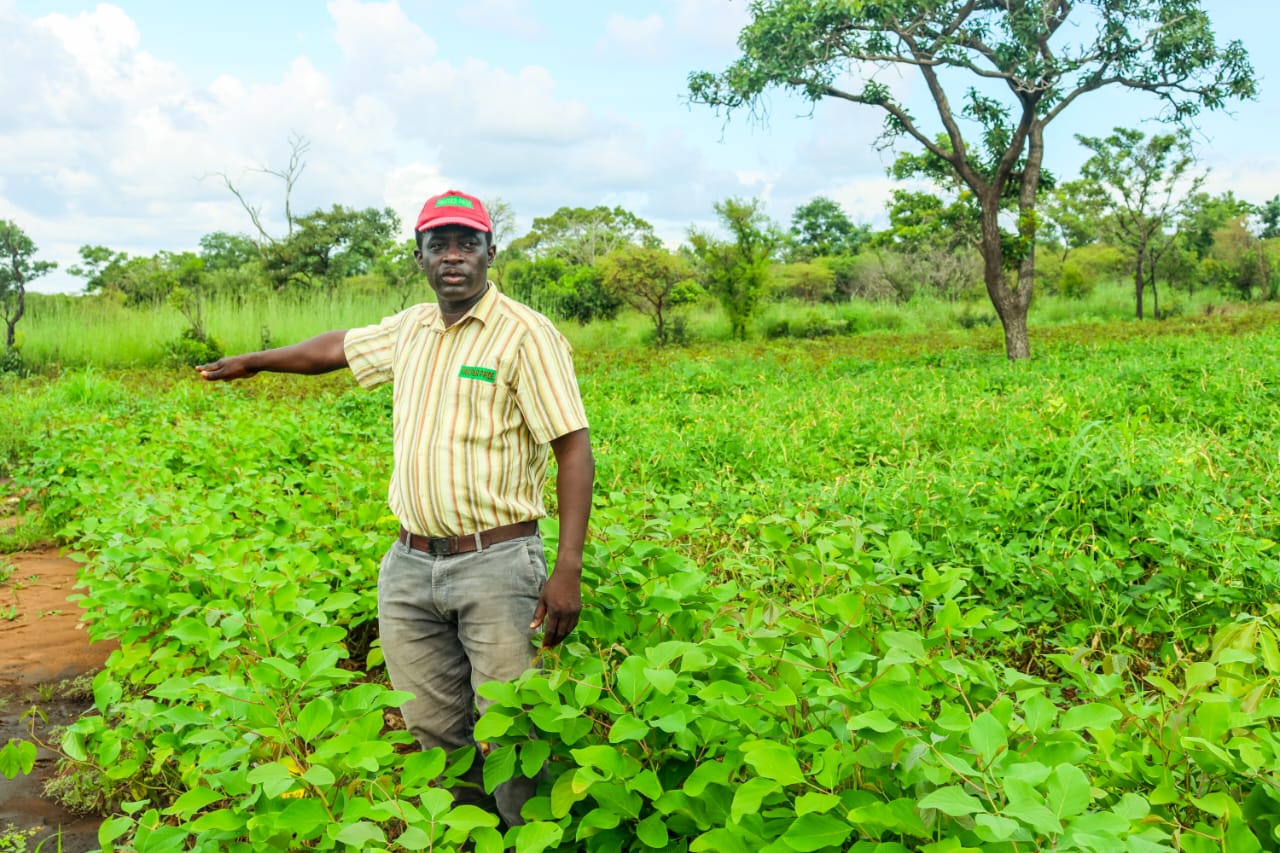
A large-scale farming enterprise operated by agricultural entrepreneur Doho Sumaila in the Sissala East Municipality of the Upper West Region is providing employment for hundreds of people while helping to reduce youth migration to southern Ghana and participation in illegal mining.


The farm, which covers thousands of acres across several locations, has its largest production area at Duu East, followed by Nabugujan, both in the Sisaala East Municipality.
Mr Sumaila, who has an academic background in Agricultural Studies and is currently pursuing an MPhil, has committed significant attention to commercial agriculture, earning recognition among farmers, researchers and students who visit the farm to study his production practices.
His work has also attracted organisations including the International Institute of Tropical Agriculture (IITA) and Ghana’s Council for Scientific and Industrial Research (CSIR).
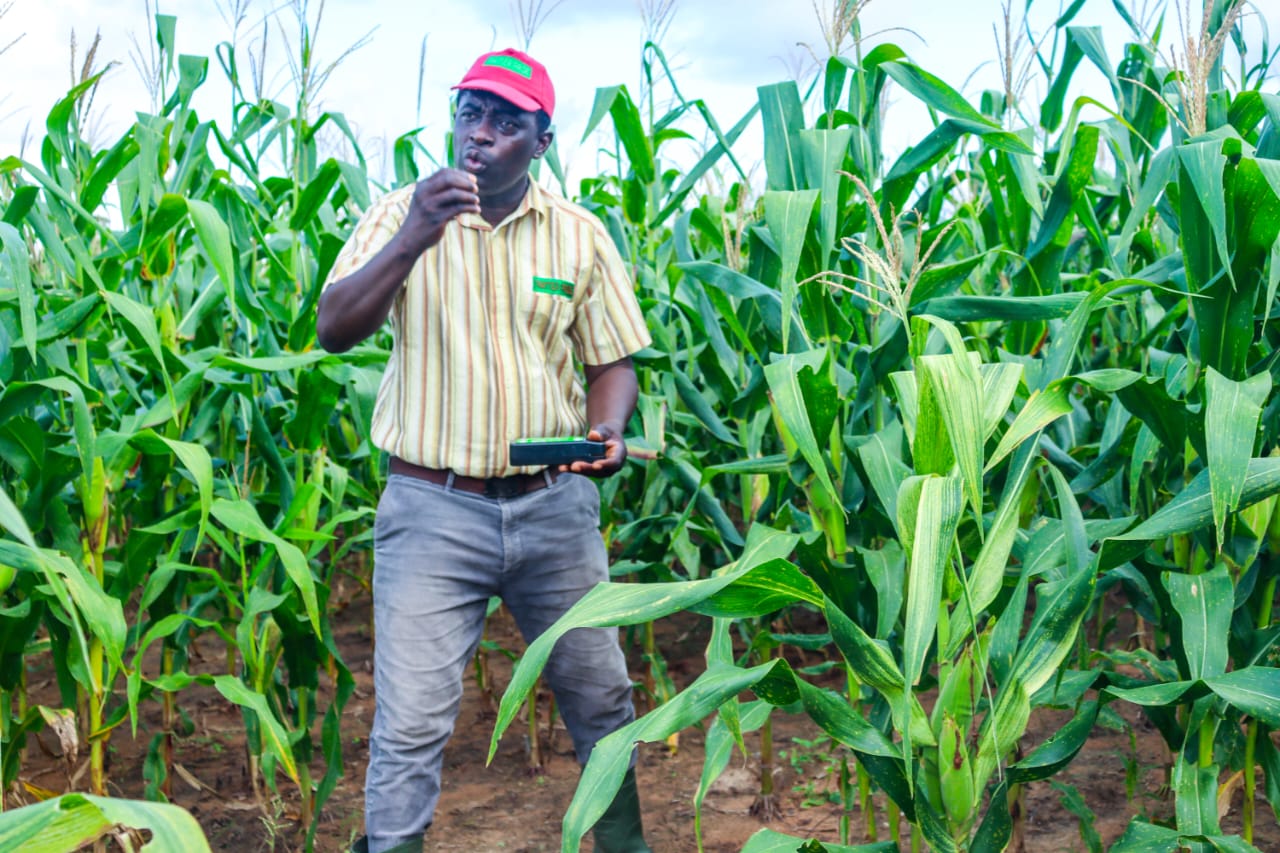
The enterprise produces a diverse range of crops, including six varieties of maize, pearl millet, two varieties of sorghum, yam, watermelon, eight varieties of soybean, rice, three varieties of cowpea, canavalia and pigeon pea.
It is also involved in the production of maize, sorghum and soybean seeds and operates an extensive out-grower scheme, with significant participation by women, including widows.
The farm has eight permanent workers and engages approximately 400 seasonal workers during major stages of production, including sowing, fertiliser application, harvesting, threshing, loading and transporting produce to warehouses.
For some workers and residents in surrounding communities, the farming enterprise is providing an alternative to travelling to southern Ghana in search of menial jobs.
Nma Alija, a married woman who works around the farming operation, said the employment opportunities had significantly reduced her need to migrate southwards for jobs such as kayayei and dishwashing in chop bars.
Another resident, Mr Haruna, said he had observed a significant decline in the movement of young people, both males and females, from Duum and surrounding communities to illegal mining sites, particularly during periods when Mr Sumaila’s farm recruits workers.
He believes the availability of seasonal agricultural employment is giving young people an alternative source of income in their own communities.
The employment opportunities also attract workers from outside the municipality.
Ayinpoka, who hails from the Upper East Region, said hundreds of farmhands travel to the Upper West Region during harvesting periods to work on the farm.
She said the workers arrive in batches because of the size of the farming operation and the demand for labour.
According to her, the seasonal jobs have helped reduce the frequency with which some workers migrate to southern Ghana in search of temporary employment.
Adama Benin Torphic, a transport officer operating a haulage station in Tumu, said he arranges articulated trucks to transport Mr Sumaila’s produce to clients across the country.
He said the movement of the farm produce creates additional employment for loading workers and others involved in the logistics chain.
A permanent worker who prepares meals for other permanent employees on the farm also expressed satisfaction with the opportunity, saying her earnings help her cater for her children.
Despite the employment and food production generated by the enterprise, Mr Sumaila is concerned about the impact of imported agricultural produce on local farmers.
He criticised the government’s policy of allowing licensed agents to import commodities such as maize, arguing that imported produce contributes to a drastic reduction in local farm-gate prices.
He said the situation was particularly worrying because farmers continue to face high costs for seeds, fertiliser, machinery, labour and other production inputs.
According to him, when farmers invest heavily in production only to encounter depressed prices at harvest, it threatens the sustainability of commercial agriculture and could discourage other potential investors from entering the sector.
Mr Sumaila therefore called on the government to adopt deliberate policies to support large-scale local farmers and protect domestic agricultural production.

He argued that supporting commercial farmers could help address some of Ghana’s pressing challenges, including youth unemployment, illegal mining, rural-to-southern migration and food insecurity.
He urged the government to see agriculture not only as a means of producing food but also as a major employment-generating sector capable of absorbing thousands of young people.
With its mechanised production, seed multiplication, out-grower scheme and seasonal employment, Mr Sumaila’s enterprise illustrates the potential of commercial agriculture to generate economic opportunities beyond the farm itself.
From farmhands and women participating in out-grower schemes to loading workers, transport operators and warehouse workers, the agricultural value chain is supporting livelihoods across communities.
Mr Sumaila believes that with appropriate government policies and stronger support for local production, agriculture can become an even more effective tool for tackling unemployment, discouraging illegal mining and reducing migration while strengthening Ghana’s food security.
Source: www.kumasimail.com/ Ayamga Bawa Fatawu